

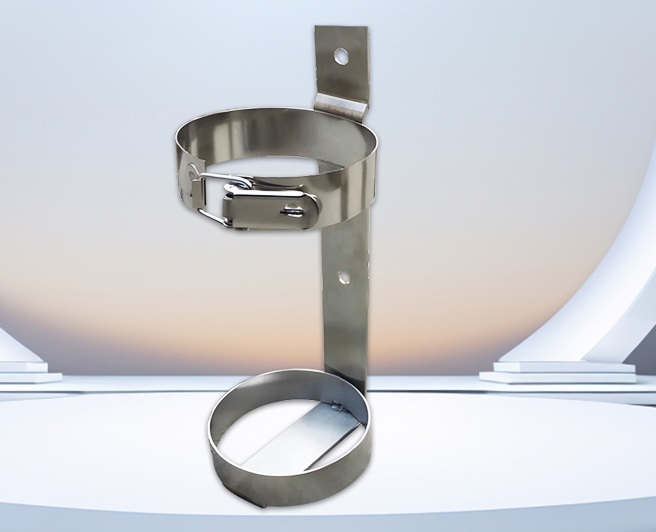
Fire Safety Equipment Mounting: Critical Regulatory Requirements
Fire safety regulations across North America, Europe, and Asia-Pacific mandate that fire extinguishers must remain securely mounted while allowing immediate access within 3-5 seconds during emergencies. OSHA 1910.157(c)(1) and NFPA 10 standards require extinguishers to be mounted in designated locations with proper brackets that withstand environmental stressors including vibration, temperature fluctuations, and accidental impact.
These regulations serve a dual purpose: ensuring extinguishers remain accessible during genuine emergencies while preventing unauthorized removal or tampering that could compromise fire protection readiness. Statistics from fire safety authorities indicate that improperly mounted extinguishers are among the leading causes of equipment failure during critical moments.
For commercial and industrial applications, lockable toggle latches with integrated key-lock mechanisms provide the optimal balance between security and accessibility. The 5103-70K-S04-ZG lockable toggle latch delivers tensile strength exceeding 700N while incorporating an integrated key-lock system that prevents unauthorized removal or tampering.
Real Application Case: Compact Fire Extinguisher Bracket
This configuration demonstrates a wall-mounted fire extinguisher bracket engineered for residential and light commercial environments. The bracket measures 330mm x 200mm x 150mm and utilizes a single 5103-70K-S04-ZG lockable toggle latch for secure closure. The latch’s key-lock feature prevents accidental release while maintaining rapid access for authorized personnel during fire emergencies.
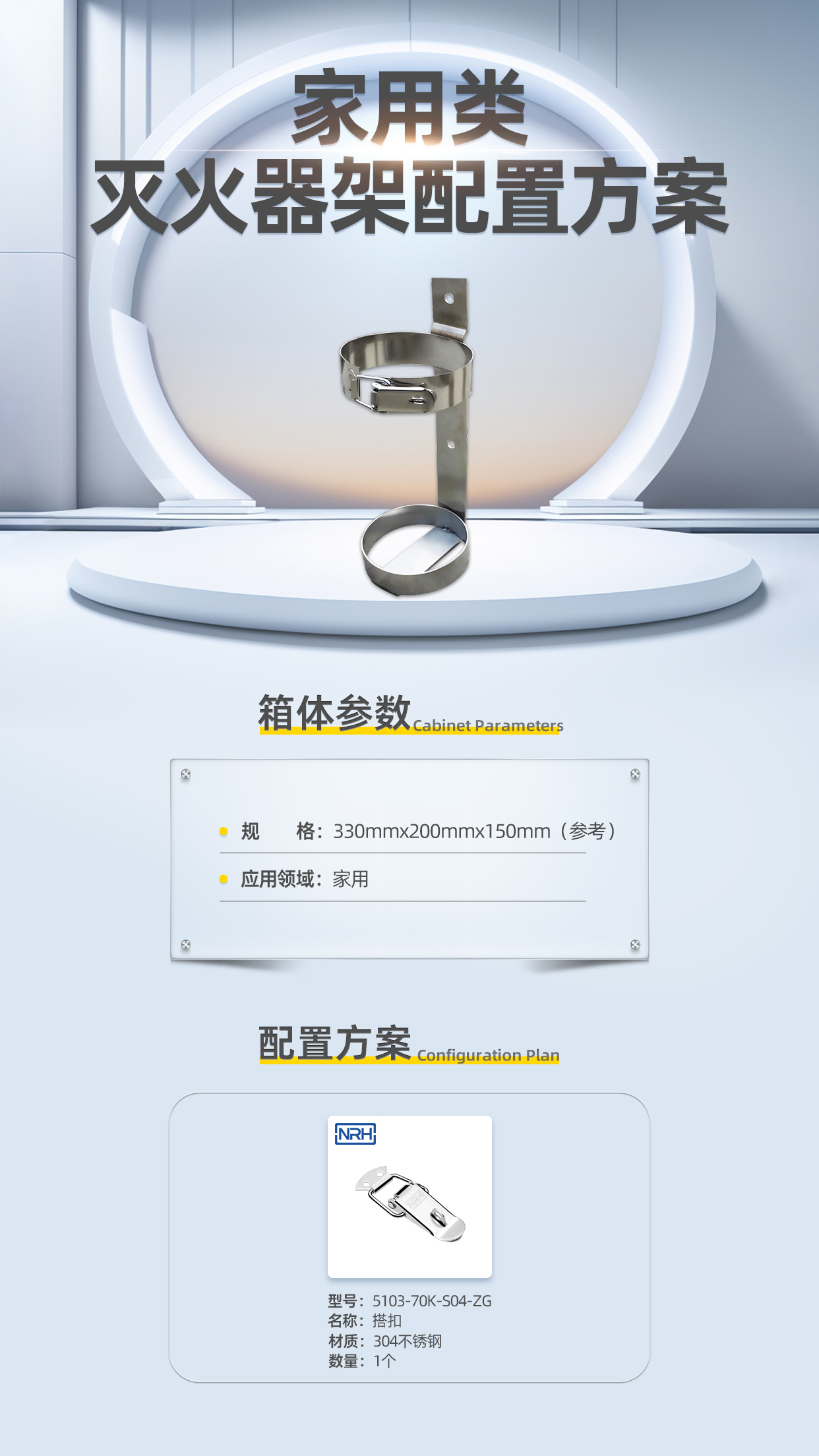
Wall-mounted fire extinguisher bracket featuring 5103-70K-S04-ZG lockable toggle latch in SUS304 stainless steel with vibratory polish finish – Case 50 Configuration
Why Lockable Design Matters for Fire Safety Equipment
The “K” designation in the 5103-70K-S04-ZG part number indicates a built-in lockable feature, which serves multiple critical functions in fire safety applications:
Unauthorized Access Prevention
Lockable toggle latches prevent tampering, accidental release, or intentional removal of fire extinguishers by unauthorized individuals. This is particularly critical in public buildings, schools, healthcare facilities, and workplaces where untrained persons might remove or mishandle safety equipment.
Safety Compliance
Many insurance requirements and fire safety regulations mandate secured fire equipment storage. Lockable mounting solutions help facility managers maintain compliance with NFPA 1, NFPA 10, and local fire codes that specifically address equipment security in public spaces.
Environmental Protection
In industrial environments, lockable brackets protect extinguishers from vibration, dust, and accidental impact that could dislodge or damage equipment. The robust swing arm mechanism absorbs dynamic loads while maintaining secure closure.
Product Overview: 5103-70K-S04-ZG Lockable Toggle Latch
The 5103-70K-S04-ZG lockable toggle latch combines industrial-grade SUS304 stainless steel construction with an integrated key-lock mechanism, making it the ideal solution for fire safety applications where equipment security is paramount.
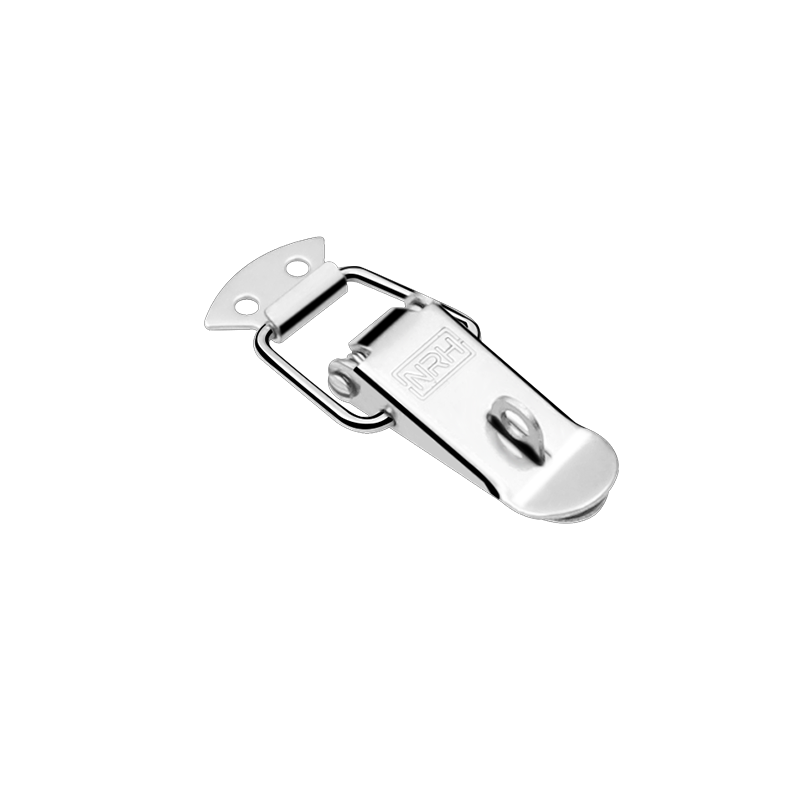
5103-70K-S04-ZG lockable toggle latch – front view displaying key-lock mechanism and SUS304 stainless steel construction with vibratory polish finish
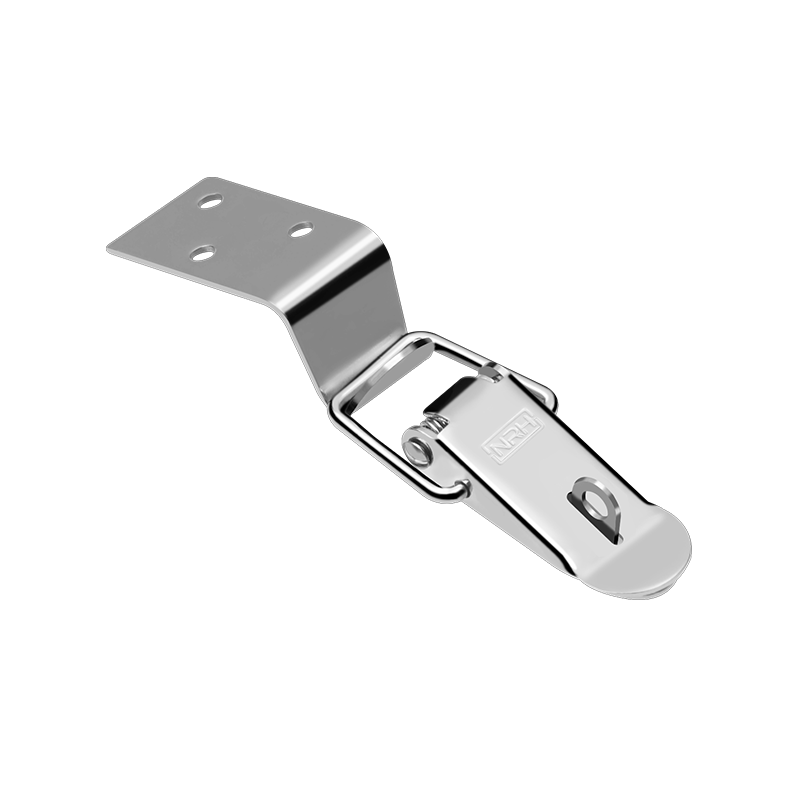
5103-70K-S04-ZG toggle latch – detailed view of swing arm mechanism in locked position showing precise engineering
Lockable Toggle Latches vs. Standard Toggle Latches: Comparative Analysis
Understanding the differences between lockable and standard toggle latches helps engineers and procurement specialists select the appropriate solution for their specific fire safety requirements.
| Feature | Lockable Toggle Latches (5103-70K-S04-ZG) | Standard Toggle Latches |
|---|---|---|
| Security Level | Integrated key-lock mechanism prevents unauthorized access | No lock feature; relies on manual operation only |
| Primary Application | Fire safety, security enclosures, public facilities, medical equipment | General industrial, flight cases, storage boxes, consumer products |
| Tamper Resistance | High – requires key to release mechanism | Low – anyone can operate without tools |
| Regulatory Compliance | Meets fire code security requirements for public buildings | May not meet regulatory security mandates |
| Material Options | Premium grades: SUS304, SUS316 stainless steel | Wide range: steel, stainless, zinc alloy, plastic |
| Finish Options | Vibratory polish (ZG), electro-polish available | Multiple options including zinc, nickel, chrome plating |
| Load Capacity | Up to 700N for fire safety applications | Varies by model; typically 100-500N |
| Cost Consideration | Premium pricing reflects enhanced security features | Economical for non-security applications |
Product Specifications
| Parameter | Specification |
|---|---|
| Part Number | 5103-70K-S04-ZG |
| Material | SUS304 Stainless Steel (18/8 chromium-nickel alloy) |
| Surface Treatment | Vibratory Polish (ZG) – mirror-like smooth finish |
| Lock Feature | Built-in Key Lock Mechanism with padlock eyelet |
| Tensile Strength | 700N minimum load capacity |
| Corrosion Resistance | Excellent – suitable for indoor, outdoor, and marine environments |
| Temperature Range | -40C to 300C operational range |
| Recommended Application | Fire extinguisher brackets, safety equipment enclosures, security cabinets |
Material Selection: SUS304 Stainless Steel Benefits
The 5103-70K-S04-ZG features SUS304 stainless steel with vibratory polish finish, providing exceptional corrosion resistance across diverse environments. This austenitic stainless steel contains 18% chromium and 8% nickel, delivering superior performance characteristics:
Indoor Environments
SUS304 stainless steel provides reliable performance in commercial buildings, offices, warehouses, and residential spaces. The material maintains structural integrity and aesthetic appearance despite exposure to normal environmental conditions and occasional cleaning regimens.
Humid Conditions
For basements, parking structures, marine facilities, and swimming pool areas, SUS304 stainless steel resists moisture-induced corrosion. The vibratory polish finish further enhances resistance by creating a smooth surface that repels water and minimizes crevice corrosion risks.
Outdoor Installations
Building exteriors, industrial yards, and exposed locations subject brackets to rain, snow, UV radiation, and temperature fluctuations. SUS304 stainless steel withstands these stressors without significant degradation, maintaining both mechanical performance and visual appearance over extended service life.
Corrosive Atmospheres
Chemical storage areas, coastal installations, and industrial facilities with airborne contaminants require materials that resist specific corrosive agents. While SUS304 performs well in most environments, facilities with exposure to chlorides or strong acids may require upgraded materials such as SUS316.
Installation Guidelines for Fire Safety Equipment
Proper installation of lockable toggle latches on fire extinguisher brackets requires adherence to the following best practices and regulatory guidelines:
Mounting Position Requirements
- Position the latch at the primary closure point of the bracket for maximum security
- Ensure the latch is accessible within 3-5 seconds as mandated by fire safety codes
- Mount at a height compliant with local regulations (typically 3.5-5 feet from floor level)
- Consider reach distance for operators of varying heights and mobility capabilities
Secure Fastening Procedures
- Use appropriate screws or bolts rated for the substrate material (wall type)
- Apply thread-locking compound for vibration resistance in industrial settings
- Verify latch operates smoothly before finalizing installation
- Test key-lock mechanism multiple times to ensure reliable operation
Key Management Protocols
- Store spare keys in designated, accessible locations known to authorized personnel
- Consider wall-mounted key boxes near the extinguisher for emergency access
- Implement key control protocols per facility security requirements
- Document key locations in emergency response plans
Regulatory Compliance Verification
- Consult local fire authority for specific mounting requirements in your jurisdiction
- Verify complete bracket assembly meets NFPA 10 or applicable local standards
- Document installation specifications for facility safety audits
- Schedule periodic inspections to verify ongoing compliance
Selection Criteria for Fire Safety Latches
When selecting lockable toggle latches for fire safety equipment, consider these critical factors to ensure optimal performance and regulatory compliance:
1. Security Requirements Assessment
Determine whether key-lock functionality is mandated by local fire codes, insurance requirements, or facility security policies. Public facilities, schools, healthcare institutions, and high-traffic commercial buildings typically require lockable versions to prevent tampering or accidental release by untrained individuals.
2. Environmental Conditions Analysis
Evaluate exposure to moisture, chemicals, salt air, temperature extremes, or UV radiation. While SUS304 stainless steel provides excellent corrosion resistance for most environments, coastal or highly corrosive settings may require upgraded materials or protective coatings.
3. Load Capacity Verification
Verify the latch’s tensile strength exceeds the dynamic loads imposed by the bracket and extinguisher during handling, transport, or seismic events. The 5103-70K-S04-ZG’s 700N rating accommodates most residential and light commercial fire extinguisher configurations.
4. Accessibility Requirements
Balance security requirements with the need for rapid emergency access. Key-lock mechanisms should be positioned for quick operation (under 5 seconds) while preventing unauthorized access by untrained individuals. Consider the cognitive and physical capabilities of potential operators.
5. Maintenance Considerations
Evaluate long-term maintenance requirements including cleaning protocols, lubrication schedules, and key replacement procedures. SUS304 stainless steel requires minimal maintenance compared to plated steel alternatives.
Compatible Lockable Toggle Latch Models
NRH Box Hardware offers multiple lockable toggle latch options to address varying application requirements. The following table compares available models:
| Model | Material | Finish | Load Capacity | Weight | Best Application |
|---|---|---|---|---|---|
| 5103-70K-S04-ZG | SUS304 | Vibratory Polish | 700N | “ | Fire safety equipment, premium applications |
| 5103-63K-S04-ZG | SUS304 | Vibratory Polish | 700N | 36g | Compact brackets, lightweight enclosures |
| 6101-108K-FE-CR | Iron | Chrome Plated | 392N | 237g | Heavy-duty applications, industrial equipment |
| 6306-85-FE-ZL | Iron | Zinc Plated | 588N | 203g | Economical solutions, indoor applications |
| 5101-96K-S04-ZG | SUS304 | Vibratory Polish | 392N | 90g | Large equipment enclosures, industrial cabinets |
Swing Arm Mechanism: Design Advantages
The swing arm design incorporated in the 5103-70K-S04-ZG provides significant advantages for fire safety applications:
Versatile Panel Accommodation: The swing arm mechanism allows the latch to engage with panels of varying thickness, making it suitable for brackets constructed from different materials or with varying wall depths. This flexibility simplifies installation and accommodates manufacturing tolerances.
Secure Engagement: During closure, the arm pivots to create a secure over-center locking action that maintains firm retention under vibration and dynamic loads. The mechanism releases smoothly when the toggle is actuated.
Ease of Operation: When unlocked, the swing arm design allows single-handed operation for rapid access during emergencies. The toggle action provides tactile feedback confirming secure closure.
Durability: The mechanical simplicity of the swing arm mechanism results in reliable long-term performance with minimal wear. The robust design withstands repeated cycling without degradation of locking performance.
Explore Our Complete Lockable Latch Collection
NRH Box Hardware offers an extensive range of industrial latches including lockable toggle latches, draw latches, compression latches, and safety latches designed for fire safety applications and security-critical environments.
Our SUS304 stainless steel products meet the demanding requirements of fire protection equipment while providing reliable, corrosion-resistant performance backed by ISO 9001 quality certification. Browse our complete latch product category to discover the ideal solution for your fire safety mounting requirements.
For custom specifications, volume pricing, or technical support, contact our sales team to discuss your specific application requirements.
Frequently Asked Questions
What fire safety regulations require lockable mounting for fire extinguishers?
NFPA 10 (Standard for Portable Fire Extinguishers) and OSHA 1910.157 mandate that extinguishers be mounted to prevent accidental dislodging. Local fire codes may additionally require tamper-evident or lockable brackets in public buildings, schools, healthcare facilities, and commercial properties. Insurance carriers often mandate enhanced security measures for fire protection equipment. Consult your local authority having jurisdiction (AHJ) for specific requirements applicable to your facility.
What does the “K” designation mean in the part number 5103-70K-S04-ZG?
The “K” indicates a built-in padlock eyelet compatible with standard keys. This lockable version prevents unauthorized removal of the extinguisher from its bracket, which is essential for fire safety equipment in public spaces, schools, and commercial buildings where tampering must be prevented. The integrated lock mechanism provides an additional security layer beyond the standard toggle closure.
What is the tensile strength of the 5103-70K-S04-ZG latch?
The 5103-70K-S04-ZG lockable toggle latch is rated for tensile strength exceeding 700N, providing robust retention force suitable for fire extinguisher brackets and similar safety equipment applications. This load capacity accommodates the dynamic forces encountered during equipment handling, transport, and environmental stress while maintaining secure closure.
Is SUS304 stainless steel suitable for outdoor fire extinguisher installations?
Yes, SUS304 stainless steel offers excellent corrosion resistance for outdoor fire extinguisher applications. It withstands exposure to rain, humidity, UV radiation, and temperature fluctuations without significant degradation. The vibratory polish finish further enhances weather resistance by creating a smooth surface that sheds moisture and resists contamination accumulation.
How many latches are required for a 330mm x 200mm x 150mm fire extinguisher bracket?
For a compact bracket of this size, one 5103-70K-S04-ZG latch positioned at the primary closure point provides adequate security and retention. Larger, heavier, wider, or irregularly shaped brackets may require additional latches for proper support and compliance with local fire codes. Consult NFPA 10 guidelines for specific mounting requirements.
Are keys included with the lockable toggle latch?
Yes, the 5103-70K-S04-ZG lockable toggle latch includes matching keys for the integrated lock mechanism. It is recommended to store spare keys in a secure but accessible location for emergency access and to implement key control protocols per facility security requirements. Consider installing a wall-mounted key box near the extinguisher for authorized emergency access.
What maintenance is required for SUS304 lockable toggle latches?
SUS304 stainless steel requires minimal maintenance under normal operating conditions. Periodically clean the latch with mild soap and water to remove debris and environmental contaminants. Avoid abrasive cleaners that may damage the vibratory polish finish. The lock mechanism benefits from occasional lubrication with a dry lubricant spray to ensure smooth, reliable operation. Inspect for any signs of corrosion or mechanical wear during routine safety inspections.
Can the swing arm mechanism accommodate different panel thicknesses?
Yes, the swing arm design allows the 5103-70K-S04-ZG latch to engage with panels of varying thickness. This flexibility makes it ideal for fire extinguisher brackets constructed from different materials or with varying wall depths. The arm pivots during closure to create a secure over-center lock that accommodates manufacturing tolerances while maintaining firm retention.
Need help choosing?