

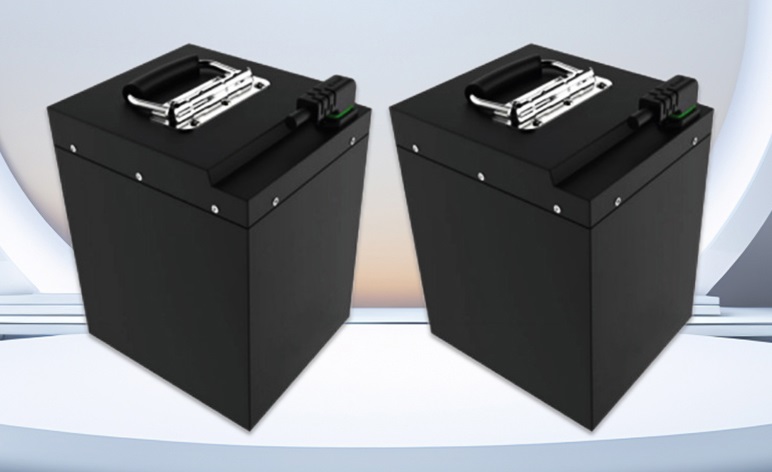
Key findings: Mixed-material handle specification reduces hardware cost by 35-45% compared to all-SUS304 configuration while maintaining equivalent load capacity. Four-handle mounting on 780mm enclosures enables flexible single-person and two-person carrying options without compromising structural integrity.
Here’s why: load distribution on a 780mm enclosure isn’t equal across all four handle positions. The inner pair near the center of gravity takes the brunt of the weight during single-person carries, while the outer handles see lower sustained loads but remain essential for two-person lifts and maneuvering in tight spaces.
Outdoor Power Case Handle Configuration: SUS304 vs Iron-Chrome Mixed Specification
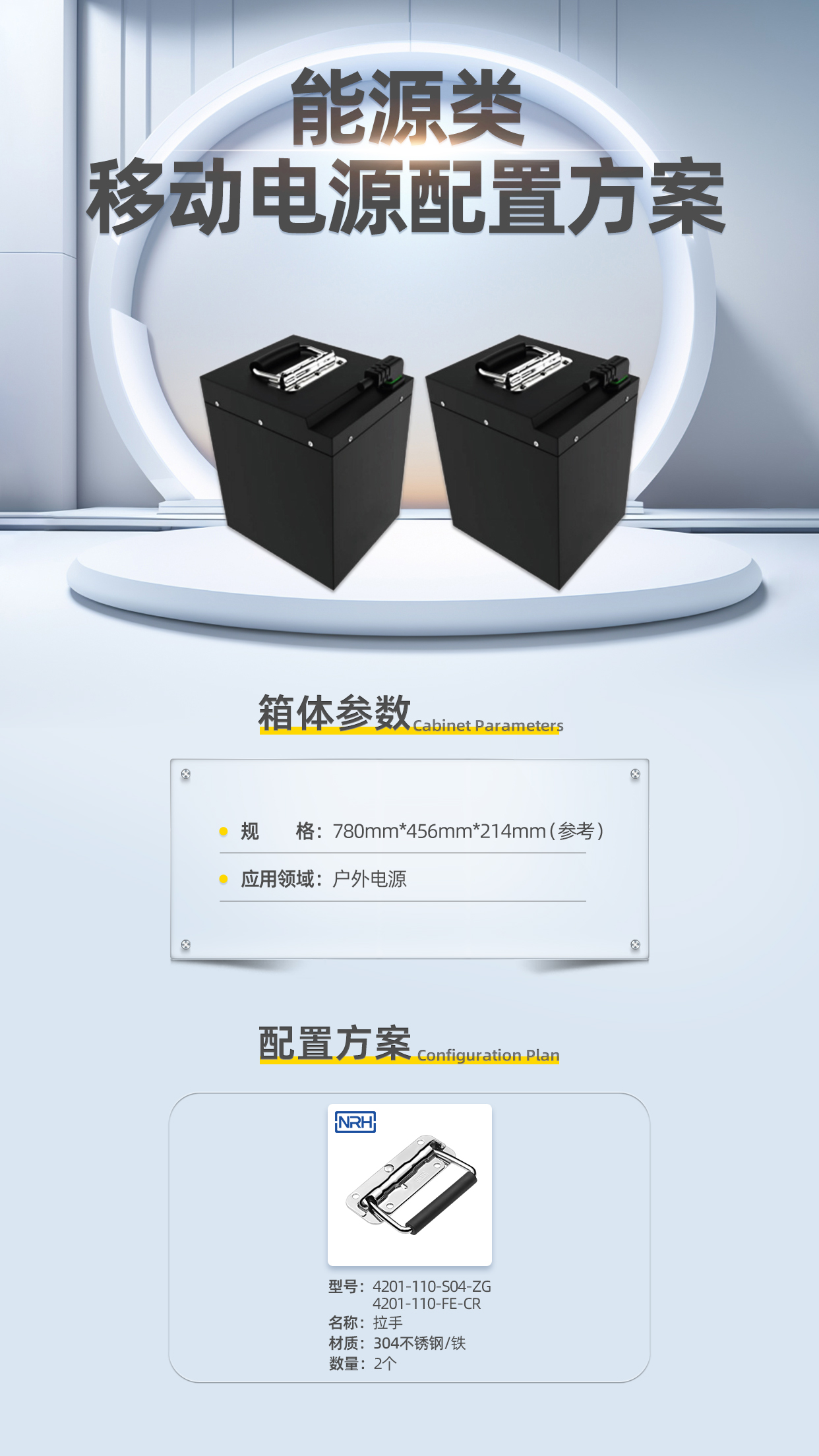
Outdoor power supply enclosure (780x456x214mm) featuring four folding handles in mixed specification: two 4201-110-S04-ZG (SUS304, vibratory grinding) at primary carry positions and two 4201-110-FE-CR (iron/chrome plated) at secondary positions for cost-optimized load distribution across the enclosure structure.
Large-format outdoor power cases require distributed carry points to accommodate both solo operators and two-person lift teams. The enclosure in this study measures 780 mm x 456 mm x 214 mm and uses a tiered handle specification:
- 2x 4201-110-S04-ZG – SUS304 stainless steel, vibratory grinding finish, positioned at primary carry points where maximum load capacity and corrosion resistance are essential
- 2x 4201-110-FE-CR – Iron body with chrome plating, positioned at secondary carry points where structural demands are lower and cost optimization takes priority
This dual-material approach allocates corrosion-resistant SUS304 exactly where environmental exposure and load demand are highest, while using cost-effective iron-chrome at positions with lower mechanical and corrosive stress. The configuration delivers the optimal balance between performance, durability, and total hardware cost for outdoor power equipment applications.
Why Mix Handle Materials on a Single Enclosure?
Not all handle positions on a large rectangular enclosure carry equal load. The handles positioned nearest the case center of gravity take the majority of load during single-person or two-person lifts. Handles at the outer positions contribute less force during normal carrying but remain important during corner lifts, rough-terrain transport, and awkward positioning scenarios.
The 4201-110-S04-ZG in SUS304 provides the highest corrosion resistance in the 42-series lineup. Its vibratory grinding finish produces a uniform matte surface that resists scratching and hides handling marks from daily use. This material specification belongs at primary carry positions exposed to moisture, salt air, thermal cycling, and repeated cleaning cycles throughout the equipment service life.
The 4201-110-FE-CR in iron with chrome plating delivers adequate corrosion resistance at a significantly lower material cost. Both handle models carry a 50 kg load rating per manufacturer catalog data. Mounted at secondary positions, the iron-chrome handles contribute to total carry capacity without demanding premium material specifications at every mounting point on the enclosure.
Material mechanics: why SUS304 at primary positions matters. SUS304 stainless steel achieves corrosion resistance through a self-repairing chromium oxide passive layer that naturally reforms when scratched or damaged. Iron-chrome handles rely entirely on the electroplated chrome layer for protection. Once this plating is compromised during installation, handling, or field use, the exposed iron substrate corrodes rapidly in moisture-prone conditions. This is why SUS304 belongs at positions where load fractions and environmental exposure are highest, while iron-chrome can serve effectively at lower-stress secondary locations.
What happens if you choose wrong? Using iron-chrome on all four handles of a coastal-deployed enclosure may result in visible pitting, handle binding, or structural failure within six months of field use. Specifying all SUS304 adds 35-45% to hardware cost without delivering any performance gain at secondary positions where corrosion risk and load demand are minimal. The mixed-material approach balances cost and reliability precisely: premium material where it earns its keep, cost-effective material where it performs adequately.
Product Specifications
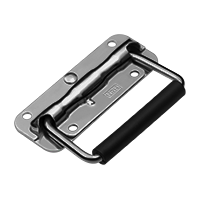
4201-110-S04-ZG: SUS304 stainless steel folding handle with vibratory grinding finish. 50 kg load rating. Ideal for primary carry positions in outdoor environments requiring maximum corrosion resistance.
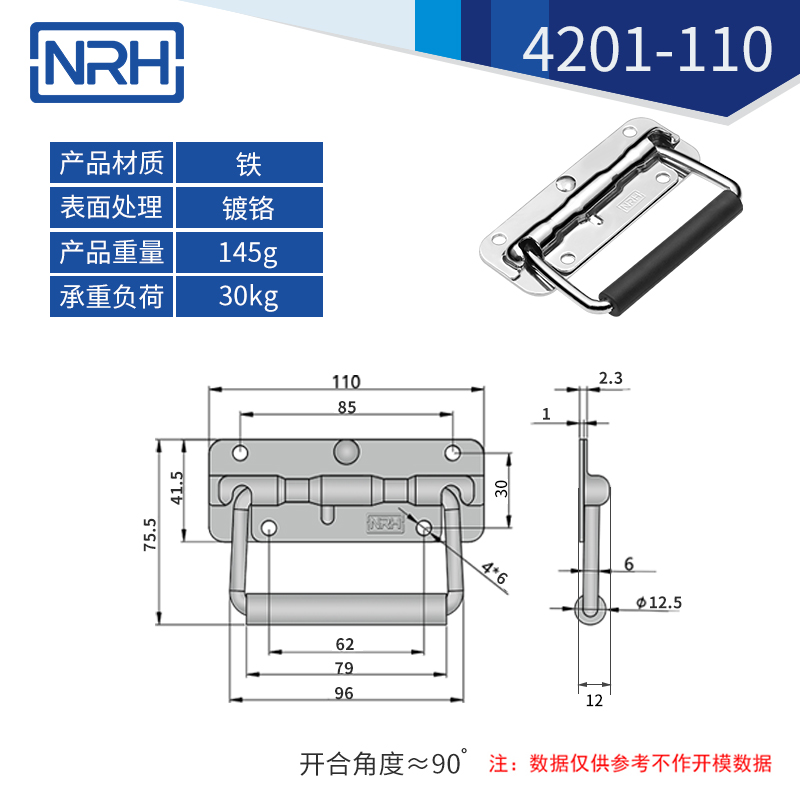
4201-110-FE-CR: Iron folding handle with chrome plating. 50 kg load rating. Cost-effective solution for secondary carry positions in sheltered indoor or covered outdoor environments.
Handle Comparison: Metal Folding vs. Rubber Strap Handles
Metal folding handles and rubber strap handles differ in several ways. Application requirements, load capacity, environmental exposure, grip comfort, and budget usually determine which type makes sense. Here’s how they compare:
| Specification | Metal Folding Handles (4201 Series) | Rubber Strap Handles (4513 Series) |
|---|---|---|
| Material Options | SUS304, Iron/Chrome, Black Coating | PVC, Rubber over metal core |
| Load Capacity | 50 kg per handle | 60 kg per handle (4513-286-PVC-BK) |
| Weight | 122 g (4201-100-S04-LG) | 215 g (4101-132-S04-LG) |
| Folded Profile | 3-8mm above panel surface | Flush mount with strap retraction |
| Grip Surface | U-shaped wire with rubber sleeve | Flexible rubber strap, cushioned grip |
| Corrosion Resistance | Excellent (SUS304); Good (Chrome) | Excellent; UV-resistant PVC construction |
| Return Mechanism | Spring-loaded auto-fold (torsion spring) | Manual retraction or bungee return system |
| Typical Application | Industrial enclosures, equipment cases, outdoor cabinets | Transit cases, tool boxes, portable equipment carriers |
| Cost Index | $ (Iron) to $$$ (SUS304) | $$ (PVC) to $$$ (Premium rubber) |
Installation Guidelines for 4201 Series Surface-Mount Folding Handles
Mounting Hole Pattern
The 4201 series uses a standardized 4-hole rectangular mounting pattern with M5 through-holes. Hole spacing accommodates panel thicknesses from 1.5 mm to 4 mm with standard M5 fasteners. This universal mounting configuration allows the same drilling template to be used regardless of the handle material variant selected.
Fastener Selection by Handle Material
- For SUS304 handles (4201-110-S04-ZG): Use A2-70 (304-grade) stainless steel socket head or flat head screws with matching washers. This prevents galvanic corrosion when dissimilar metals contact in moisture-prone environments.
- For iron/chrome handles (4201-110-FE-CR): Zinc-plated steel or stainless steel fasteners are acceptable. Match fastener corrosion resistance to the expected environmental exposure level.
Panel Preparation Steps
- Mark hole locations using the handle base as a template or the manufacturer drilling jig for accurate positioning
- Drill or punch M5 through-holes; deburr all holes to prevent fastener damage and ensure clean edges
- Clean the panel surface around mounting locations to ensure proper gasket or seal compression if weatherproofing is required
- Position the handle base and insert fasteners from the interior side of the panel for secure mounting
- Torque fasteners to 3-4 Nm for stainless steel fasteners; 2-3 Nm for zinc-plated steel fasteners
- Apply thread-locking compound for high-vibration applications or thermal cycling environments
- Verify handle operation: pull to 90 degrees and confirm spring return functions correctly before final deployment
Galvanic Corrosion Prevention
When mounting metal handles to dissimilar metal panels such as aluminum chassis, use nylon or PVC isolation washers between the handle base and the panel surface. This prevents galvanic corrosion at the metal-to-metal interface and extends service life in moisture-prone environments.
Selection Decision Framework
When to Specify SUS304 (4201-110-S04-ZG)
- Marine or coastal deployment environments with continuous salt air exposure
- Outdoor enclosures exposed to rain, humidity, or thermal cycling throughout the year
- Applications requiring repeated cleaning with water, solvents, or chemical agents
- Primary carry positions bearing the highest load fractions during normal operation
- Long-term installations where maintenance access is limited and reliability is critical
- Equipment expected to operate in harsh industrial environments with airborne contaminants
When Iron/Chrome (4201-110-FE-CR) is Appropriate
- Sheltered outdoor environments without direct precipitation exposure
- Indoor applications with controlled humidity and climate control
- Secondary carry positions with lower mechanical stress and load demands
- Budget-sensitive projects where corrosion exposure risk is minimal
- Temporary or rental equipment with limited service life expectations
- Covered storage and transport applications with controlled environmental conditions
Four-Handle Configuration Rationale for 780mm Enclosures
Cases exceeding 600 mm in length create excessive wrist torque and grip strain with only two handles. Four symmetrically placed handles on the 780 mm case enable multiple carrying configurations:
- Two-person close lift: Use inner pair of handles for tight working spaces and controlled environments
- Two-person wide stance: Use outer handles for improved balance on uneven terrain and rough surfaces
- Single-person drag: Use one inner handle positioned at the center of gravity for efficient transport
- Flexible positioning: Adapt grip selection based on load weight, transport distance, and environmental conditions
Position primary (SUS304) handles at the inner locations nearest the center of gravity where load fractions are highest during normal carrying. Position secondary (iron-chrome) handles at the outer locations where structural demands are lower. This placement strategy ensures the most corrosion-resistant hardware handles the highest load fractions during everyday use.
Dual-Material Specification Best Practices
Document the following parameters for each mounting position when specifying mixed-material handle configurations on outdoor equipment enclosures:
- Handle model, material, and surface finish specification for every mounting location
- Expected load contribution at each position under normal and extreme loading scenarios
- Corrosion environment classification: indoor, sheltered outdoor, marine, or industrial chemical exposure
- Panel thickness at each mounting location to verify fastener engagement depth and pullout resistance
- Fastener specification matched to handle base material to prevent galvanic corrosion at the mounting interface
- Inspection criteria for chrome-plated handles: verify plating integrity before field deployment
Environmental Considerations for Outdoor Handle Selection
Outdoor power equipment operates in conditions that indoor enclosures never encounter. These environmental factors significantly impact handle material selection and expected service life:
- UV radiation: Degrades polymer coatings on metal surfaces over time, causing chalking, fading, and surface embrittlement
- Thermal cycling: Creates condensation inside joints and around fasteners, accelerating corrosion at metal interfaces
- Moisture exposure: Rain, humidity, and water splashing accelerate corrosion on unprotected steel and iron substrates
- Salt air (coastal): Accelerates corrosion on unprotected steel, iron, and poorly plated components by orders of magnitude
SUS304 stainless steel handles resist corrosion through a self-repairing chromium oxide surface layer that forms naturally on the metal surface. This passive layer self-repairs when scratched or damaged, providing long-term corrosion resistance without additional coatings. Iron-chrome handles rely entirely on the chrome plating layer for corrosion protection. If chrome plating is damaged during installation, handling, or use, the iron substrate becomes exposed and will corrode rapidly in moisture-prone conditions.
FAQ
Why use two different handle materials instead of specifying all SUS304?
SUS304 stainless steel commands a significant material premium over iron-chrome. On large cases requiring four or more handles, upgrading every position to SUS304 adds unnecessary expense at locations where load demand and environmental exposure are lower. A tiered specification allocates premium material only where it earns its cost through superior corrosion resistance and load capacity. The remaining positions can use cost-effective iron-chrome without compromising overall system performance or safety margins.
Vibratory grinding (ZG) finish explained
Vibratory grinding uses vibrating abrasive media to produce a uniform matte surface on metal components. The process removes sharp edges, minor surface defects, and creates consistent reflectivity across the entire part. ZG finish on SUS304 provides better corrosion resistance than bright finish because the matte surface hides micro-scratches that can initiate corrosion propagation. The uniform surface also provides better paint adhesion if subsequent coating is required.
Can iron/chrome handles survive outdoor conditions?
Iron-chrome handles perform adequately in sheltered outdoor environments without direct precipitation exposure. For direct outdoor exposure to rain, humidity, or coastal salt air, specify SUS304 handles at all mounting positions. Chrome plating on iron can pit and rust if damaged during installation or if prolonged moisture exposure occurs. Inspect all iron-chrome handles for plating damage before field deployment and throughout the equipment service life.
Folded height of 4201 series handles
The 4201 series sits approximately 3-8 mm above the panel surface when folded flat, depending on the specific model variant. This standard surface-mount profile works for most enclosure applications. For zero-height stacking requirements where cases must nest flush without any gap, consider the 4101 recessed mounting series instead.
How many handles does a 780x456x214mm case require?
Four handles are recommended for this enclosure size. Cases over 600 mm in length benefit from four symmetrically placed handles to distribute load across both hands and reduce wrist torque during lifting operations. Two handles on a case this size create an uncomfortable grip span and uneven load distribution that increases operator fatigue and injury risk during extended use.
Do mixed-material handles affect case aesthetics?
When both handle models use the same form factor and finish color family, the visual difference is minimal during normal use. The 4201-110-S04-ZG (brushed stainless) and 4201-110-FE-CR (chrome) have similar reflective brightness and metallic appearance. However, specifying BK2 (black coating) on one material while using chrome on another creates visible contrast that may affect the overall appearance of finished enclosures.
Mounting hole pattern across 4201 variants
Yes, all 4201-110 variants share the same 4-hole rectangular mounting pattern with M5 through-holes. This interchangeability allows mixing material grades on the same case without changing the panel drilling template or mounting hardware. Base plate dimensions are identical across all material variants.
Recommended fasteners for 4201-110-S04-ZG
Use M5 stainless steel socket head or flat head screws with matching washers for SUS304 handle installations. A2-70 (304-grade) stainless fasteners match the SUS304 handle material and prevent galvanic corrosion at the fastener-handle interface. Apply thread-locking compound for high-vibration environments or thermal cycling applications where fastener loosening is a concern.
Load capacity of the 4201 series handles
The 4201 series handles carry a 50 kg load rating per manufacturer catalog data for both SUS304 and iron-chrome variants. This rating applies when handles are properly mounted to panels meeting the specified thickness range of 1.5-4mm using the recommended M5 fasteners. For applications involving dynamic loading, shock, or vibration, apply an appropriate safety factor and consider upgrading to higher-capacity mounting solutions.
Need help choosing? Contact the NRH Box Hardware team for application-specific handle configuration recommendations tailored to your enclosure specifications and environmental requirements.
Browse the complete NRH handle product range including folding handles, strap handles, recessed handles, and spring-loaded solutions for every application requirement.