

Why Tool Box Latches Fail (And How We Fixed It)
Tool boxes take a beating. They get dropped, stacked, hauled to job sites, and exposed to dust, moisture and constant vibration. The latch is usually the first part to break — and when it does, your tools are exposed, your hardware gets scattered, and your workday grinds to a halt.
We worked with a tool box manufacturer that was facing exactly this problem. Their standard latches kept failing on mid-size tool chests (17″-24″), leading to warranty claims and customer complaints. After testing multiple options, they switched to the NRH nickel plated draw latch — and the results were immediate.
This case study walks through the problem, the solution, and what you need to know if you’re upgrading latches for your own tool boxes or storage cases.
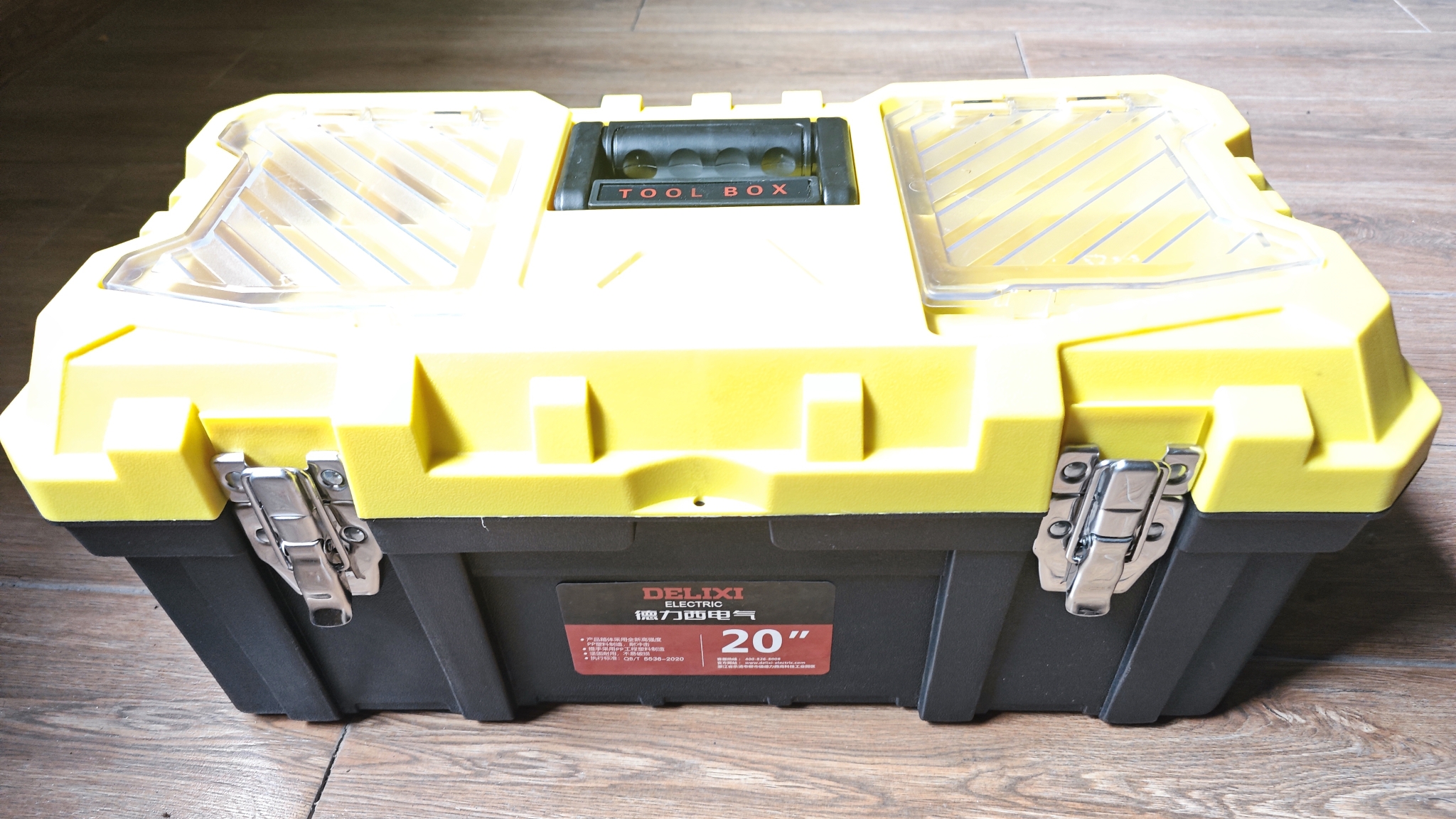
20-inch steel tool chest upgraded with heavy duty draw latch
Who This Latch Is For
This nickel plated draw latch is designed for medium to large metal boxes and cases where durability and secure closure matter. It works best for:
- Tool box manufacturers upgrading stock latches on 17″-24″ steel and aluminum tool chests
- Hardware storage brands looking for a reliable, cost-effective latch for mid-range product lines
- Case builders producing aluminum cases, flight cases, instrument cases and equipment transport boxes
- Industrial storage facilities where parts bins and tool cabinets need vibration-resistant closures
- Maintenance teams and workshops replacing broken latches on existing tool boxes and storage cabinets
If you’re working with small plastic storage boxes (under 12″), this latch may be oversized. For heavy-duty industrial cabinets over 30″, we recommend stepping up to a larger draw latch with higher load capacity.
The Problem: Failing Latches on Mid-Size Tool Chests
A tool box manufacturer came to us with a consistent pattern of customer complaints: latches on their 20″ and 24″ steel tool chests were failing within the first year of heavy job site use.
After examining the returned units, the engineering team identified three root causes:
- Thin gauge construction: Budget latches made from 0.8mm stamped steel couldn’t handle the dynamic load of a fully loaded tool box being carried or truck-transported.
- Two-point mounting failure: Most stock latches only used two mounting points, causing stress concentration at the screw holes — the latches would tear out of the box wall under impact.
- Poor corrosion resistance: Cheap zinc plating wore off after 3-6 months of outdoor or humid workshop use, leading to rust and seized mechanisms.
The cost impact was real: warranty replacements, return shipping, and brand reputation damage from a part that costs less than a dollar at retail.
The manufacturer needed a latch upgrade that was robust enough for daily job site use, easy to install on existing box designs, and priced for mid-range product lines.
The Solution: Nickel Plated Steel Draw Latch
The engineering team tested five different latch designs before selecting the NRH heavy duty draw latch. Here’s how it compared to their previous stock latch:
| Factor | Previous Stock Latch | NRH Draw Latch (6417-78) |
|---|---|---|
| Base Material | 0.8mm stamped steel | Solid iron construction |
| Finish | Zinc plated (thin coating) | Nickel plated (durable finish) |
| Rated Tensile Load | ~80-100N (not rated) | 196N (rated) |
| Mounting Points | 2-screw top mount | 4-point counterbore base |
| Weight | ~15-20g | 42g |
| Mounting Options | Screws only | Screws or rivets |
The 4-point counterbore base was the deciding factor. By distributing mounting stress across four holes instead of two, the latch handles impact and vibration loads far better than top-mounted designs. The counterbore design also means screw heads sit flush with the base surface — no sharp edges to catch on gloves or scratch other surfaces.
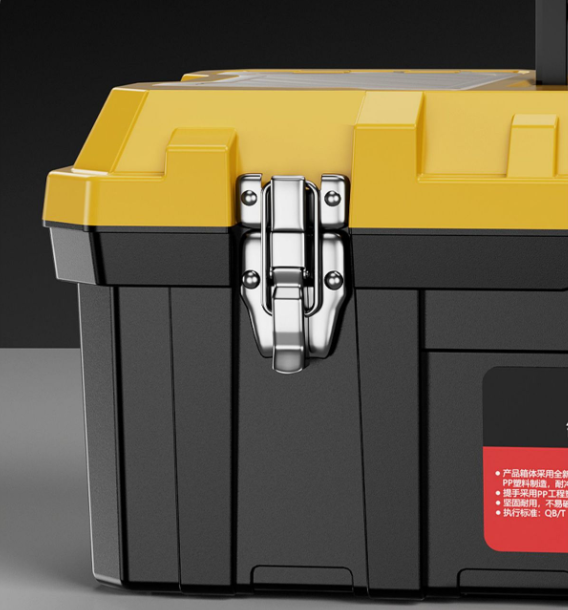
Close-up: 4-point counterbore base with nickel plated finish
Product Specifications
The 6417-78 draw latch is built for medium to large metal boxes and cases. Here are the key technical specifications:
| Specification | Value |
|---|---|
| Model | 6417-78 |
| Material | Iron with nickel plating |
| Overall Length | 78mm |
| Weight | 42g |
| Rated Tensile Load | 196N |
| Mounting Holes | 4 counterbore holes (3.8mm / 8mm) |
| Installation Method | Screws or rivets |
| Surface Finish | Nickel plated (FE-NI) |
Material Comparison: Nickel Plated Iron vs Stainless Steel
When choosing a hasp latch for tool boxes and storage cases, material selection is the biggest decision. Here’s how nickel plated iron compares to stainless steel:
| Factor | Nickel Plated Iron | Stainless Steel |
|---|---|---|
| Corrosion Resistance | Good — nickel plating protects against workshop moisture and normal outdoor exposure | Excellent — 304 or 316 stainless for marine, coastal or chemical environments |
| Cost | Budget-friendly — ideal for mid-range tool boxes and high-volume production | Premium — roughly 2-3x the cost of nickel plated iron |
| Strength & Durability | Solid construction, 196N rated load for standard industrial use | Comparable strength, better for heavy impact and extreme conditions |
| Appearance | Bright metallic finish, matches chrome and zinc hardware | Brushed or polished stainless, modern industrial look |
| Best For | Tool boxes, industrial storage, equipment cases in moderate environments | Marine hardware, food equipment, medical cases, coastal outdoor use |
For most tool box and general industrial storage applications, nickel plated iron delivers the best balance of durability and cost. It’s the sweet spot for manufacturers building mid-range tool chests and storage cases for workshops, construction sites and factory floors.
Applications Beyond Tool Boxes
While this latch is commonly used for hardware tool boxes, its 78mm size and 196N load rating make it versatile for many types of cases and storage solutions:
- Aluminum tool cases — perfect for 16″-24″ aluminum briefcase-style tool carriers
- Flight cases and road cases — secures equipment panels and access doors on transport cases
- Instrument cases — reliable closure for musical instrument, meter and gauge carrying cases
- Military and tactical storage — durable enough for gear boxes and field equipment cases
- Industrial parts cabinets — keeps drawers and bin access doors closed during forklift transport
- Wood and metal storage chests — adds a professional, heavy-duty look to custom storage builds
As long as the box wall can support 4 mounting points and the total load stays within the 196N rating, this latch works across a wide range of metal case applications.
What Happens If You Choose the Wrong Latch
Picking the wrong latch for your tool box or case doesn’t just mean a quick trip to the hardware store. It has real consequences for product quality and customer satisfaction:
1. Premature Failure and Warranty Costs
A latch that’s undersized or made from thin material will break under normal use. If your box sells for $50 and the latch costs $0.50, that’s a tiny part that can sink your profit margin on every warranty return. Cheap latches often fail at the mounting holes — the stress of opening and closing rips the screw holes out of thin-gauge base plates.
2. Security and Safety Risks
Latches that don’t stay closed mean tools or parts can fall out during transport. On a job site, a wrench falling from a truck tool box becomes a hazard. If you’re carrying a tool chest up a ladder and a latch pops, the contents can spill — creating a fall risk for you and anyone below.
3. Corrosion and Seized Mechanisms
Thin zinc plating wears off quickly in humid or dusty environments. Once the base metal is exposed, rust sets in, and the latch spring or pivot starts to seize. A latch that won’t open smoothly is almost as bad as one that won’t stay closed — especially when you need to grab a tool fast on a job site.
4. Hidden Replacement Costs Add Up
Budget latches save money upfront, but if you’re replacing them every 6-12 months, you’re actually spending more over time. Factor in labor, downtime waiting for replacements, and the inconvenience of a broken tool box, and the “cheaper” option costs more.
5. Brand Reputation Damage
For tool box manufacturers and case builders, the latch is one of the most frequently touched parts of your product. It’s how customers interact with your box every single day. A flimsy latch makes the entire product feel cheap — even if the box itself is well-built.
How to Install the Draw Latch
Installing a draw latch on a tool box or metal case takes about 5-10 minutes per latch. You can use screws (for thicker box walls) or rivets (for thinner sheet metal).
Tools You’ll Need
- Drill with metal drill bit (3.5mm for pilot holes)
- Screwdriver or rivet gun
- Marker or center punch
- Measuring tape or ruler
- Clamp (optional, for holding the latch in place while marking)
5-Step Installation
- Mark the position. Hold the latch base where you want it on the box body. Mark the four mounting holes with a marker or center punch.
- Drill pilot holes. Drill 3.5mm holes at each marked position. Deburr the holes with a file for a clean finish.
- Mount the base. Attach the latch base with screws or rivets. The counterbore design means screw heads sit flush with the base surface.
- Align the hook. Close the latch to find the exact hook position on the lid. Mark and drill the hook mounting holes.
- Test and adjust. Install the hook, then test the latch. Adjust the hook position slightly if needed to get the right tension — the latch should click firmly into place.
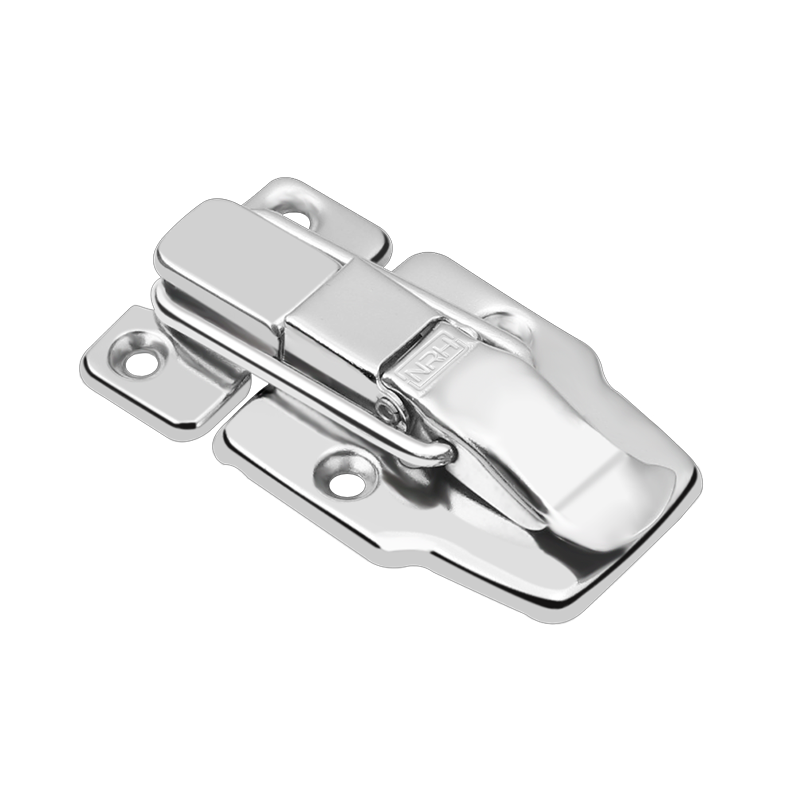
6417-78 draw latch technical drawing with dimensions
Pro tip: For thin sheet metal boxes (under 1mm), use rivets instead of screws for a more secure hold that won’t pull out. For wooden tool boxes, use wood screws with washers to distribute the load.
Frequently Asked Questions
Q: What size tool boxes does this latch fit?
A: The 78mm draw latch works best on medium to large tool boxes and cases, roughly 17″-24″ (43-61cm) in length. It’s suitable for steel, aluminum and wooden boxes where the wall can support 4 mounting points.
Q: Can I use this latch for outdoor storage boxes?
A: Yes, the nickel plated finish provides good corrosion resistance for normal outdoor and workshop use. For coastal areas or extremely humid environments, we recommend stainless steel latches for better long-term corrosion protection.
Q: How much weight can this latch hold?
A: The rated tensile load is 196N, which is approximately 20kg or 44 lbs of pulling force. This is a pull-strength rating, not a weight capacity — the total weight a tool box can hold depends on the box construction, number of latches, and how the load is distributed. For most mid-size tool chests, two latches (one on each side) provide secure closure.
Q: How do I install it on thin sheet metal?
A: For thin metal boxes (0.5-1.2mm), use pop rivets instead of screws. Rivets create a permanent, vibration-resistant connection that won’t strip or pull out of thin metal. Drill the correct size hole for your rivet diameter and set with a rivet gun.
Q: Is this latch lockable?
A: This model doesn’t have a built-in lock. If you need locking capability, you can add a small padlock through the loop if your design allows, or choose a lockable draw latch model. Contact us for lockable options.
Q: What’s the difference between this and a toggle latch?
A: A draw latch (also called a pull-down latch or hasp latch) pulls the lid down tightly as you close it, creating a sealed fit. A toggle latch uses an over-center mechanism that snaps into place. Draw latches are simpler, more compact, and better for tool boxes where you want a low profile. Toggle latches provide more clamping force but are bulkier.
Final Takeaway
Upgrading from a budget two-screw latch to a heavy duty 4-point counterbore draw latch makes a noticeable difference in tool box quality and durability. The nickel plated iron construction gives you solid performance at a price that works for mid-range product lines — much better corrosion resistance than zinc plating, without the premium cost of stainless steel.
For tool box manufacturers, case builders, and industrial storage applications, it’s a small upgrade that pays off in fewer warranty claims, happier customers, and a better overall product feel.
Looking for the right latch for your specific box or case? Contact NRH Box Hardware for product recommendations and samples.