

Why Industrial Machinery Demands Durable, Vibration-Resistant Hardware
Applicable Buyers
Industrial equipment manufacturers, machinery producers, field service equipment fabricators, and industrial case manufacturers requiring durable, corrosion-resistant hardware for vibration-prone industrial machinery.
Key Finding
Two industrial machines – a threaded parts winding machine and a portable spark erosion machine – demonstrate different hardware approaches. The winding machine uses 1 latch and 2 folding handles for access and handling, while the spark erosion machine uses 2 spring-assisted toggle latches for vibration-resistant closure. Both applications highlight the importance of material selection and spring-assisted designs for industrial environments.
What Happens If You Choose Wrong
Non-spring-assisted latches on industrial machinery can vibrate open during operation, exposing internal components to dust and debris. Handles that do not lie flat snag on workbenches and equipment during transport. Carbon steel hardware corrodes in workshop environments, seizing fasteners and making maintenance access difficult.
On any given day in an industrial workshop, machines vibrate, components move, and hardware must hold fast. For equipment that operates in these demanding environments, the right hardware is not a luxury – it is a requirement for reliable operation, safe handling, and efficient maintenance.
This case examines two distinct industrial machines: a threaded parts winding machine and a portable spark erosion machine. Each uses different hardware configurations tailored to its specific operational requirements – yet both demonstrate the importance of material selection, spring-assisted designs, and space-efficient handling features.
Machine 1: Threaded Parts Winding Machine
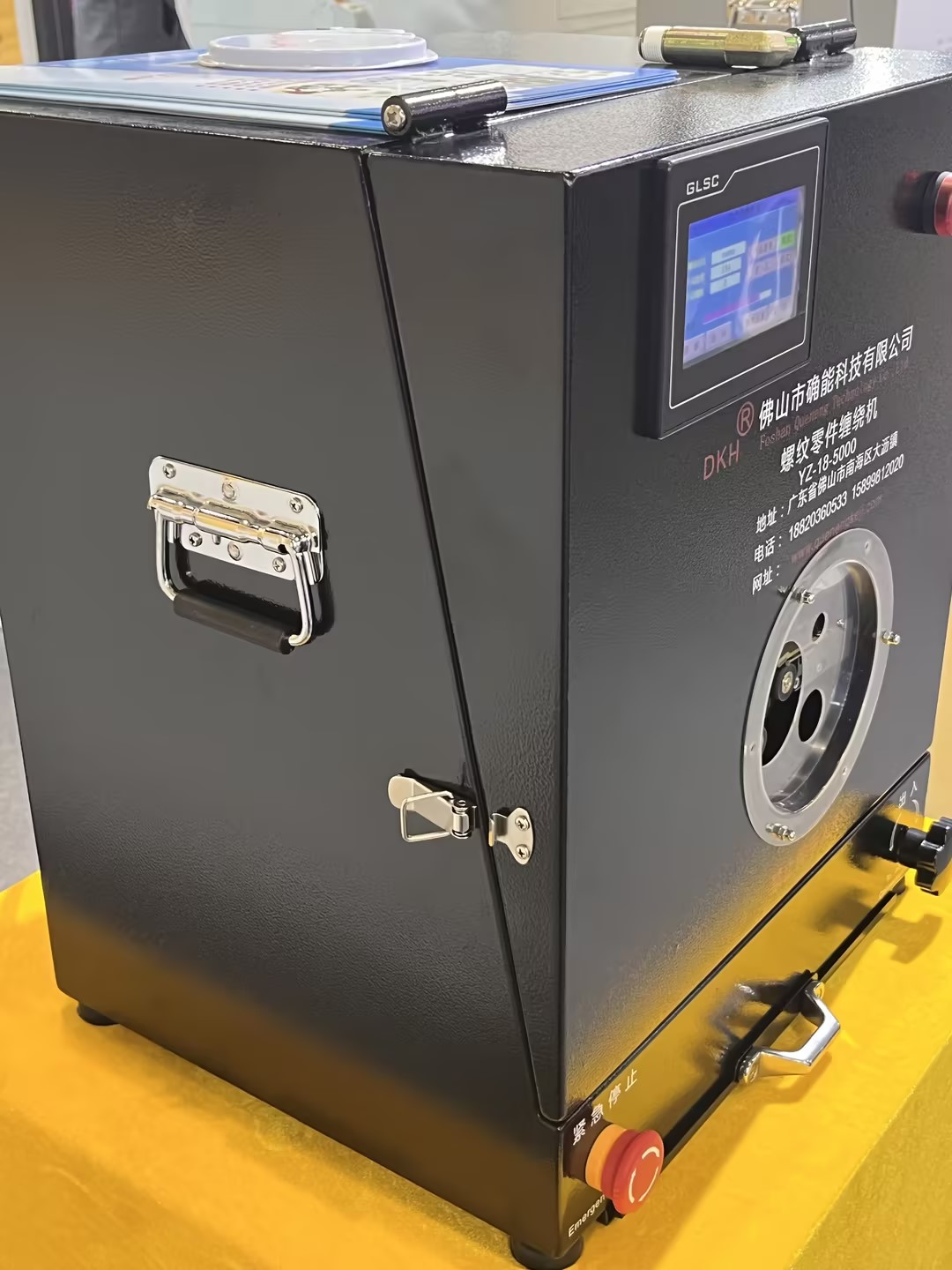
Threaded parts winding machine with 304 stainless steel latch and folding handles
The threaded parts winding machine is a specialized industrial device used for winding thread, wire, or other materials onto components. The machine is designed for workshop use, requiring secure access panels and ergonomic handling features.
Hardware Configuration
| Component | Model | Material | Finish | Spec | Qty |
|---|---|---|---|---|---|
| Latch | 5104-56 | Chrome-Plated Steel | Chrome-Plated | Spring-assisted | 1 |
| Folding Handle | 4201-100 | 304 Stainless Steel | Vibratory Polished | Spring-loaded auto-return | 2 |
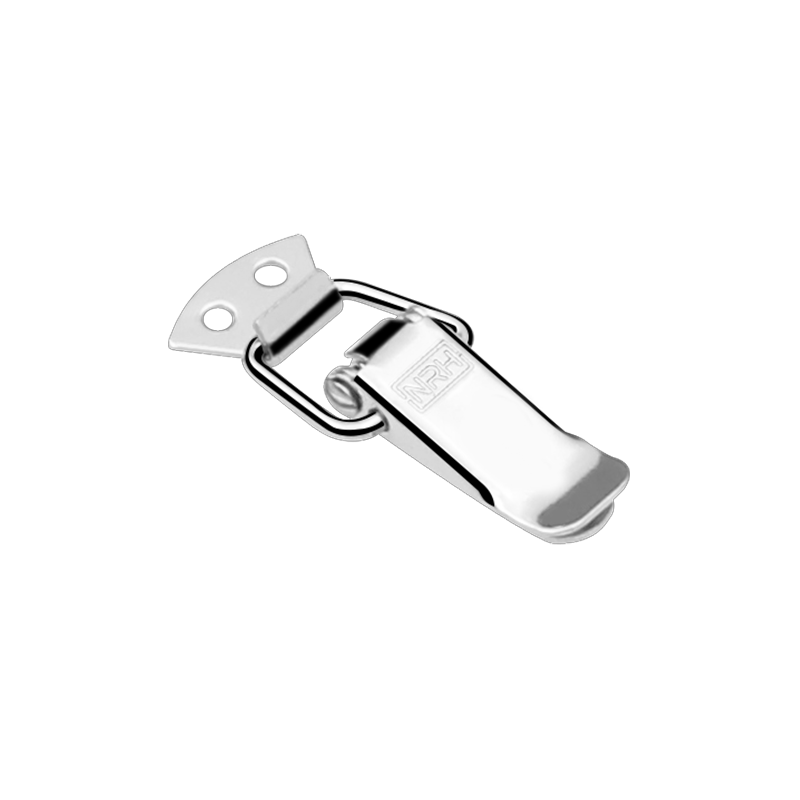
5104-56 Latch – chrome-plated steel, spring-assisted
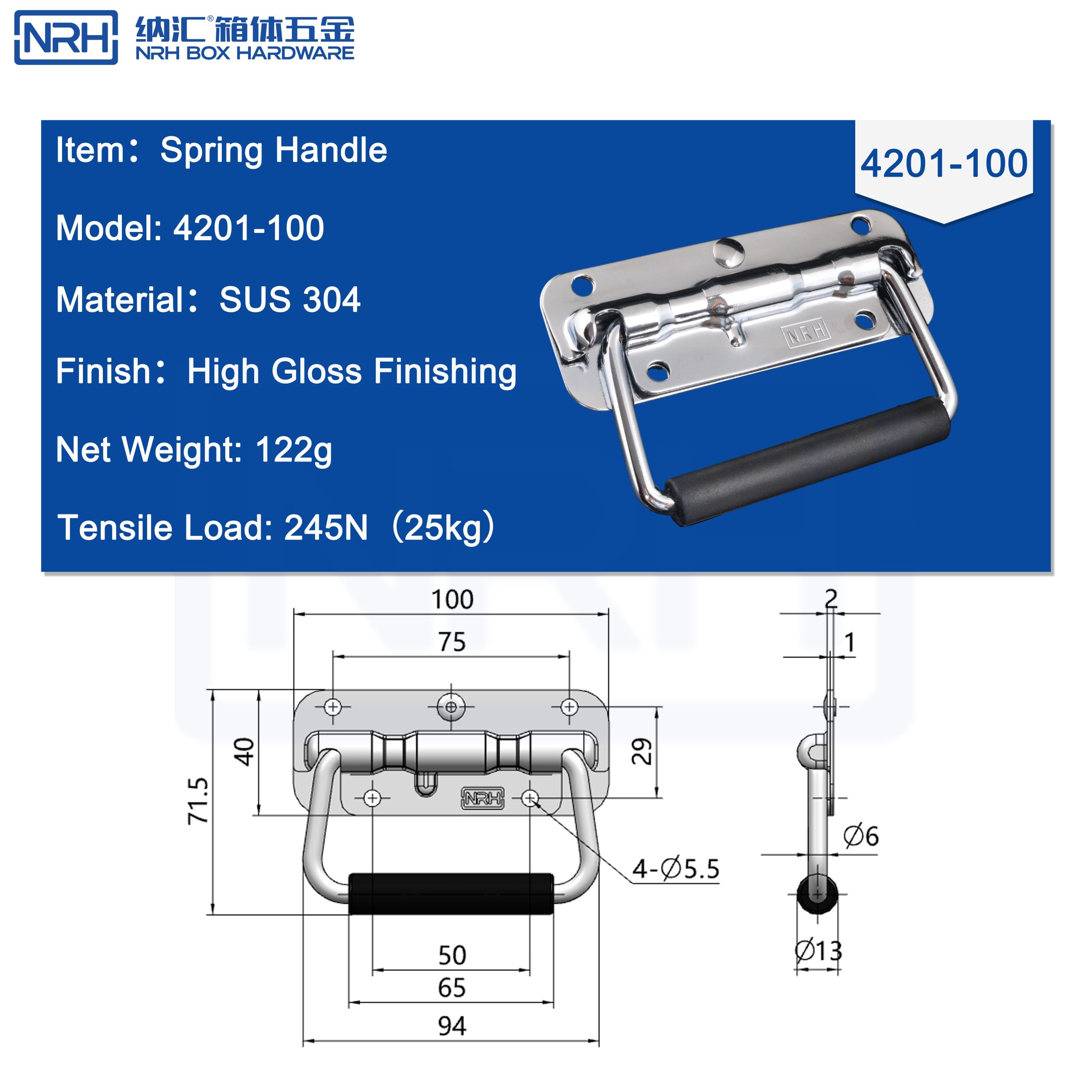
4201-100 Folding Handle – 304 stainless steel, spring-loaded auto-return
Why This Configuration Works
One latch (5104-56) for secure panel closure. The 5104-56 latch provides a single securing point for the machine’s access panel. The internal spring mechanism maintains clamping force under vibration and provides automatic return when opened. This ensures the panel remains securely closed during operation while allowing quick access for maintenance and adjustments.
Two folding handles (4201-100) for ergonomic handling. The 4201-100 folding handles feature a spring-loaded auto-return mechanism that keeps the handle flat against the machine body when not in use. This is essential for workshop equipment that may be moved or repositioned – protruding handles would snag on workbenches and equipment. The folding design also prevents damage to the handles themselves during storage. The handles provide comfortable grip points for lifting and positioning the machine.
Material selection for workshop durability. The 304 stainless steel folding handles provide corrosion resistance for long-term reliability in workshop environments. The vibratory polished finish provides a smooth surface that is easy to clean and resists the accumulation of workshop debris. The chrome-plated steel latch offers adequate corrosion resistance for its application while providing cost efficiency.
Machine 2: Portable Spark Erosion Machine (EDM-1500C)
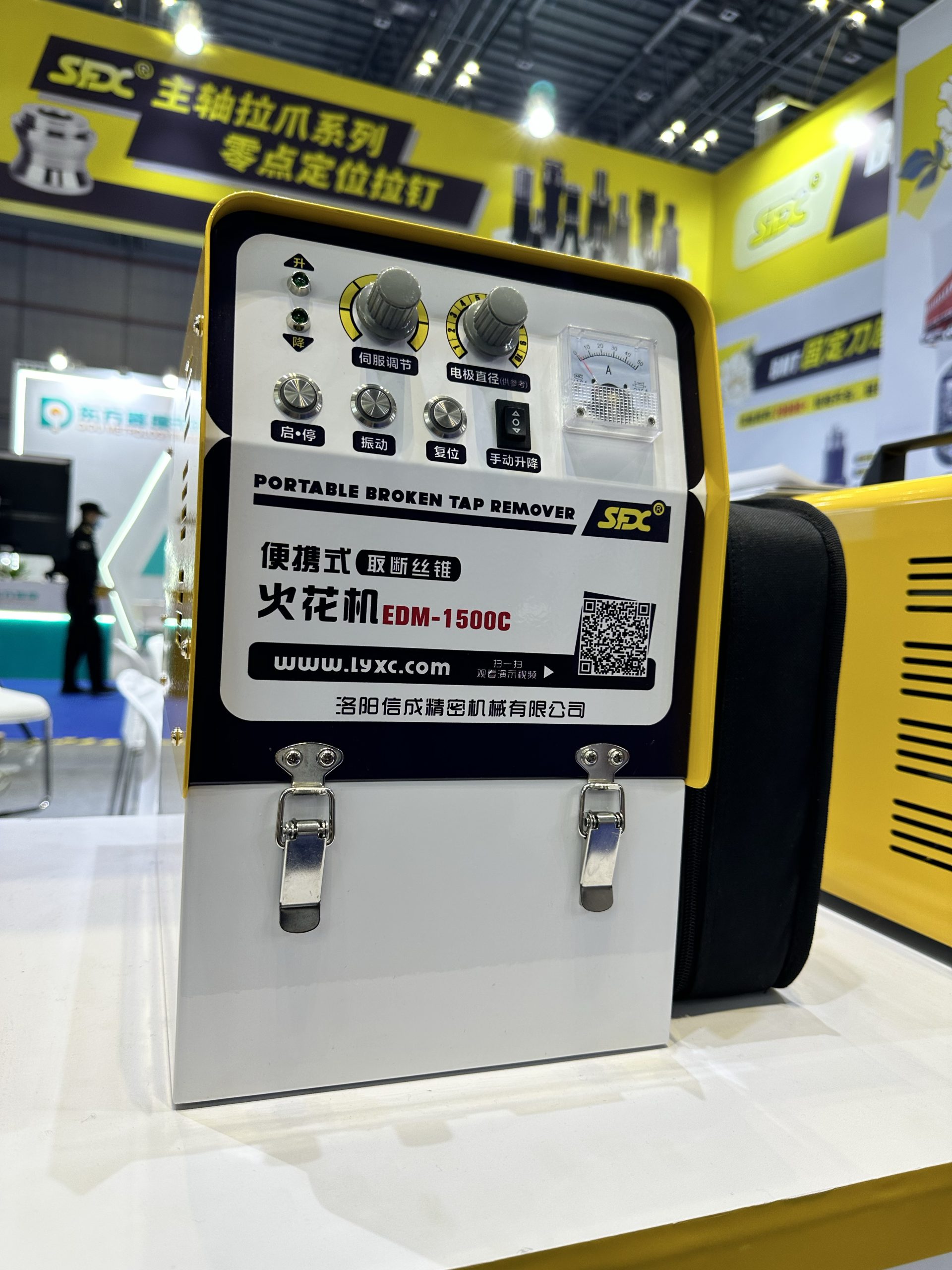
Portable spark erosion machine (EDM-1500C) with 304 stainless steel toggle latches
The portable spark erosion machine (model EDM-1500C) is designed for removing broken taps, drills, and fasteners from workpieces using electrical discharge machining technology. The machine is highly portable, moving between job sites, and operates with high-frequency vibrations that place unique demands on its hardware.
Hardware Configuration
| Component | Model | Material | Finish | Spec | Qty |
|---|---|---|---|---|---|
| Toggle Latch | 5101-96 | 304 Stainless Steel | Vibratory Polished | Spring-assisted, 392N tensile load | 2 |
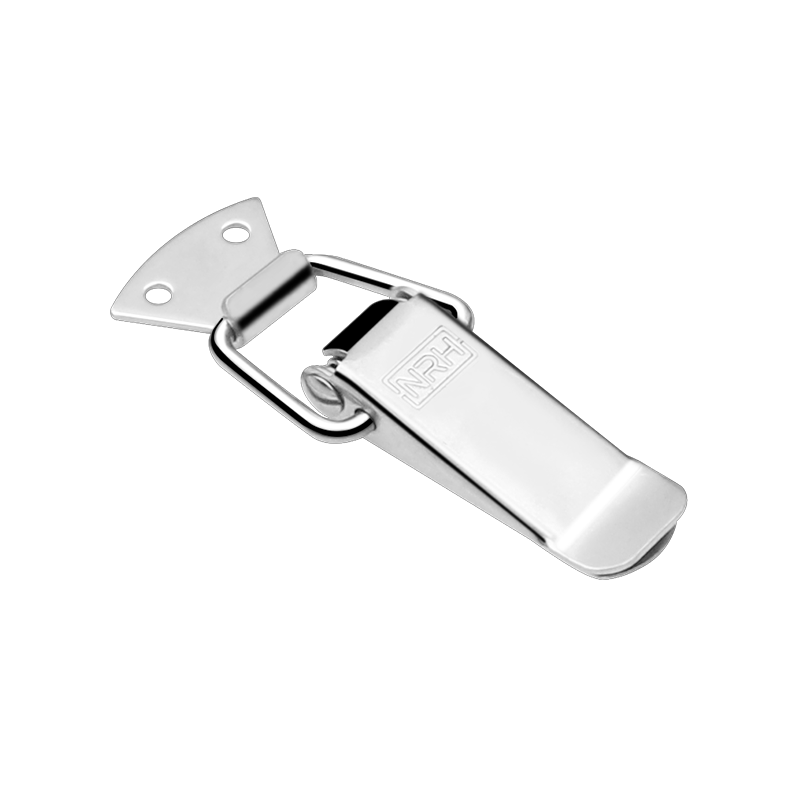
5101-96 Toggle Latch – 304 stainless steel, spring-assisted, 392N tensile load
Why This Configuration Works
Two spring-assisted toggle latches (5101-96) for vibration resistance. The 5101-96 toggle latch features an internal spring mechanism that provides automatic return and maintains clamping force under vibration. This is critical for spark erosion machines, which generate high-frequency vibrations during operation. Without spring assistance, latches can vibrate open, exposing internal components to dust and debris. The 392N tensile load rating ensures secure closure even under vibration. Two latches provide redundancy – if one latch is inadvertently left unlatched, the second maintains closure.
304 stainless steel for workshop durability. The 5101-96 is constructed from 304 stainless steel with a vibratory polished finish, providing corrosion resistance that ensures long-term reliability in workshop environments. The smooth finish is easy to clean and resists the accumulation of workshop debris.
Comparative Analysis
| Factor | Threaded Parts Winding Machine | Portable Spark Erosion Machine |
|---|---|---|
| Primary hardware need | Access + handling | Vibration-resistant closure |
| Latches used | 5104-56 (1) | 5101-96 (2) |
| Handles used | 4201-100 (2) | None |
| Material | Chrome-plated steel + 304 SS | 304 Stainless Steel |
| Key design feature | Folding handles for space efficiency | Spring-assisted vibration resistance |
Product Specifications
5101-96 – Toggle Latch (304 Stainless Steel)
This spring-assisted toggle latch provides secure closure for access panels on industrial equipment. The internal spring mechanism maintains clamping force under vibration and provides automatic return when opened.
| Parameter | Specification |
|---|---|
| Model | 5101-96 |
| Type | Toggle Latch (Spring-Assisted) |
| Material | 304 Stainless Steel |
| Finish | Vibratory Polished |
| Tensile Load | 392N (verified from NRH product specification drawings) |
| Spring Mechanism | Internal spring – automatic return, vibration resistance |
| Application | Industrial equipment, machine enclosures, portable tools |
5104-56 – Latch (Chrome-Plated Steel)
This spring-assisted latch provides secure closure for access panels on industrial equipment. The internal spring mechanism maintains clamping force under vibration and provides automatic return when opened.
| Parameter | Specification |
|---|---|
| Model | 5104-56 |
| Type | Latch (Spring-Assisted) |
| Material | Chrome-Plated Steel |
| Finish | Chrome-Plated |
| Spring Mechanism | Internal spring – automatic return, vibration resistance |
| Application | Industrial equipment, machine enclosures, portable tools |
4201-100 – Folding Handle (304 Stainless Steel)
This folding handle features a spring-loaded auto-return mechanism that keeps the handle flat against the equipment body when not in use. The 304 stainless steel construction offers durability and corrosion resistance for workshop environments.
| Parameter | Specification |
|---|---|
| Model | 4201-100 |
| Type | Folding Handle (Spring-Loaded Auto-Return) |
| Material | 304 Stainless Steel |
| Finish | Vibratory Polished |
| Spring Mechanism | Spring-loaded auto-return to flush |
| Application | Portable equipment, industrial machines, transport cases |
Key Takeaways
- Industrial machines require hardware tailored to their specific operating conditions – vibration-prone equipment needs spring-assisted latches, while equipment that is frequently moved needs folding handles.
- Threaded parts winding machines benefit from folding handles (4201-100) that lie flat when not in use, saving space and preventing snagging.
- Portable spark erosion machines require spring-assisted toggle latches (5101-96) that resist vibration-induced opening during high-frequency operation.
- Material selection matters – 304 stainless steel provides corrosion resistance for workshop environments, while chrome-plated steel offers a cost-effective alternative for less demanding applications.
- Spring-assisted designs improve reliability by maintaining clamping force under vibration and providing automatic return when opened.
- Multiple latch points provide redundancy – two 5101-96 latches on the spark erosion machine ensure secure closure even if one latch is inadvertently left unlatched.
Frequently Asked Questions
Why do different machines use different latch types?
Hardware selection depends on the machine’s operating conditions. Vibration-prone equipment like spark erosion machines requires spring-assisted latches that maintain clamping force under vibration. Equipment that is opened less frequently or experiences less vibration may use simpler latch designs for cost efficiency.
What is the difference between the 5101-96 and 5104-56 latches?
The 5101-96 is a toggle latch made of 304 stainless steel with a 392N tensile load rating, designed for primary securing points on vibration-prone equipment. The 5104-56 is a latch made of chrome-plated steel, suitable for access panels where less securing force is required. Both feature internal spring mechanisms that resist vibration-induced opening.
Why use folding handles on industrial equipment?
Folding handles like the 4201-100 lie flat against the equipment body when not in use, preventing snagging during transport and storage. This is essential for workshop equipment that may be moved or repositioned frequently. Fixed handles would protrude, potentially catching on workbenches, equipment, or operator clothing.
Why stainless steel for industrial equipment hardware?
304 stainless steel provides excellent corrosion resistance for workshop environments where equipment is exposed to dust, coolant mist, and occasional impacts. Unlike carbon steel, stainless steel’s corrosion resistance is inherent and does not rely on a coating that can be scratched or worn away.
How many latches does an industrial machine need?
The number of latches depends on the panel size and the operating environment. For vibration-prone equipment, multiple latches provide redundancy and even closure pressure. The portable spark erosion machine uses two 5101-96 latches for redundancy. For equipment with smaller access panels, a single latch may be sufficient.
What is the load rating of the 5101-96 toggle latch?
The 5101-96 toggle latch has a tensile load rating of 392N (verified from NRH product specification drawings). This provides secure closure for industrial equipment access panels under normal operating conditions.
Need Help Choosing?
Specifying hardware for industrial equipment requires balancing vibration resistance, corrosion resistance, and handling requirements. The two configurations examined here – the threaded parts winding machine with 1 latch and 2 folding handles, and the portable spark erosion machine with 2 toggle latches – demonstrate that hardware selection must be tailored to each machine’s specific operating conditions.
NRH Box Hardware supplies stainless steel latches and folding handles for industrial equipment, machine enclosures, and portable tools. For technical specifications, material certifications, or configuration guidance tailored to your equipment requirements, contact the engineering team:
Email: nrh-gz@nrh.cn
WhatsApp: +86 180 1797 5137
NRH Box Hardware
Room 1703-1704, Zhongji Building, No. 819 Yinxiang Road, Nanxiang Town, Jiading District, Shanghai, China