

What Is a Lockable Toggle Latch? Adding Security to Standard Toggle Hardware
A lockable toggle latch is a standard toggle latch modified with an integrated locking mechanism. The lock prevents unauthorized opening of the clasp, adding a security layer to enclosures, cabinets, and transit cases that standard latches cannot provide. This guide explains how the locking mechanism works, compares padlock versus keyed options, and identifies when lockable hardware is required for regulatory compliance.
How Does a Lockable Toggle Latch Work?
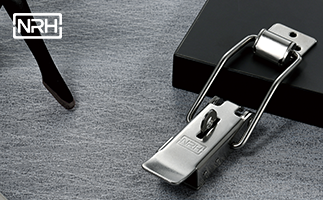
A standard toggle latch operates with a simple over-center lever action: pull the lever to close, push to open. Anyone can operate it at any time. A lockable version adds a locking pin or cylinder that blocks the lever in the closed position. Until that pin is removed or the cylinder is rotated with a key, the latch stays shut and the enclosure stays secured.
Two primary locking methods exist in toggle latch hardware:
Padlock Loop (Hasp Style)
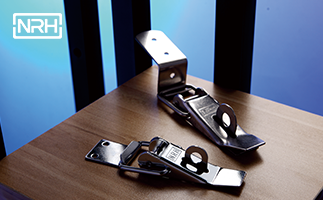
The latch body includes a small loop or hasp that aligns when the lever closes. A standard padlock passes through the loop, preventing the lever from lifting open. This is the simplest and most widely used design in industrial enclosures. Models like the NRH 5103-70K-S04-ZG feature this padlock loop integrated into the lever base. The loop adds minimal bulk to the latch profile and accepts any padlock shackle diameter up to the hole size specified in the product sheet.
Padlock loop latches offer a clear advantage: you control the padlock selection. High-security padlocks, combination locks, and color-coded lockout padlocks all work with the same latch. Facility managers can standardize padlock types across an entire plant without changing the latch hardware.
Built-in Key Cylinder
A keyed cylinder is built directly into the latch body. Turning the key locks or unlocks the lever. This design eliminates the need for a separate padlock entirely. The 6101-108K series uses this approach with a chrome-plated iron body and a 392N tensile rating per manufacturer catalog data. Keyed cylinders are more compact than padlock loops and resist tampering better because the lock mechanism is enclosed within the latch housing.
Key management becomes a factor with keyed latches. Most units ship with two keys per latch. Production batches often share a common key code, meaning multiple latches from the same order may open with the same key. If your application requires unique keys per latch or a master key system, specify this at the time of order.
Both methods achieve the same result: preventing the toggle lever from opening without proper authorization. The choice between them depends on your security protocol, space constraints, and key management preferences.
When Do You Need a Lockable Toggle Latch?
Compliance requirements drive most lockable latch specifications. Several standards explicitly mandate locking hardware on enclosures and transit cases. Understanding these requirements early in the design process prevents costly redesigns later.
The following standards and regulations commonly require lockable latches:
- ATA 300 Category I for air transit cases requires latches that can be secured against accidental or unauthorized opening during air transport. Lockable latches satisfy this requirement directly.
- MIL-STD-810 testing for military enclosures often specifies that access points must be lockable to pass environmental and security test protocols.
- NEMA 250 Type 12 and Type 4 enclosures used in industrial settings require locking to meet the “tool-access” or “key-access” provision. This maintains enclosure integrity by ensuring only authorized personnel can open the enclosure.
- OSHA 29 CFR 1910.147 (Lockout/Tagout) applies when the enclosure contains energy sources that must be secured during maintenance. A lockable latch allows a worker to apply a personal padlock, satisfying LOTO compliance.
- IEC 60529 (IP rating) does not directly require locking, but enclosures rated IP54 and above must prevent unauthorized access to live parts. A lockable latch is the most practical way to achieve this on hinged doors.
Beyond compliance, lockable latches make sense in any scenario where unauthorized access creates risk. Server rack cabinets in co-location facilities, chemical storage enclosures on plant floors, field-deployed electronics cases, and pharmaceutical transport boxes all benefit from lockable hardware. If the contents are valuable, hazardous, or regulated, a lockable latch is the correct specification.
Key Lockable Latch Models and Specifications
Lockable toggle latches span the same size ranges as standard toggle latches. The “K” suffix in NRH model numbers designates the locking variant. The load rating of a locking variant matches its non-locking counterpart because the locking mechanism operates independently of the clamping force path.
| Model | Series | Material | Finish | Locking Method | Load Rating |
|---|---|---|---|---|---|
| 5103-70K-S04-ZG | Spring Latch | SUS304 | Vibratory Polish | Padlock Loop | 700N tension |
| 5103-63K-S04-ZG | Spring Latch | SUS304 | Vibratory Polish | Padlock Loop | 700N tension |
| 5101-96K-S04-ZG | Butterfly Latch | SUS304 | Vibratory Polish | Padlock Loop | 392N tension |
| 5102-88K-S04-ZG | L-Type Latch | SUS304 | Vibratory Polish | Padlock Loop | 55kg load |
| 6101-108K-FE-CR | Butterfly Lock | Iron | Chrome Plated | Keyed Cylinder | 392N tension |
| 5301-112K-FE-CL | Compression Latch | Iron | Bright Zinc | Padlock Loop | 40kg load |
All data per manufacturer catalog data. The locking mechanism does not reduce the load rating compared to the non-locking variant of the same model. This is an important specification point: selecting a locking variant does not require upsizing the latch to compensate for any perceived strength loss.
Note on 5301-112K-FE-CL: This model features a padlock loop design that accepts an external padlock for added security. It is not a keyed cylinder design.
Materials and Finishes
Lockable toggle latches are available in a range of materials and finishes to suit different environmental conditions:
| Material | Code | Characteristics | Recommended Environment |
|---|---|---|---|
| SUS304 Stainless Steel | S04 | Corrosion-resistant, good strength, clean appearance | Standard choice for outdoor, humid, and marine environments |
| SUS316 Stainless Steel | S16 | Contains molybdenum, superior salt spray and chemical resistance | Coastal, marine, and chemical-exposure environments |
| Iron/Carbon Steel + Chrome Plating | FE-CR | Bright mirror finish, cost-effective | Dry indoor environments |
| Iron/Carbon Steel + Zinc Plating | FE-ZL / FE-CL | Matte blue-silver finish, most economical | Cost-sensitive indoor applications |
Installation and Maintenance
Installation of lockable toggle latches follows the same procedure as standard toggle latches:
- Position the latch body on the lid or door surface and mark the mounting hole positions using the product as a template.
- Position the catch plate on the enclosure body so the hook engages cleanly when the lid closes.
- Drill pilot holes at the marked positions.
- Secure both components with screws, rivets, or spot welding.
- Test the closure by opening and closing several times to verify alignment and tension.
- For keyed variants, test the lock cylinder with the provided keys to ensure smooth operation.
Maintenance requirements are minimal. Inspect latches periodically for loose fasteners, worn components, or corrosion. For keyed variants, lubricate the key cylinder periodically with a dry lubricant. For padlock loop variants, ensure the loop is free of debris that could prevent proper padlock engagement.
Frequently Asked Questions (FAQ)
What is the difference between a padlock toggle latch and a keyed toggle latch?
A padlock toggle latch has a built-in hasp or loop that accepts a separate padlock. You choose the padlock based on your security requirements. A keyed toggle latch has a lock cylinder integrated into the latch body, and no separate padlock is needed. Padlock styles are simpler and allow standardization; keyed styles are more tamper-resistant and compact but require key management.
Does the locking mechanism affect the clamping force?
No. The locking pin or cylinder engages only after the lever is fully closed and latched. It blocks the lever from opening but does not contribute to the clamping force. A 5103-70K-S04-ZG delivers the same 700N tensile load as its non-locking counterpart. The lock is a separate function from the clamp.
Can I add a lock to an existing standard toggle latch?
Some standard toggle latches can be field-modified with a padlock hasp accessory, but this approach is not reliable for compliance. The hasp must be properly aligned with the lever and rated for the load. Misalignment causes the padlock to bind or the lever to slip. In most cases, replacing the standard latch with a factory-built locking variant is the correct and compliant approach.
What padlock shackle size fits a lockable toggle latch?
This varies by model. Most padlock loop latches accept shackles from 4mm to 8mm diameter. Check the product specification sheet for the exact hole diameter of the locking loop on your specific model. Using a shackle that is too thin creates play that can allow the lever to shift under vibration. Using a shackle that is too thick will not pass through the loop.
Are lockable toggle latches available in stainless steel?
Yes. Many locking variants are available in SUS304 and SUS316 stainless steel. The 5103-70K-S04-ZG and 5101-96K-S04-ZG are both SUS304 stainless steel with vibratory polished finish. For marine or corrosive environments, SUS316 variants are also available. Stainless steel models resist corrosion and maintain appearance in harsh environments.
How many keys come with a keyed toggle latch?
Keyed toggle latches typically ship with two keys per unit. Most manufacturers use a common key code within a production batch, meaning multiple latches from the same batch may share a key. This is convenient for installations where one technician services multiple enclosures. If you need unique keys per latch or master key systems, specify this at the time of order. NRH offers keyed-alike and keyed-different configurations on request.
Do lockable toggle latches meet NEMA or IP ratings?
The latch itself does not carry an IP or NEMA rating. The enclosure system as a whole must be tested and rated. A lockable toggle latch can be part of a NEMA 4 or IP65 rated enclosure if the gasket, enclosure design, and latch compression work together to seal the opening. The locking function neither helps nor hurts the seal. Always test the complete enclosure assembly to verify the rating.
When is a lockable latch required for compliance?
Lockable latches are required when the applicable standard mandates “tool-access,” “key-access,” or “secure closure.” OSHA Lockout/Tagout (29 CFR 1910.147) requires that energy isolation devices be lockable. If your enclosure contains electrical disconnects or other energy sources, the latch must accept a lock. ATA 300 Category I cases used in air cargo must prevent accidental opening during flight. NEMA 250 Type 12 enclosures must be accessible only with a tool or key. Always check the specific standard that applies to your application.
Need help choosing? Contact NRH Box Hardware for lockable toggle latch recommendations based on your security requirements, compliance needs, and environmental conditions. The full product catalog is available at nrh.hk.