

What Are Case Corner Protectors? Protecting Transport Cases from Impact Damage
A corner protector is a metal fitting mounted on the corners of transport cases, flight cases, toolboxes, and wooden crates. It serves two primary functions: protecting the vulnerable corner from impact damage during handling and transit, and reinforcing the structural integrity of the case itself.
Without corner protection, the edges of a case are the first point of contact in drops, bumps, and stacking scenarios. Over time, repeated impacts cause delamination, cracking, and fastener pull-out. Corner protectors absorb and distribute the force of impact across a larger surface area, preventing localized damage and extending the service life of the case.
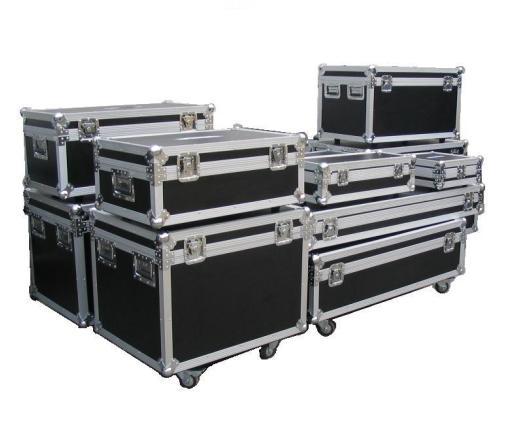
What a Corner Protector Does
Corner protectors serve one core purpose: they shield the most vulnerable part of any case – the corner – from impact damage. In modular transport configurations, multiple cases often travel stacked or side by side. Without corner protection, vibration, tilting, and impact cause case edges to chip, crack, or deform, damaging contents and creating handling hazards.
Corner protectors also reinforce the structural corners of a single case. By bridging two or three panel faces at the corner intersection, they distribute load across multiple fasteners and prevent stress concentration at any single point.
Types of Corner Protectors
NRH offers several categories of corner protectors, each designed for specific applications and case profiles:
Ball Corners (Spherical Corner Protectors)
Ball corners feature a rounded, dome-shaped profile that protrudes beyond the case surface. The NRH 7101 series ball corners are fabricated from iron with chrome plating or SUS304 stainless steel with vibration polishing. The ball shape provides maximum impact absorption by deflecting blows away from the corner itself. Available sizes include 40mm (7101-40), 53mm (7101-53-1-FE-CR), and 66mm (7101-66-3) variants. The ball corner design is visually distinctive and often specified for flight cases, musical instrument cases, and high-value equipment transport where both protection and appearance matter.
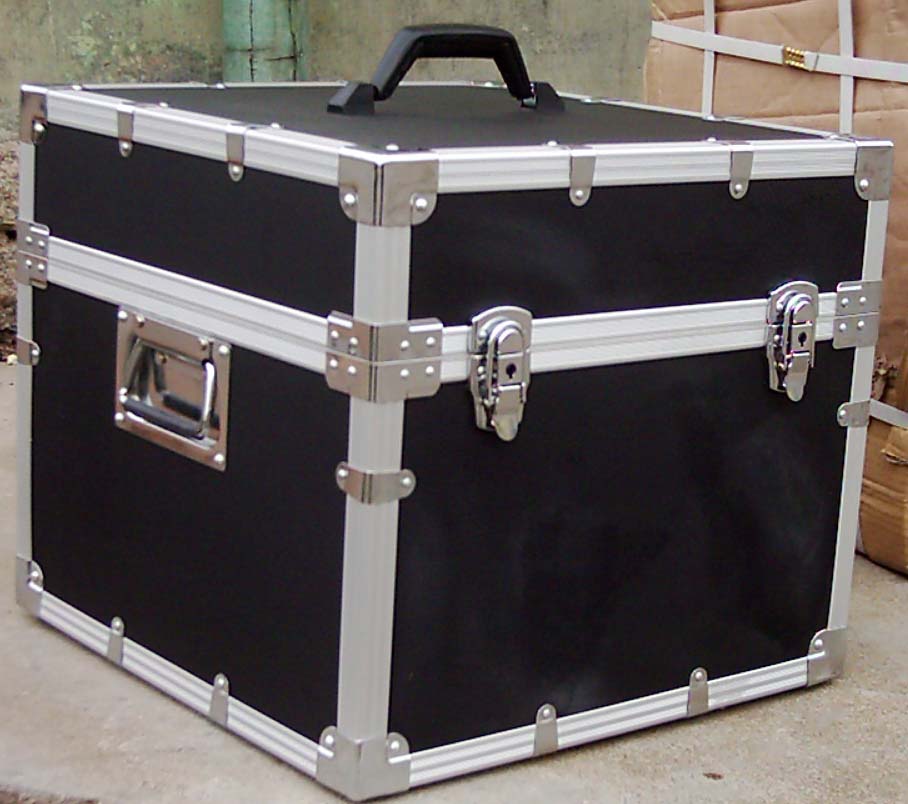
Flat Corners (Square Corner Braces)
Flat corner braces, also known as square corners or flat corner protectors, mount flush on the panel surface. The NRH 7201 series flat corners are available in SUS304 stainless steel with vibration polishing (weighing 22g) or iron with chrome plating (weighing 25-26g). They feature a three-sided profile that wraps around the corner intersection, providing fastening points on both adjacent panels simultaneously.
Flat corners offer a clean, low-profile appearance and are the most versatile type – they work on any panel thickness because they sit on the surface rather than wrapping around the edge. Common sizes include 35mm (7201-35-1, 7201-35-2), 40mm (7201-40-1, 7201-40-2), and 50mm (7201-50) variants.
Square Flat Corners (Han Style)
The NRH 7401 series, also known as Han-style square corners, features a block-like design that fits flush against the case corner. These four-sided square corners provide a clean, minimalist appearance while offering robust corner protection. Made from iron with chrome plating, they are commonly specified for wooden crates, export packaging, and industrial cases where a simple, functional profile is preferred.
Edge Braces (Corner Edge Protectors)
Edge braces, such as the 7602 series, protect the edges between corners rather than the corners themselves. These components connect two sides of a case together, providing structural reinforcement along the case perimeter. The 7602-50 model, fabricated from iron with chrome plating and weighing 33g, is widely used on flight cases, aluminum cases, and stage equipment cases.
Materials and Surface Treatments
The choice of material and finish directly affects the durability, corrosion resistance, and appearance of the corner protector. NRH offers the following options:
Stainless Steel (SUS304)
SUS304 stainless steel provides the best combination of corrosion resistance and mechanical strength. It suits outdoor, marine, and chemical-exposure environments. Vibration polishing (ZG) produces a smooth matte finish that hides minor scratches.
Chrome-Plated Iron (FE-CR)
Chrome-plated iron offers a bright, reflective finish at a lower cost. It is suitable for dry or mildly humid indoor settings. However, if the plating chips, the underlying steel will rust – inspect regularly and replace damaged parts promptly.
Zinc-Plated Iron
Zinc plating provides moderate corrosion resistance for general-purpose indoor applications. It is the most economical option for applications where corrosion exposure is minimal.
Selecting the Right Corner Protector
Choosing the correct corner protector depends on four factors:
- Case type and application – Flight cases and high-value equipment benefit from ball corners for maximum impact protection. Industrial crates and export packaging often use flat corners or square corners.
- Panel thickness – Flat corner braces work on any panel thickness because they mount on the surface. Edge braces and some 3D corners require specific internal channel dimensions.
- Environmental exposure – SUS304 stainless steel is required for outdoor, marine, and chemically aggressive environments. Chrome-plated iron is sufficient for indoor use.
- Load and handling conditions – Heavy cases or rough handling require larger protectors with more fasteners. The 7101 series ball corners and 7201 series flat corners both offer robust protection for demanding applications.
Installation tip: Most corner protectors are installed using rivets or screws. Measure and mark hole positions precisely before drilling. Use the correct fastener size for your panel thickness – M4 or M5 rivets are typical for most applications. For plastic cases with thin walls, use backing plates or well nuts to distribute the load and prevent pull-out.
Applications and Industries Served
NRH corner protectors are used across a wide range of industries and applications:
- Aviation and flight cases – Ball corners and flat corners protect sensitive equipment during air transport.
- Military and defense – Rugged corner protectors on military cases and field equipment cases.
- Musical instruments – Guitar cases, keyboard cases, and amplifier cases use corner protectors for tour-grade durability.
- Medical equipment – Transport cases for diagnostic and monitoring equipment require reliable corner protection.
- Industrial packaging – Wooden crates and export packaging use square corners and edge braces for structural reinforcement.
- Toolboxes and storage cases – Workshop and job site tool cases benefit from impact-resistant corner hardware.
Maintenance and Inspection
Inspect corner protectors before each deployment. Check for loose fasteners, cracked brackets, and corroded surfaces. Tighten any loose screws or replace missing rivets immediately. A loose protector provides no protection – it gives false confidence that the case is secure when it is not.
For SUS304 stainless steel protectors, wipe away surface deposits with a dry cloth and check for pitting. Remove and replace any protector that shows visible corrosion, cracking, or permanent deformation. Chrome-plated iron protectors require closer attention: if the plating chips, the exposed steel will rust rapidly. Replace chipped protectors before the corrosion spreads to the panel underneath.
Storage recommendation: Store corner protectors in a dry location. Do not stack them in damp or humid areas to avoid rust or oxidation.
Frequently Asked Questions (FAQ)
What is a case corner protector?
A case corner protector is a metal fitting mounted on the corners of transport cases, flight cases, toolboxes, and wooden crates. It protects vulnerable corners from impact damage, reinforces the case structure, and extends service life.
What materials are corner protectors made from?
The most common materials are SUS304 stainless steel, chrome-plated iron, and zinc-plated iron. SUS304 provides the best corrosion resistance and mechanical strength for outdoor and marine environments.
What is the difference between ball corners and flat corners?
Ball corners (7101 series) feature a rounded dome that deflects impact away from the corner. Flat corners (7201 series) mount flush on the panel surface and provide a clean low-profile appearance. Ball corners offer maximum impact protection; flat corners are more versatile and work with any panel thickness.
How do I choose the right corner protector size?
Select based on your case dimensions. NRH offers multiple sizes across product series – 7101 series ball corners come in 40mm, 53mm, and 66mm sizes. 7201 series flat corners are available in 35mm, 40mm, and 50mm variants. Match the protector size to your case corner dimensions for proper fit.
What surface treatments are available for corner protectors?
Common finishes include vibration polishing (ZG) for a smooth matte finish, bright polishing (LG) for mirror-like shine, chrome plating (CR), and various black finishes (BK series) for low-visibility applications.
Can corner protectors be used on plastic cases?
Yes, with proper fasteners. Flat corner braces work best on plastic cases as they don’t depend on a specific edge profile. Use rivets for permanent installations or screws with backing plates to distribute the load on thinner plastic walls.
Need help choosing? Contact NRH Box Hardware for corner protector recommendations and technical specifications. Visit the headquarters at Room 1703-1704, Zhongji Building, No. 819 Yinxiang Road, Nanxiang Town, Jiading District, Shanghai, China. The full product catalog is available at nrh.hk.