

Choosing Between Locking Hasps and Padlock Hasps
Applicable Buyers
This guide is for product designers, engineers, and procurement professionals selecting security hardware for tool cases, equipment enclosures, transit cases, and storage cabinets. The choice between a locking hasp and a padlock hasp affects key management, operational cost, and security level. This article explains the difference, material options, keying configurations, load ratings, and how to match hardware to application requirements.
Key Finding: A hasp secures a case with either an integrated key lock (locking hasp) or a staple loop for a standard padlock (padlock hasp). NRH offers the 5904 series as the integrated key lock option (zinc alloy, chrome-plated, single-key or master-key). Padlock hasps include the 5906 series (304 stainless steel, vibratory finish) and the 5901, 5902, 5903, and 5911 series (304 stainless steel or iron, brushed or black finishes). Load ratings range up to 50kg. The suffix indicates the type: -2 or -3 for keying options on the 5904, K for padlock compatibility, S for stainless steel. Choosing incorrectly adds hardware cost or compromises security.
Every case that needs security requires a decision: do you use a key lock built into the hardware, or a staple loop that accepts a standard padlock? This guide covers both options, the trade-offs, and how to match the hardware to your application.
What Is a Hasp?
A hasp is a two-piece metal closure that secures a case, cabinet, or enclosure. One piece mounts to the door or lid, the other to the frame. When closed, the hasp plate rotates over the staple or loop, creating a point where a key lock or padlock prevents opening.
The design is simple but the details matter: slot width determines which padlock shackles fit, plate thickness sets shear resistance, and hinge style affects security and service life.
Locking Hasps: Integrated Key Lock
A locking hasp features a built-in key lock cylinder. It requires no separate padlock. This is a complete security solution in one hardware set – no padlock to purchase, carry, or lose. The key is the only access control point.
Locking hasps are ideal for applications where:
- Padlocks are inconvenient or add unnecessary bulk
- Key control needs to be managed centrally
- Streamlined, professional appearance is required
- Multiple cases need a single key system (master key)
5904 Series – Zinc Alloy Locking Hasps
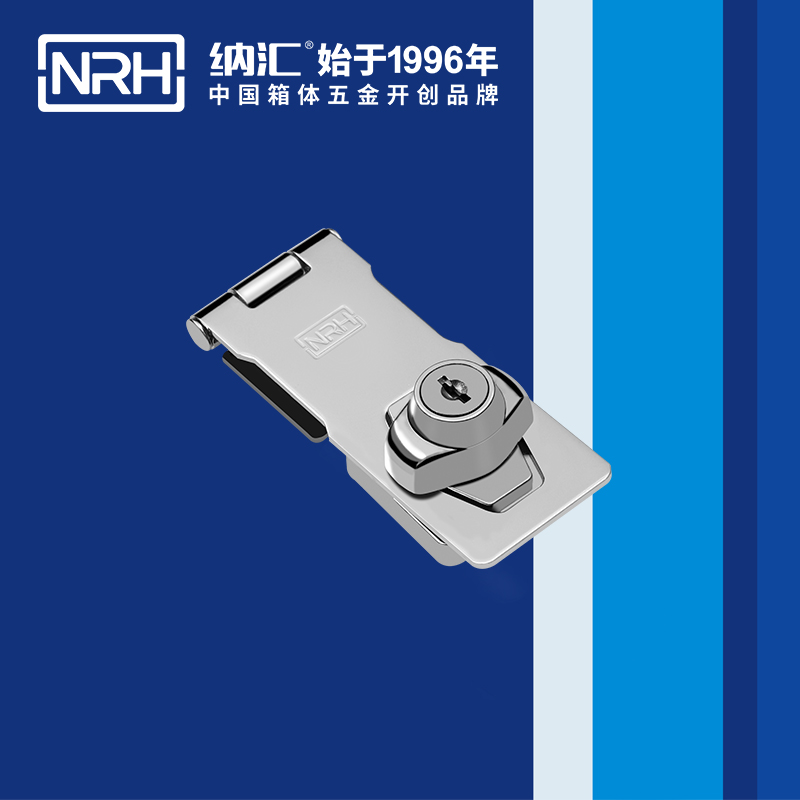
Figure 1: 5904 series zinc alloy locking hasp with integrated key lock cylinder. Available in single-key and master-key configurations. (Image source: NRH Box Hardware)
The 5904 series is manufactured from zinc alloy with chrome plating and features an integrated key lock cylinder. Chrome provides a bright, polished finish with corrosion resistance suitable for indoor and general-purpose applications.
| Model | Material | Finish | Weight | Length | Keying |
|---|---|---|---|---|---|
| 5904-65 | Zinc Alloy | Chrome | 81g | 65mm | Single Key |
| 5904-65-3 | Zinc Alloy | Chrome | 98g | 65mm | Master Key |
| 5904-75-1 | Zinc Alloy | Chrome | 87g | 75mm | Master Key |
| 5904-75-2 | Zinc Alloy | Chrome | 104g | 75mm | Single Key |
| 5904-100-2 | Zinc Alloy | Chrome | 192g | 100mm | Single Key |
| 5904-100-3 | Zinc Alloy | Chrome | 192g | 100mm | Master Key |
Keying Options:
- Single Key (-2 suffix): Each hasp uses a unique key. Each key opens only its matching hasp. Use this for applications where each case needs independent access control – for example, individual employee toolboxes, separate storage lockers, or any scenario where one person should not have access to all cases.
- Master Key (-3 or -1 suffix): All hasps in the set share the same key. One key opens every hasp. Use this for fleet operations, maintenance teams, facility management, or any scenario where streamlining access outweighs individual security requirements.
Why Choose a Locking Hasp?
Locking hasps eliminate the padlock as a separate component. There is nothing to lose, nothing to buy separately, and no shackle clearance to verify. The key is the only interface. For users managing many cases, master-key systems reduce key count from dozens to one. For OEMs designing cases, locking hasps present a cleaner, more integrated appearance than a hasp with a separate padlock dangling from it.
Padlock Hasps: Staple Loop for Standard Padlocks
A padlock hasp features a staple loop designed to accept a standard padlock. It does not include an integrated lock cylinder. The padlock is a separate component supplied by the user. This design provides flexibility – you choose the padlock type, security level, and branding.
Padlock hasps are ideal for applications where:
- Padlocks are already standardized across a facility
- Different security levels are needed for different cases
- Padlocks need to be replaced or upgraded independently
- Maximum corrosion resistance is required (stainless steel options)
Critical Consideration: Shackle Clearance
The staple loop inner diameter determines which padlock shackles fit. Most NRH padlock hasps accept shackles from 6mm to 10mm diameter. A shackle that is too thick will not pass through; one that is too thin may rattle or sit loose, reducing effective security. Always verify your padlock shackle diameter against the hasp specifications before ordering.
5906 Series – Stainless Steel Padlock Hasps
The 5906 series is manufactured from 304 stainless steel with a vibratory finish. The S suffix indicates stainless steel construction. Vibratory finish creates a uniform matte surface that hides minor scratches and does not show fingerprints.
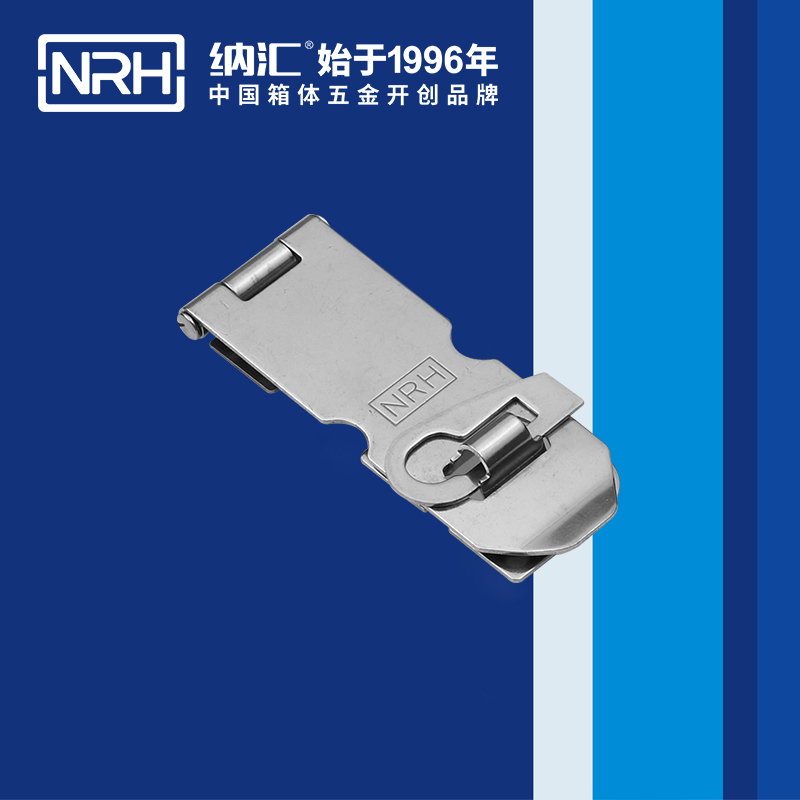
Figure 2: 5906 series 304 stainless steel padlock hasp with vibratory finish. The S suffix indicates stainless steel construction. (Image source: NRH Box Hardware)
| Model | Material | Finish | Weight | Length |
|---|---|---|---|---|
| 5906-78S | 304 Stainless Steel | Vibratory | 54g | 78mm |
| 5906-94S | 304 Stainless Steel | Vibratory | 59g | 94mm |
The 5906 series is the choice for outdoor, marine, and chemically exposed environments. 304 stainless steel resists rust and pitting even with sustained moisture exposure. The vibratory finish is field-forgiving – it does not show every scratch or fingerprint. If your cases go to sea, into chemical plants, or anywhere that moisture is a concern, this is the series to choose.
5901, 5902, 5903, 5911 Series – High-Load Padlock Hasps
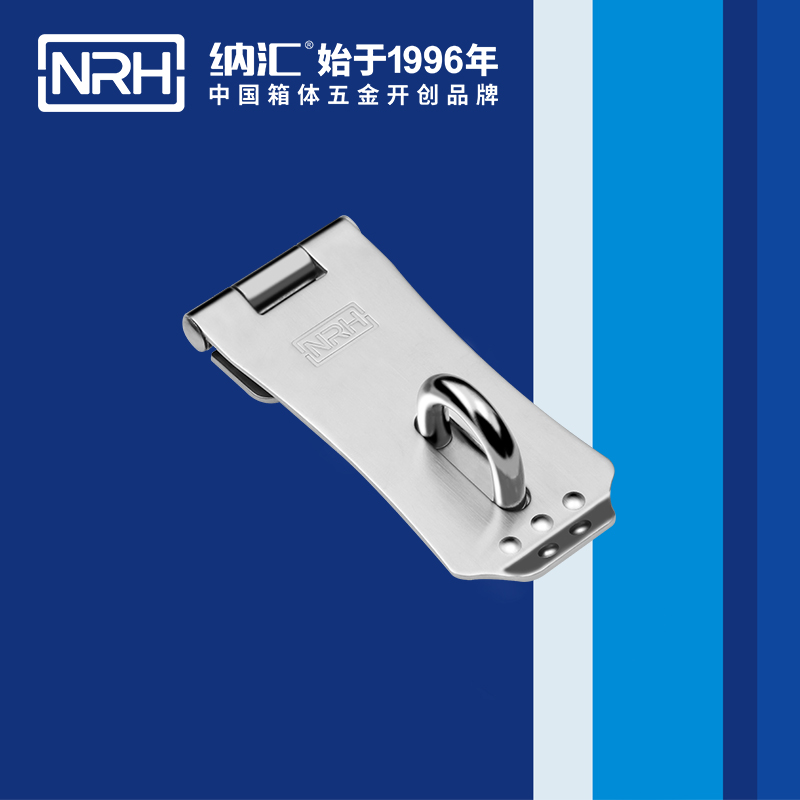
Figure 3: 5901 series padlock hasp with brushed stainless steel finish. K suffix indicates padlock-compatible design. (Image source: NRH Box Hardware)
These series offer higher load ratings for demanding padlock applications. All feature the K suffix indicating padlock-compatible design. The 5911 series offers the highest load rating at 50kg.
| Series | Material | Finish | Sizes | Load Rating | Best For |
|---|---|---|---|---|---|
| 5901 | 304 SS or Iron | Brushed / BK2 / Black Baked | 75K, 100K, 125K | 40kg (100K) | Multi-material flexibility, black finish option |
| 5902-1 | 304 SS | Brushed | 75K-1, 100K-1, 125K-1 | 40kg (100K-1) | Professional appearance, corrosion resistance |
| 5903 | 304 SS | Brushed | 75K, 100K, 125K | 40kg | Heavy-duty padlock applications |
| 5911 | 304 SS | Brushed | 100K, 111K | 50kg (100K) | Maximum load rating |
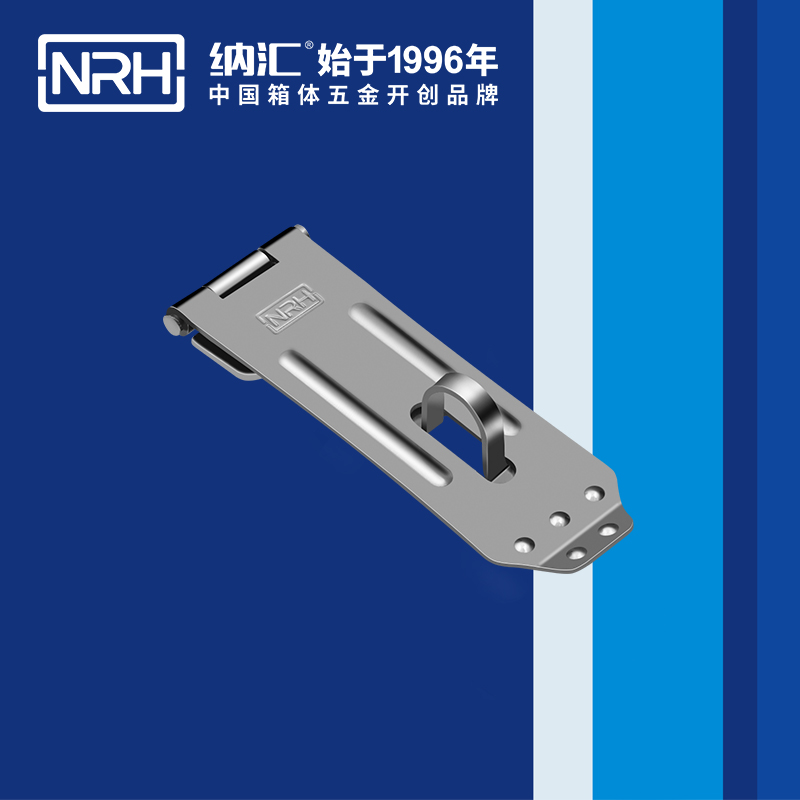
Figure 4: 5911 series padlock hasp. The 5911-100K offers the highest load rating at 50kg for demanding padlock applications. (Image source: NRH Box Hardware)
What “K” Means – And What It Does NOT Mean:
The K suffix on 5901, 5902, 5903, and 5911 indicates a padlock-compatible hasp. The staple loop is sized to accept a standard padlock shackle. K does not mean key lock. This is a common point of confusion. If you need an integrated key lock, choose the 5904 series. If you need a padlock-compatible hasp, choose a K-series from 5901, 5902, 5903, or 5911.
Locking Hasp vs Padlock Hasp: Side-by-Side Comparison
| Factor | Locking Hasp (5904) | Padlock Hasp (5901, 5902, 5903, 5906, 5911) |
|---|---|---|
| Locking mechanism | Integrated key cylinder | User-supplied padlock |
| Separate padlock required | No | Yes |
| Keying | Single key or master key | Determined by padlock |
| Material | Zinc alloy, chrome | 304 SS or iron, multiple finishes |
| Max load rating | Standard | 50kg (5911 series) |
| Corrosion resistance | Good (indoor use) | Excellent (5906 SS series) |
| Suffix codes | -2 = single key, -3 = master key | K = padlock, S = stainless steel |
| Best application | Centralized key management, no padlocks | Existing padlock systems, outdoor/marine |
What Happens If You Choose the Wrong Type
The cost of choosing wrong is not just the price of the hardware. It is operational friction, security gaps, and unnecessary expense. Here are three common scenarios:
Scenario 1: Choosing a padlock hasp for a fleet operation. You have 50 cases in the field. Each has a padlock hasp and each has a different padlock. Technicians need 50 keys. Keys get lost. Cases get locked out. Productivity drops. Had you chosen a locking hasp with master-keying, one key would open all 50 cases. The hardware cost difference is negligible compared to the operational cost of managing 50 padlocks.
Scenario 2: Choosing a locking hasp when padlocks are standardized. Your facility already uses a standardized padlock across all equipment. You add a locking hasp with a new key. Now every technician must carry two keys: one for the padlock system and one for the new locking hasp. The integrated lock adds complexity, not simplicity.
Scenario 3: Choosing a standard hasp for a marine application. You use a chrome-plated zinc alloy hasp on a case that goes to sea. The chrome plating resists corrosion on land, but salt spray penetrates the plating and the zinc base corrodes. In six months, the hasp is seized or the staple has corroded through. The cost of replacing hardware and the downtime of the case far exceed the cost of a 5906 stainless steel hasp at the time of purchase. The stainless steel option is not a luxury; it is the minimum spec for the environment.
Decision Framework: Three Questions
Answer these three questions before selecting a hasp:
1. Do you already use standardized padlocks across your facility?
If yes, choose a padlock hasp (5901, 5902, 5903, 5906, or 5911 with K suffix). If no, consider a locking hasp (5904) to avoid introducing padlocks where none are needed.
2. What is the exposure environment?
Indoor/dry: 5904 (zinc alloy chrome) or 5901 (brushed stainless) will serve. Outdoor/humid: 5906 (vibratory stainless) for maximum corrosion resistance. Marine/chemical: 5906 is the minimum specification.
3. What is the load or security requirement?
Standard applications: 5904 or 5906. High load (40kg): 5901, 5902, or 5903. Maximum load (50kg): 5911.
Material Selection Guide
| Material / Finish | Available On | Corrosion Resistance | Appearance | Best For |
|---|---|---|---|---|
| Zinc Alloy + Chrome | 5904 | Good | Bright, polished | Indoor, general-purpose |
| 304 SS + Vibratory | 5906 | Excellent | Matte, scratch-resistant | Outdoor, marine, chemical |
| 304 SS + Brushed | 5901, 5902, 5903, 5911 | Very Good | Professional, satin | Indoor, light outdoor, appearance-sensitive |
| Iron + BK2 (Black) | 5901 (Iron) | Good | Low-profile matte black | Dark panels, indoor |
Key Takeaways
- Locking hasp (5904): Integrated key lock – no padlock required. Choose -2 for single-key, -3 or -1 for master-key. Zinc alloy with chrome. Indoor applications, centralized key management.
- Padlock hasps (5901, 5902, 5903, 5906, 5911): Staple loop for standard padlocks. K suffix = padlock-compatible. Choose 5906 for outdoor/marine (304 SS vibratory), 5911 for 50kg load rating.
- Suffix guide: S = stainless steel (5906). K = padlock-compatible (5901, 5902, 5903, 5911). -2 = single key (5904). -3 = master key (5904). -1 = master key (5904).
- Load ratings: 5911-100K = 50kg. 5901-100K, 5902-100K-1, 5903 = 40kg. 5904 and 5906 = standard duty.
- Shackle clearance: Always verify padlock shackle diameter against staple loop inner diameter before ordering.
Frequently Asked Questions
What is the difference between a locking hasp and a padlock hasp?
A locking hasp (5904 series) features an integrated key lock cylinder and does not require a separate padlock. A padlock hasp (5901, 5902, 5903, 5906, 5911 series) features a staple loop designed to accept a standard padlock.
What does the K suffix mean?
The K suffix on 5901, 5902, 5903, and 5911 series indicates a padlock-compatible hasp. It does NOT mean key lock. It means the staple loop accepts a standard padlock. For an integrated key lock, choose the 5904 series.
What does the S suffix mean?
The S suffix on 5906 models indicates stainless steel construction (304 stainless steel).
What does the -2 suffix mean on 5904 models?
The -2 suffix on 5904 models indicates single-key configuration. Each hasp uses a unique key that opens only that specific hasp.
What does the -3 suffix mean on 5904 models?
The -3 suffix on 5904 models indicates master-key configuration. All hasps in the set share the same key. One key opens every hasp. Models with -1 suffix are also master-key configurations.
Which hasp series offers the highest load rating?
The 5911-100K is rated at 50kg. The 5901-100K, 5902-100K-1, and 5903 series are rated at 40kg.
Can I use a padlock hasp without a padlock?
No. A padlock hasp requires a padlock to secure it. Without a padlock, the hasp can be opened by anyone. If you need key-only security without a padlock, choose the 5904 locking hasp series.
Are black-finish hasps available?
Yes. The iron versions of the 5901 series (5901-75K, 5901-100K, 5901-125K) are available with black electrophoretic coating (BK2) or black baked finish.
What size hasp do I need for my case?
Small cases (under 300mm): 65mm (5904-65). Medium cases (300-600mm): 75-78mm (5904-75, 5906-78S). Large cases (600-900mm): 94-100mm (5906-94S, 5904-100). Extra-large cases (over 900mm): 111-125mm (5911-111K, 5901-125K).
Need help choosing? Whether you need locking hasps, padlock hasps, or stainless steel hardware, NRH can help you find the right product. Contact the team for technical support and product selection guidance:
TEL & WhatsApp & WeChat: +86 180 1797 5137
E-MAIL: nrh-gz@nrh.cn
ADD: Room 1703-1704, Zhongji Building, No. 819 Yinxiang Road, Nanxiang Town, Jiading District, Shanghai, China