

Understanding Load Ratings for Case Hardware: Tensile Strength vs Working Load
Quick Answer: Tensile strength is the force at which a component breaks. Working load is the force it can carry safely in daily use. The 5103-63K-S04-ZG spring latch rates 700N tensile – that is the breaking point, not the load it should carry. Always apply a safety factor of 2:1 to 4:1 between tensile strength and working load, depending on the application. A latch rated 700N tensile has a working load of approximately 175-230N (18-23kg) at 3:1 to 4:1 safety factor.
Have you ever specified a latch by its tensile rating – and watched it fail in the field? That is the signature mistake of confusing tensile strength with working load. Tensile is the lab number. Working load is the real number. This guide explains the difference, shows you how to calculate the right safety factor, and provides a practical framework for selecting case hardware that actually holds up in service.
Applicable Buyers
This guide is for case builders, product designers, engineers, and procurement professionals selecting latches, handles, and hinges for flight cases, industrial enclosures, military containers, and heavy-duty transit cases. Understanding the difference between tensile strength and working load is essential for safe, reliable hardware specification.
Key Finding: The distinction between tensile strength and working load is the single most important factor in hardware selection. Tensile strength (measured in Newtons) is the breaking point – a lab number. Working load (measured in kilograms) is the safe service load – the number that should drive your specification. NRH products display both types of ratings: tensile load for certain latch series (5100 series) and load capacity for handles and hinges. Never design to tensile limits. Always design to working load with an appropriate safety factor.
Case hardware specifications show two very different numbers: tensile load in Newtons (N) and load capacity in kilograms (kg). The 5103-63K-S04-ZG spring latch rates 700N tensile. The 5102-88-1-S04-ZG L-type latch rates 55kg load capacity. Both are 304 stainless steel. Both are latches. But the 700N figure is the force at which the latch fails – not the force it should carry in daily use. That distinction is the difference between tensile strength and working load.
Tensile Strength: The Breaking Point
Tensile strength measures the maximum pulling force a component withstands before deformation or fracture. In case hardware, this is the number that tells you when the part breaks – not when it works well, and not when it is safe.
NRH catalog data lists tensile load in Newtons for certain latch series. The 5103-63K-S04-ZG spring latch, at just 36g body weight, reaches 700N tensile = approx. 71.4kgf. The spring-loaded toggle geometry distributes load across two link arms instead of one, which raises the failure point even with less material. The 5104-56 spring latch rates 750N tensile at 21g – even higher tensile per gram of material.
Tensile tests use a universal testing machine. Force increases at a constant rate until the component yields or fractures. The peak force is the tensile load. This is a clean, controlled scenario – no vibration, no shock, no corrosion, no repeated cycling. A single pull to failure on a new part.
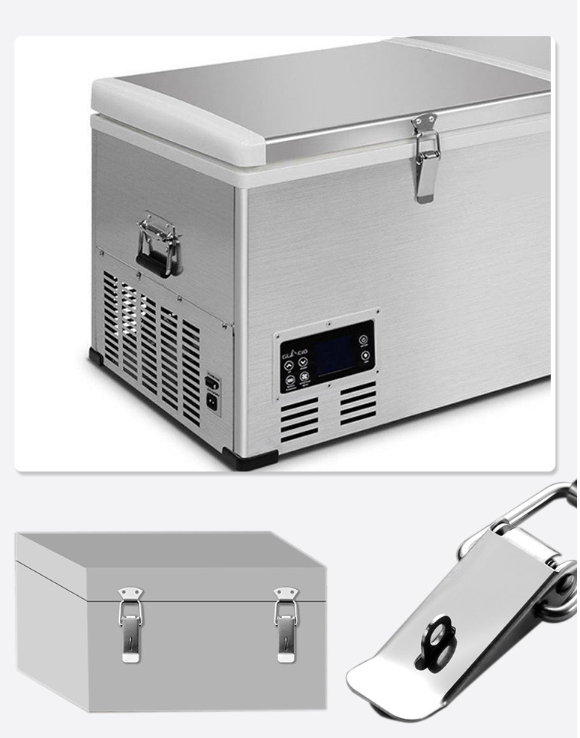
That gap between test conditions and real conditions is why tensile strength is a reference point, not a design target. You never spec hardware to operate at its tensile limit. The real question is: what load can this hardware carry reliably, thousands of times, in the field?
Working Load: What You Actually Design For
Working load (also called load capacity or safe working load) is the maximum force a component is rated to carry in normal service. It includes a built-in safety margin below the tensile breaking point. This is the number that should drive your hardware selection.
NRH handles and hinges list load capacity in kilograms. The 4101-160-FE-CR recessed handle rates 80kg load capacity at 371g. The 4101-132-S04-LG rates 60kg at 215g. The 4201-100-S04-LG folding handle rates 25kg at 122g. These are not breaking forces – they are the loads each handle can support repeatedly without permanent deformation.
Some latches also list load capacity in kilograms. The 5102-88-1-S04-ZG L-type latch lists 55kg. The 5201-106-S04-ZG draw latch lists 35kg. The 5301-112K-KS-FE-CL compression latch lists 40kg. These figures already include a safety factor, typically 2:1 to 4:1 below tensile.
The two rating systems create confusion. A latch rated 700N tensile is not comparable to a handle rated 55kg load capacity. One is a breaking force; the other is a safe service load. To compare them, you need the safety factor.
| Tensile Strength (Breaking Point) | ||||||
|---|---|---|---|---|---|---|
| Model | Type | Material | Weight | Rating | Type | Key Feature |
| 5103-63K-S04-ZG | Spring latch | SUS304 | 36g | 700 N | Tensile | Spring-loaded toggle |
| 5104-56-S04-ZG | Spring latch | SUS304 | 21g | 750 N | Tensile | Highest tensile per gram |
| Working Load (Safe Service Load) | ||||||
|---|---|---|---|---|---|---|
| Model | Type | Material | Weight | Rating | Type | Key Feature |
| 5102-88-1-S04-ZG | L-type latch | SUS304 | 79g | 55 kg | Working | Highest capacity latch |
| 5201-106-S04-ZG | Draw latch | SUS304 | 76g | 35 kg | Working | Light-duty draw latch |
| 5301-112K-KS-FE-CL | Compression latch | Iron chrome | 86g | 40 kg | Working | Gasket compression |
| 4101-160-FE-CR | Recessed handle | Iron chrome | 371g | 80 kg | Working | Highest capacity handle |
| 4101-132-S04-LG | Recessed handle | SUS304 | 215g | 60 kg | Working | SUS304 handle |
| 4201-100-S04-LG | Folding handle | SUS304 | 122g | 25 kg | Working | Lightweight folding |
| 4301-100-S04-ZG | U-handle | SUS304 | 142g | 50 kg | Working | Mid-range handle |
| 8101-100-FE-ZL | Butt hinge | Iron zinc | 82g | 13 kg | Working | Per hinge capacity |
| 8201-50-S04-LG | Short hinge | SUS304 | 52g | 10 kg | Working | Small hinge |
| 8131-70-FE-CR | Support hinge | Iron chrome | 137g | 10 kg | Working | Lid support |
Safety Factors Across Hardware Types
The safety factor (also called design factor) is the ratio between tensile strength and working load. A latch with 750N tensile and a 4:1 safety factor has a working load of 187.5N = approx. 19kg. A 2:1 safety factor on the same part gives 375N = approx. 38kg working load.
Safety factors vary by hardware type and application:
- Latches for general enclosures: 2:1 to 3:1. These see moderate clamping forces and occasional vibration. The 5102-88-1 L-type latch at 55kg load capacity with SUS304 construction likely uses a 2:1 to 3:1 factor on its tensile base.
- Latches for transport cases: 3:1 to 4:1. Shipping and freight environments introduce shock loads, vibration, and temperature swings that reduce effective strength over time. A draw latch on a flight case that gets thrown onto a truck bed needs more margin than a cabinet latch in a server room.
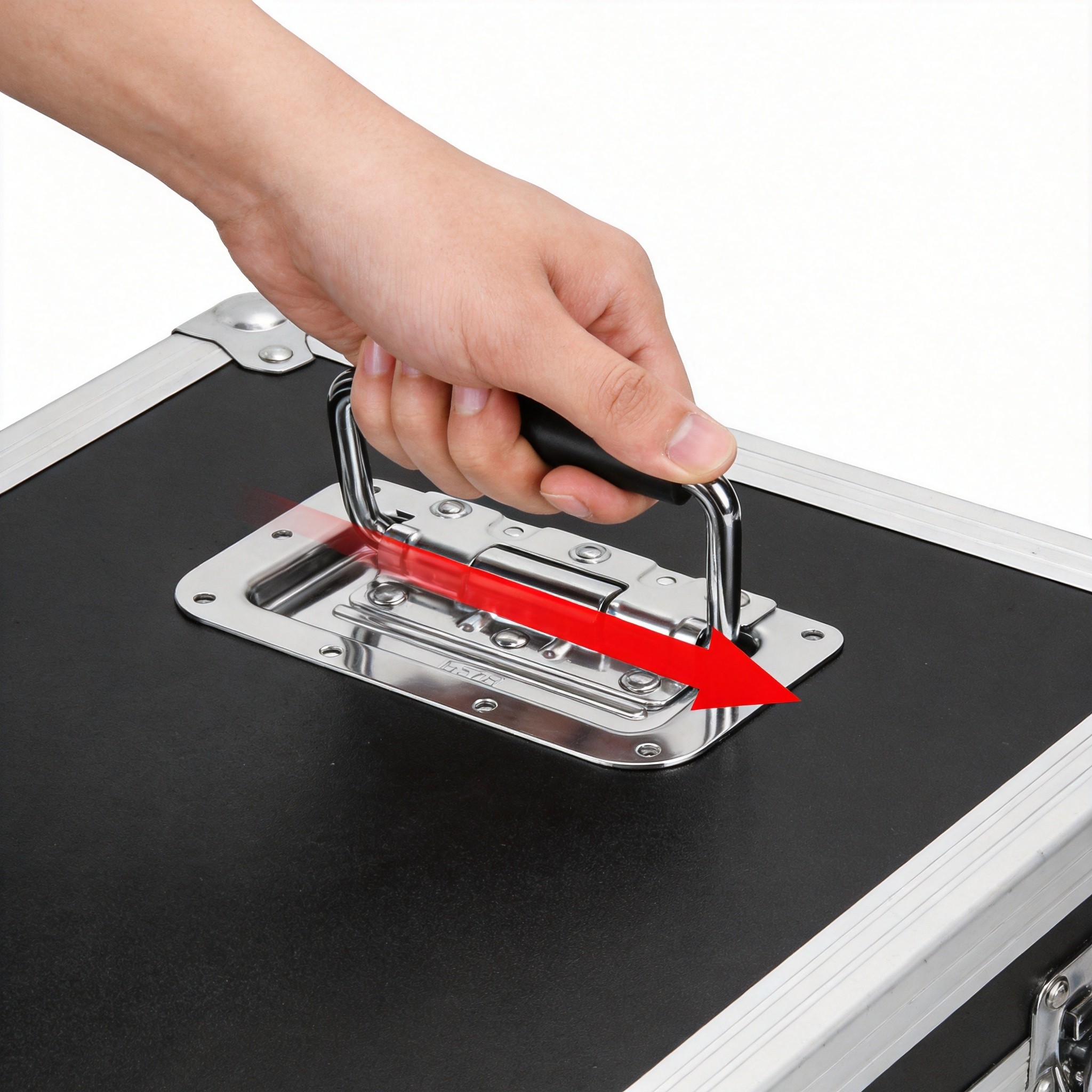
- Handles: 2:1 to 3:1. Handles for lifting carry static loads – the weight of the case and contents. The 4101-160-FE-CR at 80kg load capacity means you can lift an 80kg case by one handle without yielding. Two handles double that to 160kg, but you should still apply a 2:1 factor for dynamic loads (jerking, swinging the case).
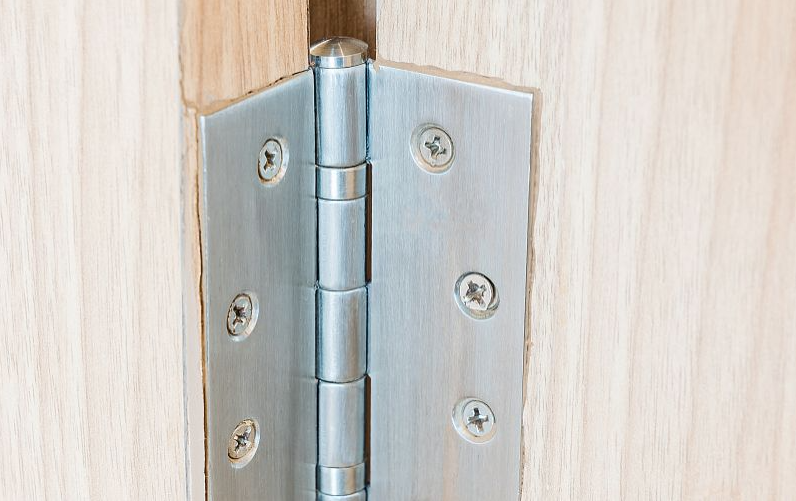
- Hinges: 2:1 to 4:1. Hinges carry shear loads from the lid weight. The 8101-100-FE-ZL butt hinge rates 13kg per hinge. A case lid weighing 15kg needs two hinges (26kg combined capacity), giving a 1.7:1 effective factor – tight. Adding a third hinge or choosing a higher-rated hinge is the safer choice. The 8131-70-FE-CR support hinge at 10kg per unit is designed for lid support rather than primary load-bearing, so it gets used in combination with butt hinges.
The choice of safety factor depends on three variables: consequence of failure, load predictability, and environment. A latch on a medical transport case demands a higher factor than a latch on a DJ cable case. A handle on air-freighted cargo sees different loads than one carried by hand across a parking lot.
For products that list tensile load only, apply the safety factor yourself. The 5104-56-S04-ZG at 750N tensile = approx. 76.5kgf: at 3:1, the working load is approx. 25.5kg. At 4:1, approx. 19kg. These are conservative numbers for a latch that holds a lid shut, not carries hanging weight. The actual clamping force in service is far lower – a toggle latch holds a case closed with maybe 20-50N of spring preload.
For products that list load capacity directly, the safety factor is already embedded per manufacturer catalog data. The 4101-160-FE-CR at 80kg load capacity means 80kg is the safe working load. The actual tensile breaking point is higher, typically 2-4 times that figure.
Selection Guide: Matching Load Ratings to Your Application
Choosing hardware based on load ratings requires a structured approach.
Step 1: Determine Your Actual Load
Weigh the case with contents. Calculate the load per hardware unit. A 40kg case with two handles carries 20kg per handle. A 30kg lid on three hinges carries 10kg per hinge. A latch holding a lid closed against a gasket seal carries the spring clamping force plus any internal pressure – typically 20-80N, well below tensile ratings.
Step 2: Choose Your Safety Factor
Use 2:1 for indoor, low-vibration applications with predictable loads. Use 3:1 for transport cases that ship regularly. Use 4:1 for critical applications – medical, defense, or any case where hardware failure causes significant loss.
Step 3: Compare Against Rated Values
For products with load capacity in kg, compare your actual load per unit directly against the rating. Your 20kg per handle must be below the rated capacity of 25kg (4201-100 folding handle) or 60kg (4101-132 recessed handle). For products with tensile load in N, divide by your safety factor to get the working load, then compare.
Step 4: Account for Mounting
Load capacity assumes proper installation. A recessed handle rated 80kg that is screwed into thin aluminum with four M4 screws will not reach that rating if the fasteners pull out first. The weakest link – the hardware, the fasteners, or the substrate – sets the actual capacity.
Application-Specific Recommendations
| Application | Typical Load | Safety Factor | Recommended Hardware |
|---|---|---|---|
| Light flight case (<20kg) | 5-10kg per latch | 3:1 | 5104-56-S04-ZG (750N tensile) or 5201-106-S04-ZG (35kg capacity) |
| Heavy transport case (20-50kg) | 10-25kg per latch | 3:1-4:1 | 5103-63K-S04-ZG (700N tensile) or 5102-88-1-S04-ZG (55kg capacity) |
| Case lifting (<40kg total) | 20kg per handle | 2:1 | 4201-100-S04-LG (25kg) or 4301-100-S04-ZG (50kg) |
| Case lifting (40-80kg total) | 40kg per handle | 2:1 | 4101-132-S04-LG (60kg) or 4101-160-FE-CR (80kg) |
| Lid support (<10kg lid) | 5kg per hinge | 2:1 | 8201-50-S04-LG (10kg) or 8101-100-FE-ZL (13kg) |
| Compression seal | Gasket compression force | 3:1 | 5301-112K-KS-FE-CL (40kg capacity) |
When in doubt, move up one size. The cost difference between a 25kg handle and a 50kg handle is minimal. The cost of a latch failing in transit is not.
Frequently Asked Questions (FAQ)
What does tensile load mean on a latch specification?
Tensile load is the maximum pulling force the latch withstands before it deforms or breaks in a controlled lab test. It is a failure point, not a service rating. The 5103-63K-S04-ZG spring latch lists 700N tensile – that is the force at which the latch mechanism fails, not the force you should apply in normal use.
How do I convert tensile load in Newtons to kilograms?
Divide the Newton value by 9.81. A 750N tensile load equals approx. 76.5kgf. A 700N tensile load equals approx. 71.4kgf. This gives you the breaking force in familiar weight units, but remember: this is the failure point, not the working load.
What safety factor should I use for case hardware?
Use 2:1 for indoor enclosures with predictable, static loads. Use 3:1 for transport and flight cases that encounter vibration and handling shock. Use 4:1 for critical applications where hardware failure causes equipment damage, safety hazards, or significant financial loss. The safety factor is your insurance margin.
Why do some products list tensile load and others list load capacity?
Different product lines follow different testing and reporting conventions. Latches in the 5100 series report tensile load in Newtons – the raw breaking force from a pull test. Handles and hinges typically report load capacity in kilograms, which already includes a safety margin. Always check the unit: N indicates tensile (breaking) force, kg indicates working (safe) load.
Can I use a latch at its full tensile rating?
No. Tensile rating is the point of failure. Operating at that load means the latch breaks. Even approaching it causes plastic deformation – the metal bends permanently. Apply a safety factor of at least 2:1, and 3:1 or 4:1 for transport applications.
How does vibration affect working load?
Vibration causes fatigue, which reduces effective strength over time. A latch that holds 750N in a static test may fail at 500N after 100,000 vibration cycles. This is why transport applications require higher safety factors. The 3:1 to 4:1 margin absorbs the fatigue penalty without pushing the hardware into a range where cumulative damage causes unexpected failure.
What load rating do I need for a flight case handle?
Divide the total case weight by the number of handles, then apply a 2:1 safety factor for dynamic lifting loads. A 50kg case with two handles needs handles rated at least 50kg each (50 ÷ 2 = 25kg per handle × 2 factor = 50kg). The 4101-132-S04-LG at 60kg or the 4101-160-FE-CR at 80kg both exceed this requirement.
Does material choice affect the safety factor?
Yes. SUS304 stainless steel has higher ductility than chrome-plated carbon steel, meaning it deforms more before fracturing. This gives a more gradual failure mode – you see the bend before the break. Iron-based hardware with chrome or zinc plating is more brittle, and failure can be more sudden. For critical applications, the ductile failure mode of SUS304 justifies a slightly lower safety factor compared to iron hardware at the same tensile rating.
Key Takeaways
- Tensile strength (N) is the breaking point – a lab measurement of failure force. Working load (kg) is the safe service load – the number that should drive your specification.
- Always apply a safety factor of 2:1 to 4:1 between tensile strength and working load, depending on the application.
- Products with load capacity in kg already include a safety factor. Products with tensile load in N require you to apply the safety factor yourself.
- 5100 series latches report tensile load in Newtons: 5103-63K-S04-ZG (700N), 5104-56-S04-ZG (750N), 5102-88-1-S04-ZG (55kg working load).
- Handles and hinges report working load in kilograms: 4101-160-FE-CR (80kg), 4101-132-S04-LG (60kg), 4201-100-S04-LG (25kg), 4301-100-S04-ZG (50kg).
- Mounting matters – the weakest link (hardware, fasteners, or substrate) determines actual capacity.
- When in doubt, move up one size – the cost difference is minimal compared to the cost of failure.
About NRH
NRH is a brand of Shanghai Nahui Hardware Products Co., Ltd., established in 1996 and headquartered in Shanghai, China. The company specialises in R&D and production of high-quality hardware fittings for cases and boxes – including toggle latches, handles, hinges, and corner protectors. NRH products are manufactured in 304 stainless steel, 201 stainless steel, and zinc-plated steel with multiple finish options, serving military, medical, aviation, industrial, and logistics applications worldwide.
All NRH load rating data presented in this guide is based on actual product specifications and marked “for reference only – not for tooling/mould creation”. For official engineering drawings, customisation enquiries, or bulk orders, please contact the NRH sales team directly.
For official engineering drawings, customisation enquiries, or bulk orders, please visit the NRH product pages or contact the sales team directly.