

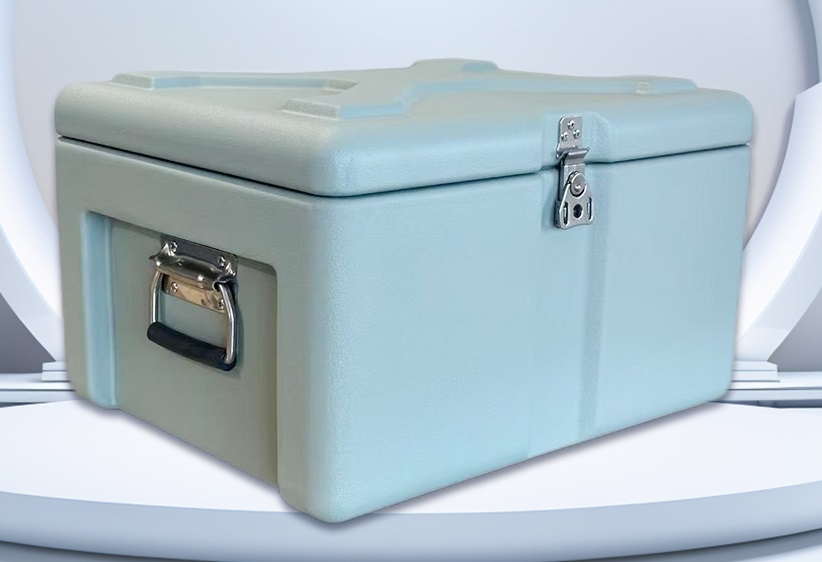
Military Insulated Case Hardware Spring Handles and Butterfly Latches
Applicable Buyers: Military equipment case manufacturers | Tactical gear suppliers | Medical transport case builders | Aerospace logistics case fabricators | Industrial equipment case OEMs
Key finding: A 390x215x270mm military insulated case was configured with two NRH 4259-108-S04-ZG spring-loaded handles (215g each, 40kg load, SUS304) and two 6324-74-3-S04-ZG butterfly latches (100g each, 588N tensile strength, SUS304) with four 6324-74F-S01-ZG reinforcement plates (4g each, 201 stainless steel). The all-stainless construction provides corrosion resistance for field deployment, while the spring-loaded handle mechanism reduces operator fatigue during extended carry.
Military-grade insulated cases protect critical equipment in demanding field environments. From medical supplies to sensitive electronics, these cases must withstand rough handling, temperature extremes, and repeated transport cycles while maintaining seal integrity and equipment protection. The hardware that seals and carries the case determines its service life and the safety of its contents.
This case study examines a 390x215x270mm military insulated case configured with NRH 4259-108-S04-ZG spring-loaded handles and 6324-74-3-S04-ZG butterfly latches with reinforcement plates, documenting the configuration rationale and installation practice.
Case Study: 390x215x270mm Military Insulated Case
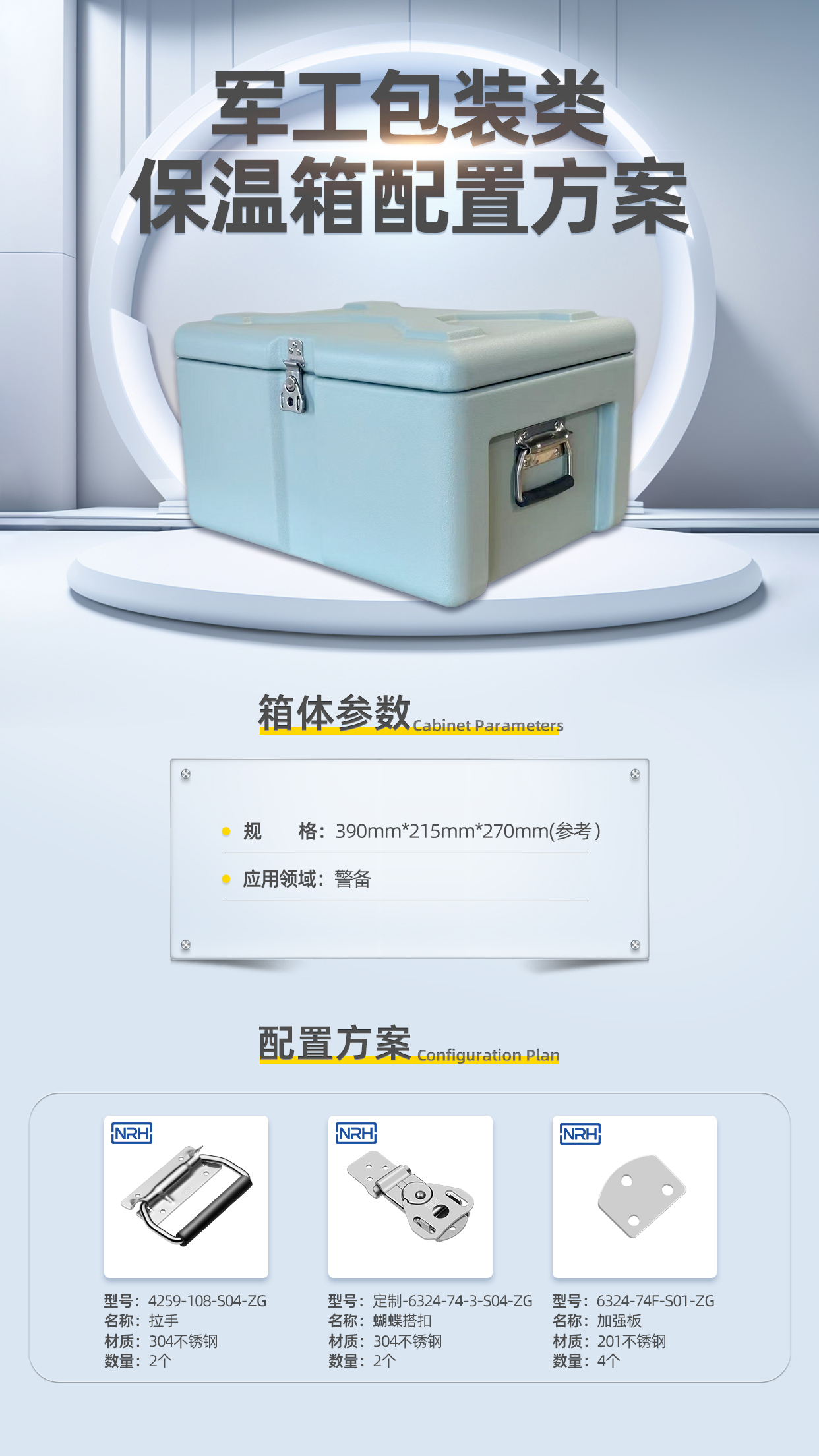
Military insulated case (390x215x270mm) configured with 4259-108-S04-ZG spring-loaded handles and 6324-74-3-S04-ZG butterfly latches with reinforcement plates
Configuration Summary
| Parameter | Value |
|---|---|
| Case Dimensions | 390mm x 215mm x 270mm |
| Case Material | Insulated roto-molded plastic |
| Application | Military / Tactical equipment transport |
| Handle Model | 4259-108-S04-ZG |
| Handle Material | SUS304 Stainless Steel |
| Handle Weight | 215g |
| Handle Load Capacity | 40kg |
| Handle Spring | Built-in spring (auto-return) |
| Handle Quantity | 2 units (symmetrical positioning) |
| Latch Model | 6324-74-3-S04-ZG |
| Latch Type | Butterfly latch |
| Latch Material | SUS304 Stainless Steel |
| Latch Weight | 100g |
| Latch Tensile Strength | 588N (approx. 60kg) |
| Latch Quantity | 2 units (lid perimeter distribution) |
| Reinforcement Plate Model | 6324-74F-S01-ZG |
| Reinforcement Plate Material | 201 Stainless Steel |
| Reinforcement Plate Weight | 4g |
| Reinforcement Plate Quantity | 4 units (two per latch location) |
Product Specifications
4259-108-S04-ZG Spring-Loaded Handle
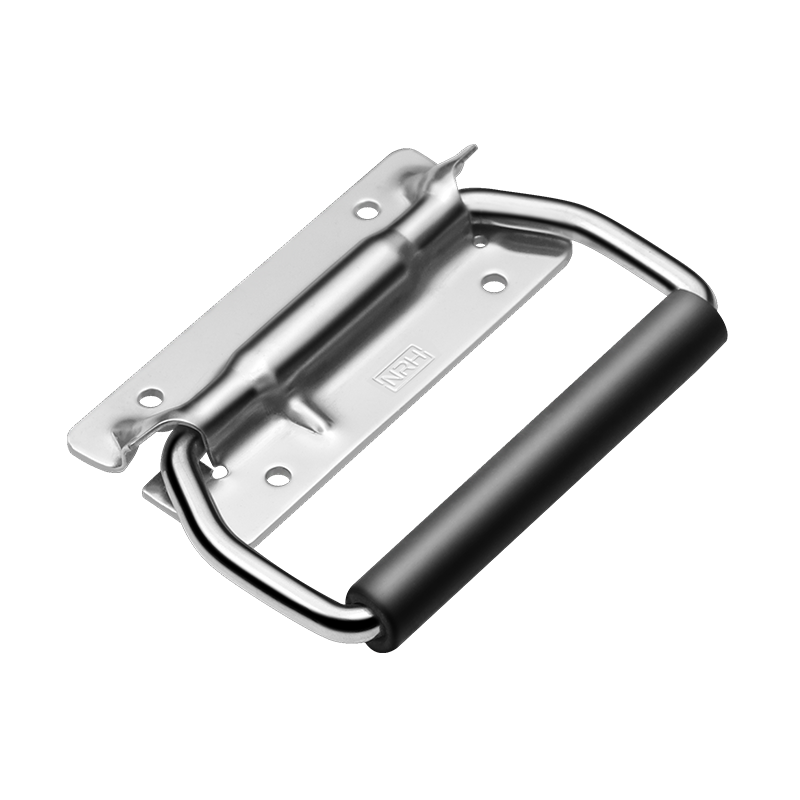
4259-108-S04-ZG, SUS304 stainless steel spring-loaded handle, 215g, 40kg load capacity, built-in spring mechanism
The 4259-108-S04-ZG is a spring-loaded handle from NRH’s 4259 series. Key specifications:
| Parameter | Specification |
|---|---|
| Model | 4259-108-S04-ZG |
| Type | Spring-loaded handle |
| Material | SUS304 Stainless Steel |
| Finish | Polished (LG) |
| Weight | 215g |
| Load Capacity | 40kg |
| Spring Function | Built-in spring (auto-return to folded position) |
| Overall Dimensions | 95 x 50.5 x 19mm |
| Mounting Hole Centers | 107mm |
| Mounting Hole Diameter | 4 x 5mm |
| Mounting | Screws / Rivets / Welding |
Why this handle was selected: The 4259-108-S04-ZG’s spring-loaded design provides a low-profile folded position when not in use, reducing snag hazards during transport and storage. The 40kg load capacity per handle comfortably supports the weight of the insulated case and its contents. The polished SUS304 stainless steel construction provides corrosion resistance for field deployment in various weather conditions. The built-in spring automatically returns the handle to the folded position when released, eliminating the need for manual stowing.
6324-74-3-S04-ZG Butterfly Latch
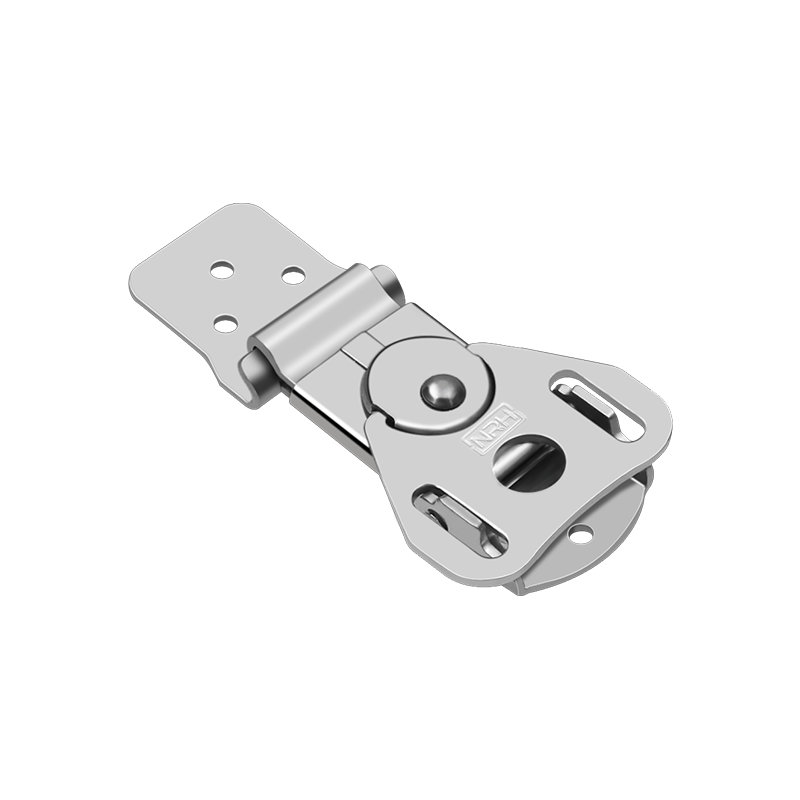
6324-74-3-S04-ZG, SUS304 stainless steel butterfly latch, 100g, 588N tensile strength
The 6324-74-3-S04-ZG is a butterfly latch from NRH’s 6324 series. Key specifications:
| Parameter | Specification |
|---|---|
| Model | 6324-74-3-S04-ZG |
| Type | Butterfly latch |
| Material | SUS304 Stainless Steel |
| Finish | Vibratory Grinding (ZG) |
| Weight | 100g |
| Tensile Strength | 588N (approx. 60kg) |
| Overall Dimensions | 108 x 72.5 x 48mm |
| Mounting Hole Diameter | 6 x 4mm |
| Lock Function | None (no lock cylinder) |
| Mounting | Screws / Rivets (through reinforcement plate) |
Why this latch was selected: The 6324-74-3-S04-ZG butterfly latch provides secure closure with a tensile strength of 588N (approx. 60kg), ensuring the lid remains securely closed under transport vibration and impact. The butterfly design offers comfortable operation even with gloved hands. The SUS304 stainless steel construction ensures corrosion resistance in field environments. Two latches distributed on the lid perimeter ensure even sealing pressure across the 390mm width.
6324-74F-S01-ZG Reinforcement Plate
The 6324-74F-S01-ZG is a reinforcement plate designed specifically for the 6324 series butterfly latches. Key specifications:
| Parameter | Specification |
|---|---|
| Model | 6324-74F-S01-ZG |
| Type | Reinforcement plate (mounting backplate) |
| Material | 201 Stainless Steel |
| Finish | Vibratory Grinding (ZG) |
| Weight | 4g |
| Dimensions | 30 x 18mm |
| Function | Load distribution for butterfly latch mounting |
| Compatibility | 6324-74 series butterfly latches |
Why reinforcement plates are required: For roto-molded insulated plastic cases, the wall thickness is typically insufficient to support the clamping force of butterfly latches without reinforcement. The 6324-74F-S01-ZG reinforcement plates mount on the inside surface of the case wall, distributing the latch clamping load across a wider area and preventing the plastic from cracking or deforming under repeated use. Four plates are required for two latches (two plates per latch location).
Product Comparison
| Model | Type | Material | Weight | Load/Tensile | Spring | Application |
|---|---|---|---|---|---|---|
| 4259-108-S04-ZG | Spring Handle | SUS304 | 215g | 40kg | Yes | Carrying handle |
| 6324-74-3-S04-ZG | Butterfly Latch | SUS304 | 100g | 588N (approx. 60kg) | No | Lid closure |
| 6324-74F-S01-ZG | Reinforcement Plate | 201 SS | 4g | N/A | No | Latch reinforcement |
Installation Guide
Tools Required
- Drill with appropriate bits for pilot holes
- Rivet gun (4mm or 4.8mm blind rivets)
- Marker or scribe
- Deburring tool
- Torque wrench (if using screw mounting)
Step-by-Step Installation
- Position the handles. Mount the two 4259-108-S04-ZG handles symmetrically on the case ends or sides. For a 390mm case, position handles approximately 100-150mm from each end for balanced load distribution.
- Position the reinforcement plates. Place the 6324-74F-S01-ZG reinforcement plates on the inside surface of the case wall at each latch mounting location (two plates per latch location). For roto-molded cases, the plates distribute load and prevent cracking.
- Position the latches. Mount the two 6324-74-3-S04-ZG butterfly latches on the exterior surface, aligned with the reinforcement plates on the interior.
- Mark pilot hole locations. Use the handle flange, latch flange, and reinforcement plate as templates. Mark all mounting hole positions on both the case body and lid.
- Drill pilot holes. Drill pilot holes according to the product’s hole spacing specifications. For plastic cases, use slow drill speed to prevent melting or cracking.
- Deburr and clean. Remove burrs from all drilled holes. Clean the mounting surfaces to ensure flanges sit flush against the case surface.
- Secure the hardware. Insert blind rivets through each flange hole and through the reinforcement plate. Set rivets firmly. The flange must sit completely flat against the case surface.
- Verify operation. Close the lid and engage each latch. The butterfly latch should snap into the locked position securely. Verify handles spring back to the folded position when released.
- Test under vibration. Simulate transport vibration by gently shaking the case. Confirm all latches remain locked and handles remain secure.
Mounting Method Options
| Method | Best For | Considerations |
|---|---|---|
| Rivet Fixing | Production assembly, plastic cases | Fastest, tamper-resistant, consistent clamp force |
| Screw Fixing | Field replacement, adjustable installations | Use thread-locking compound for vibration-prone environments |
| Spot Welding | Metal cases | Use unfinished products to avoid coating damage |
Plastic Case Considerations
- Reinforcement plates are essential: For roto-molded or insulated plastic cases, the 6324-74F-S01-ZG reinforcement plates must be installed on the interior surface to distribute latch clamping loads.
- Pilot hole size: Use appropriately sized pilot holes for plastic to prevent cracking.
- Rivet selection: Use aluminum blind rivets for plastic housings. Steel rivets may crack the plastic during setting.
What Happens If You Choose Wrong?
- Using handles without spring return on tactical cases: Handles left in the open position create snag hazards during transport and may be damaged by adjacent equipment. Spring return is essential for field equipment.
- Installing butterfly latches without reinforcement plates on plastic cases: The clamping force of the latch will crack the plastic around the mounting holes. Reinforcement plates are mandatory for roto-molded cases.
- Using non-SUS304 hardware in field environments: Iron or zinc-plated hardware will corrode in humid or outdoor conditions. SUS304 provides corrosion resistance essential for military equipment.
- Using only one latch on a 390mm case: Single-latch closure creates uneven sealing pressure. Two latches distribute the load evenly, maintaining seal integrity.
- Specifying a handle with insufficient load capacity: A 25kg-rated handle on a 20kg case provides inadequate safety margin. The 40kg rating of the 4259-108-S04-ZG ensures adequate capacity.
Application Summary
The 390x215x270mm military insulated case demonstrates how properly specified hardware, spring-loaded handles with 40kg load capacity and butterfly latches with reinforcement plates, creates a durable, secure enclosure for tactical equipment transport.
Key selection factors for this application included:
- Spring-loaded handle design: 4259-108-S04-ZG automatically returns to folded position, reducing snag hazards
- 40kg load capacity: Per-handle rating provides adequate safety margin for insulated case contents
- SUS304 stainless steel: Corrosion resistance for field deployment in all weather conditions
- Butterfly latches: 6324-74-3-S04-ZG provides secure closure with 588N tensile strength
- Reinforcement plates: 6324-74F-S01-ZG distributes latch load on plastic case walls, preventing cracking
- Two-latch configuration: Even sealing pressure across the 390mm lid width
Recommended for similar applications: This hardware configuration is also well-suited for tactical medical kits, military communication equipment cases, emergency response kits, survival gear containers, and any insulated or roto-molded case requiring secure, corrosion-resistant hardware with ergonomic carrying.
Frequently Asked Questions
Q: What is the load capacity of the 4259-108-S04-ZG handle?
Data answer: Each 4259-108-S04-ZG handle is rated for 40kg. With two handles installed, the total capacity is 80kg.
Q: Does the 4259-108-S04-ZG handle have a spring return mechanism?
Data answer: Yes. The 4259-108-S04-ZG features a built-in spring mechanism that automatically returns the handle to the folded position when released.
Q: Why are reinforcement plates required for butterfly latches on plastic cases?
Data answer: Plastic and roto-molded case walls are typically too thin to support the clamping force of butterfly latches. The 6324-74F-S01-ZG plates mount on the interior surface, distributing the load and preventing cracking.
Q: Does the 6324-74-3-S04-ZG butterfly latch include a lock?
Data answer: No. The 6324-74-3-S04-ZG is a standard butterfly latch without a lock cylinder. For applications requiring security, NRH offers lockable variants with the same footprint.
Q: What is the tensile strength of the 6324-74-3-S04-ZG latch?
Data answer: The 6324-74-3-S04-ZG has a tensile strength of 588N (approx. 60kg), providing robust clamping force for secure lid closure under transport vibration and impact.
Q: What material is used for the 4259-108-S04-ZG handle?
Data answer: The 4259-108-S04-ZG is constructed from SUS304 stainless steel with a polished finish.
Q: How many latches should I install on a 390mm case?
Data answer: Two latches provide even sealing pressure across the 390mm lid width. A single latch would create uneven pressure and could compromise the seal.
Q: What is the expected service life of this hardware in military applications?
Data answer: With proper installation and SUS304 stainless steel construction, both handles and latches are designed for the full service life of the case. The spring mechanism is rated for thousands of open-close cycles.
Need help choosing the right hardware for your military or tactical case? Contact our technical team for specification support and sample requests.
Contact Information:
- TEL and WhatsApp and WeChat: +86 180 1797 5137
- E-MAIL: nrh-gz@nrh.cn
- ADD: Room 1703-1704, Zhongji Mansion, 819 Yinxiang Road, Nanxiang Town, Jiading District, Shanghai, China