

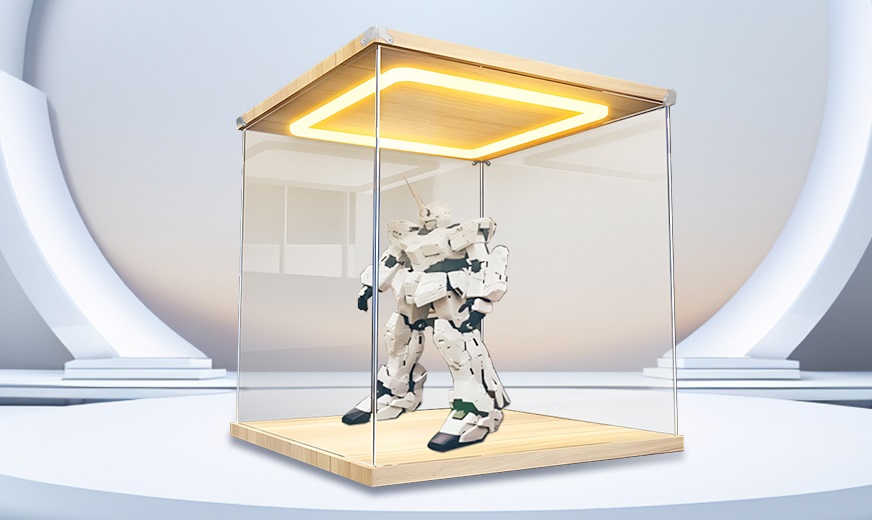
Corner Brackets for Display Cases – Structural Integrity and Visual Design
Applicable Buyers: Display case manufacturers | Museum exhibit fabricators | Retail fixture builders | Collectible display producers | Modular case assemblers
Key finding: A 300x300x300mm figurine display case with wood-and-acrylic construction was assembled using four 7301-30-FE-CR corner brackets (iron, chrome-plated, 13g each). The low-profile chrome finish complements both natural wood tones and acrylic materials, while the iron body provides adequate structural reinforcement for display cases up to 500mm.
Corner brackets are the load-bearing joints that determine whether a modular case survives daily handling or fails within months. In display case construction, the difference between adequate and inadequate reinforcement often comes down to material selection and mounting geometry.
The 7301-30-FE-CR corner bracket delivers iron strength with chrome-plated corrosion resistance at a cost-effective price point compared to stainless steel options. For display cases in the 200mm to 500mm size range, this bracket handles the structural demands of regular transport and handling without visible degradation over typical product lifecycles.
NRH Box Hardware offers corner bracket models spanning iron-chrome and stainless steel configurations. The iron variants provide cost-effective solutions for standard indoor applications, while the SUS304 stainless steel options address requirements for marine environments, high-humidity locations, and premium product presentations where long-term corrosion resistance takes priority over material cost.
Case Study: Figurine Display Case
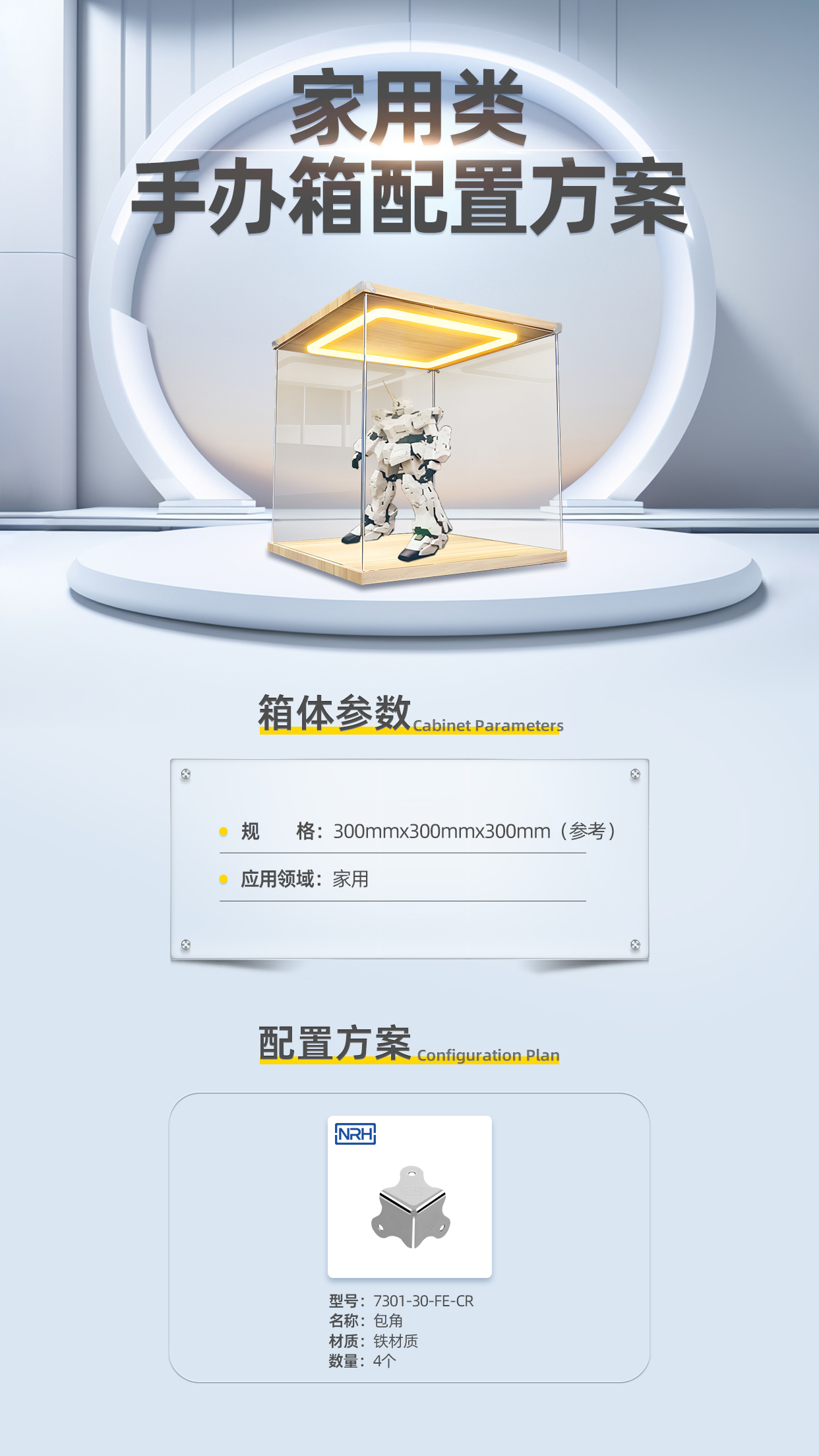
300x300x300mm figurine display case assembled with four 7301-30-FE-CR corner brackets. The chrome-plated iron brackets integrate seamlessly with acrylic panels and wooden frame elements, providing structural reinforcement at each corner joint.
This 300x300x300mm figurine display case illustrates effective corner bracket application in compact display construction. The design combines transparent acrylic panels with wooden top and bottom bases, creating a contemporary enclosure that places the collectible in focus.
Four units of the 7301-30-FE-CR corner bracket anchor each frame joint. The iron body provides adequate strength for this size class, while the chrome-plated (CR) finish delivers two practical advantages. First, the plating layer resists surface oxidation in indoor environments where humidity and handling oils may contact the hardware. Second, the polished chrome surface produces a consistent metallic appearance compatible with both natural wood tones and clear acrylic materials.
The bracket geometry distributes clamping force across a wider contact surface than simple screw or nail joints would achieve. This load distribution reduces stress concentrations that could compromise acrylic panel integrity or cause wooden joints to separate over repeated handling cycles. When designing modular systems, this force distribution capability allows engineers to specify thinner frame members without sacrificing overall structural performance.
For collectible display applications, the aesthetic integration between hardware and enclosure materials matters as much as structural capability. The 7301-30-FE-CR achieves this integration through its low-profile design and reflective chrome surface, which complements rather than competes with the displayed item. This balance between structural function and visual restraint makes the bracket suitable for museum display cases, retail product stands, and personal collector enclosures alike.
Product Specifications
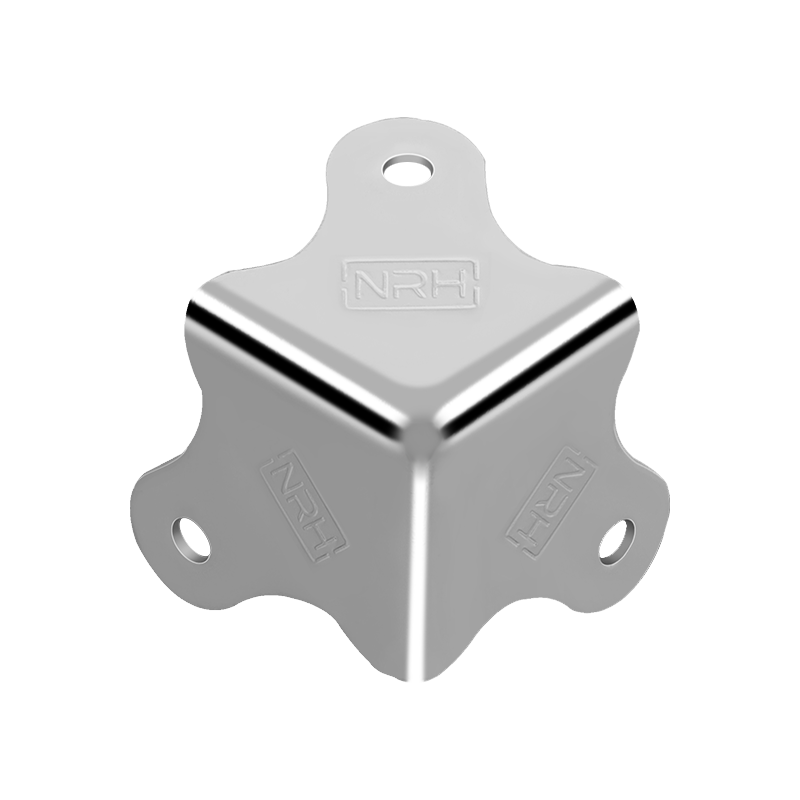
7301-30-FE-CR corner bracket in iron with chrome-plated finish. Fixed 90-degree angle geometry suits standard case corner construction. Weight: 13g.
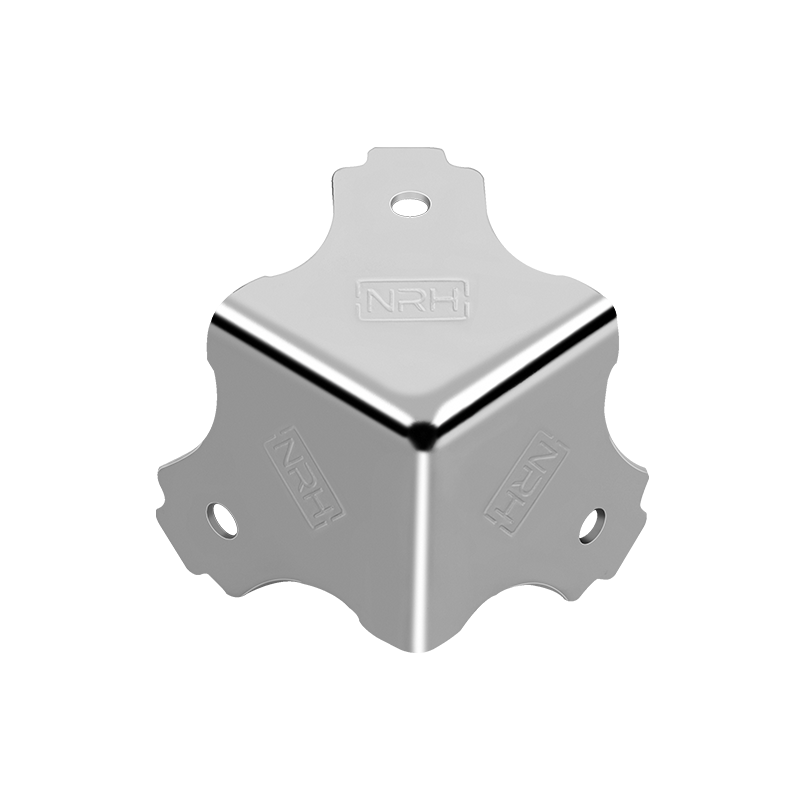
7301-38-FE-CR offers increased mounting surface area compared to the 30-series, handling greater static loads at the corner joint. Weight: 17g.
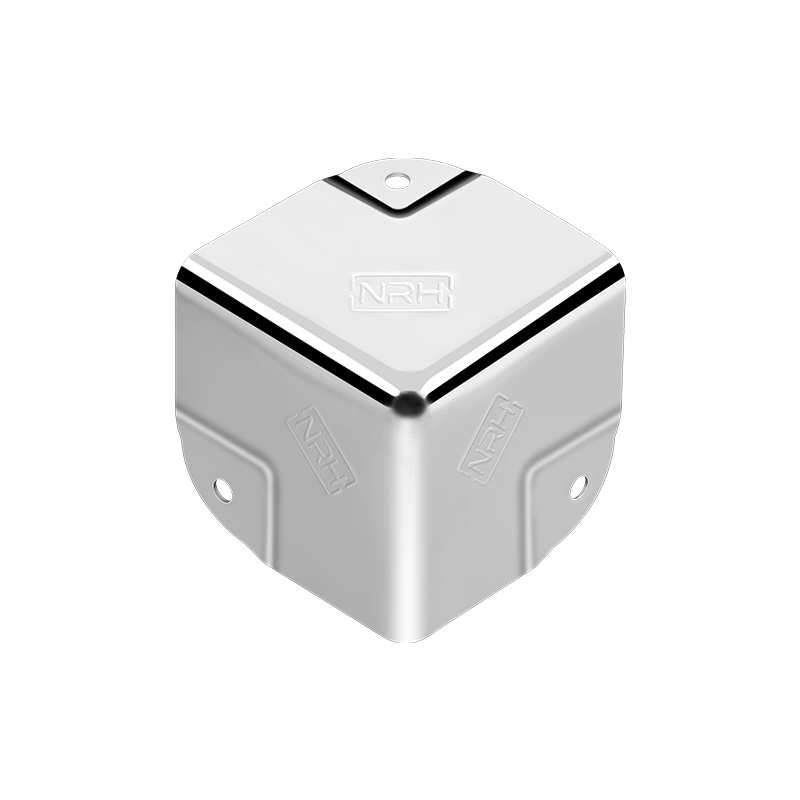
7201-40-1-S04-ZG connector bracket in SUS304 stainless steel with vibratory grinding finish. Weight: 22g.
Product Comparison
Selecting the appropriate corner bracket requires understanding how material composition and surface treatment affect performance characteristics. The following comparison outlines key specifications across the standard product range:
| Model | Material | Surface Treatment | Weight | Recommended Application |
|---|---|---|---|---|
| 7301-30-FE-CR | Iron (FE) | Chrome (CR) | 13g | Display cases up to 500mm, indoor use |
| 7301-38-FE-CR | Iron (FE) | Chrome (CR) | 17g | Display cases 400-600mm, moderate load |
| 7301-45-FE-CR | Iron (FE) | Chrome (CR) | 23g | Larger display cases, enhanced rigidity |
| 7101-66-FE-CR | Iron (FE) | Chrome (CR) | 95g | Heavy-duty applications, large case construction |
| 7201-40-1-S04-ZG | SUS304 | Vibratory grinding (ZG) | 22g | Premium display cases, high-humidity locations |
| 7201-50-FE-CR | Iron (FE) | Chrome (CR) | 45g | Industrial cases, extended panel spans |
The iron-chrome (FE-CR) variants represent the core product line, offering a balance of strength, corrosion resistance, and cost efficiency. Chrome plating on iron substrate provides adequate surface protection for controlled indoor environments while maintaining the structural benefits of ferrous metal construction.
The SUS304 stainless steel variants with vibratory grinding (ZG) finish target applications requiring maximum corrosion resistance and aesthetic durability. The vibratory grinding process creates a uniform, satin-like surface that resists fingerprints and maintains appearance in high-humidity or marine environments.
Installation Guide: Corner Bracket Assembly
Proper installation of corner brackets ensures maximum load-bearing performance and prevents damage to panel materials. The following procedure applies to standard modular case configurations using the 7301-series brackets, though similar principles apply to other bracket types in the product range.
Step 1: Prepare Frame Components
Cut frame members to exact dimensions, accounting for bracket mounting depth at each joint. For the 7301-series brackets, reserve approximately 15-20mm of overlap at each corner for secure mounting. Sand or finish all cut edges before assembly to prevent moisture infiltration and ensure clean adhesive bonding surfaces if construction adhesive is used alongside mechanical fasteners.
For wooden frame construction, ensure wood moisture content falls within the 8-12% range to minimize dimensional changes after assembly. For aluminum extrusions, deburr all cut edges and clean surfaces with isopropyl alcohol before bracket attachment.
Step 2: Position Brackets at Corners
Place one bracket at each corner with the 90-degree angle matching your frame geometry. Ensure the mounting flanges sit flush against the interior faces of both frame members. For consistent results across all four corners, mark bracket positions using a carpenter’s square to maintain alignment before drilling any pilot holes.
When working with transparent panel materials, verify that bracket positions do not obstruct the intended viewing area. For display cases with three-sided visibility, position brackets at corners that fall outside the primary viewing angles.
Step 3: Drill Pilot Holes
Using the bracket mounting holes as templates, drill pilot holes through the frame members. For iron brackets, use a drill bit slightly smaller than your chosen fastener diameter to ensure adequate thread engagement. When working with acrylic panels, use a specialized acrylic bit and reduced drill speed to prevent cracking or chipping at the hole perimeter.
For soft woods, increase pilot hole diameter by 10-15% compared to hardwood applications. For aluminum, match pilot hole closely to fastener minor diameter for optimal thread formation.
Step 4: Attach Brackets
Secure brackets using M4 or M5 screws appropriate for your frame material. Leave screw engagement of at least 3mm in the bracket mounting hole for reliable connection. Use a torque-limiting screwdriver to prevent over-tightening, which can deform the bracket flange or damage acrylic panels through excessive clamping force.
For applications requiring removal and reassembly, consider using threaded inserts in wooden frames to prevent thread degradation over multiple assembly cycles.
Step 5: Verify Assembly
After installing all corner brackets, verify frame squareness using a carpenter’s square or by measuring diagonal distances. The two diagonal measurements should match within 1mm for frames under 500mm, or within 2mm for larger constructions. Adjust bracket positions if needed before proceeding with panel installation.
Apply gentle pressure to each corner joint to confirm secure attachment. Any movement or flexing indicates insufficient fastener engagement requiring correction before panel installation.
Selection Criteria
Choosing the right corner bracket requires matching hardware specifications to your application requirements. Consider these key factors when evaluating options from the product range:
- Case Size: The 7301-30-FE-CR suits cases up to 500mm in any dimension. Larger cases benefit from the 7301-45-FE-CR or 7201-50-FE-CR for increased rigidity at corner joints. Oversized cases may require supplementary center supports in addition to corner reinforcement.
- Material Compatibility: Iron chrome-plated brackets pair well with wood and acrylic. For metal-framed cases, verify fastener compatibility between bracket and frame materials to prevent galvanic corrosion, particularly when combining dissimilar metals in humid environments.
- Environmental Conditions: Indoor climate-controlled environments allow standard chrome-plated iron hardware. High-humidity locations, coastal areas, or spaces with temperature fluctuations benefit from SUS304 stainless steel alternatives that resist oxidation without additional protective treatments.
- Aesthetic Requirements: Chrome-plated iron produces a bright metallic finish comparable to stainless steel at lower material cost. When hardware visibility is acceptable as a design element, this finish integrates well with contemporary design schemes. For concealed installations where brackets remain hidden, matte finishes may suffice.
- Assembly Access: Consider how bracket position affects assembly sequence. Exterior-mounted brackets allow post-panel installation attachment, while interior positions may require bracket installation before final panel insertion.
What Happens If You Choose Wrong?
- Using under-sized brackets on large display cases: The 7301-30-FE-CR is designed for cases up to 500mm. Using it on larger cases (600mm+) creates insufficient joint reinforcement. Frame members may flex under load, causing acrylic panels to crack or wooden joints to separate over time.
- Specifying iron brackets for outdoor or marine environments: Chrome plating provides moderate corrosion resistance for indoor use. In coastal or high-humidity conditions, the plating will degrade and the iron substrate will rust within 6-12 months. Specify SUS304 stainless steel (7201-40-1-S04-ZG) for these environments.
- Using chrome-plated brackets where hardware visibility is a concern: The reflective chrome surface may not suit all design aesthetics. For concealed installations, consider less visible hardware or confirm placement outside primary viewing angles.
- Inadequate fastener engagement in acrylic panels: Over-tightening screws in acrylic causes cracking at the hole perimeter. Always use acrylic-specific fasteners with controlled torque or rubber washers to provide a compliant interface between metal bracket and acrylic panel.
Application Summary
The 300x300x300mm figurine display case demonstrates how four 7301-30-FE-CR corner brackets (13g each, iron, chrome-plated) provide adequate structural reinforcement for compact display applications. The low-profile chrome finish integrates seamlessly with natural wood tones and acrylic materials, making it suitable for museum displays, retail fixtures, and personal collector cases up to 500mm in size.
Key selection factors for this application included:
- Size-appropriate brackets: 7301-30-FE-CR suits cases up to 500mm
- Corrosion resistance: Chrome plating protects against indoor humidity and handling oils
- Aesthetic integration: Chrome finish complements wood and acrylic materials
- Cost-effective solution: Iron construction at lower cost than stainless steel
- Four-bracket configuration: One at each corner for even load distribution
Recommended for similar applications: This bracket configuration is also well-suited for retail display cases, museum exhibit boxes, jewelry showcases, collectible figure display enclosures, and any modular case construction requiring secure corner joints with professional appearance.
Frequently Asked Questions
Q: How many corner brackets are needed for a 300mm cube case?
Data answer: Four brackets total, one at each corner. The 7301-30-FE-CR is specified in sets of four, matching the requirement for a standard cubic case directly. Rectangular cases typically require eight brackets, with one at each corner and additional brackets at mid-span on long edges for reinforcement.
Q: Will chrome-plated iron brackets corrode over time?
Data answer: The chrome plating provides moderate corrosion resistance for indoor applications. In climate-controlled environments with stable humidity levels, the 7301-30-FE-CR maintains surface integrity for years without visible degradation. Avoid using these brackets in marine environments, outdoor settings, or spaces with persistent high humidity without additional protective measures such as clear coat sealants.
Q: Can these brackets be used with acrylic panels safely?
Data answer: Yes. The flat mounting surface distributes clamping force evenly across the interface, reducing stress concentrations that could cause acrylic to crack under load. Always use fasteners designed for acrylic materials and apply controlled torque during installation. Consider using rubber or silicone washers to provide a compliant interface between metal bracket and acrylic panel.
Q: What screw size works best with the 7301-30-FE-CR?
Data answer: M4 screws provide secure mounting for most display case applications with frame member thickness of 12-18mm. M5 screws offer increased pull-out resistance for larger or heavier constructions. The 7301-30 mounting holes are 3.3mm diameter, accommodating M3 or M4 screws. Ensure at least 3mm of thread engagement in the bracket mounting hole regardless of screw selection.
Q: Are the brackets adjustable after installation?
Data answer: The fixed 90-degree angle provides consistent assembly results across multiple units. For applications requiring post-installation adjustment, consider brackets with elongated mounting slots that allow positional fine-tuning, or select separate connector systems designed for adjustable configurations.
Q: Do chrome brackets visually match stainless steel hardware?
Data answer: The chrome plating on iron hardware produces a similar metallic appearance to stainless steel from typical viewing distances. Both options provide clean, modern aesthetics suitable for contemporary display designs. Upon close inspection, subtle differences in reflectivity and surface texture may become apparent.
Q: Can brackets be installed on interior or exterior surfaces?
Data answer: Both positions function effectively depending on your priorities. Interior placement conceals hardware for a streamlined appearance with no visible fasteners. Exterior placement provides easier assembly access and adds a defined design element to the case profile, though exposed hardware requires consideration of aesthetic integration with surrounding materials.
Q: What is the weight of the 7301-30-FE-CR bracket?
Data answer: The 7301-30-FE-CR weighs 13g per unit, making it a lightweight solution for display case construction. The low weight contributes to the overall portability of the assembled case without sacrificing structural reinforcement at the corner joints.
Need help choosing the right corner brackets for your display case? Contact our technical team for specification support and sample requests.
Contact Information:
- TEL and WhatsApp and WeChat: +86 180 1797 5137
- E-MAIL: nrh-gz@nrh.cn
- ADD: Room 1703-1704, Zhongji Mansion, 819 Yinxiang Road, Nanxiang Town, Jiading District, Shanghai, China