

Transit Case Hardware – Butterfly and Toggle Latch Selection Guide
Applicable Buyers: Industrial shipping crate manufacturers | Military equipment case fabricators | Roto-molded case producers | Heavy equipment logistics providers | Export packaging specialists
Key finding: Two transit case configurations demonstrate distinct latch approaches: A 1500x1200x800mm wooden crate using 38 butterfly latches (6306-85-FE-ZL standard and R6306-85-FE-ZL value versions, 588N each) for maximum retention, and a 1500x800x300mm roto-molded case using 3 custom PVC latches (5063-146-PVC-BK) for surface-mounted, lightweight closure. Selection depends on load capacity requirements, mounting surface, and budget constraints.
Transit cases used in industrial and military applications face demanding conditions that standard hardware cannot withstand. Repeated impacts during handling, continuous vibration during transport, and exposure to extreme temperatures all place stress on case closure systems. The right latch selection ensures cargo arrives undamaged.
This guide examines two distinct latch types: butterfly latches (6306 series) for heavy-duty wooden crates requiring high tensile strength, and custom PVC latches (5063 series) for roto-molded cases where lightweight, corrosion-resistant hardware is prioritized. Each configuration addresses different application requirements.
Butterfly latches use a mechanical lever mechanism that locks over-center, providing consistent clamping force without springs. The wing-shaped activation lever offers comfortable grip even with work gloves. Standard PVC latches provide simple, cost-effective closure for lighter applications.
Case Study: Two Transit Case Configurations
Case 13 – Heavy-Duty Wooden Crate
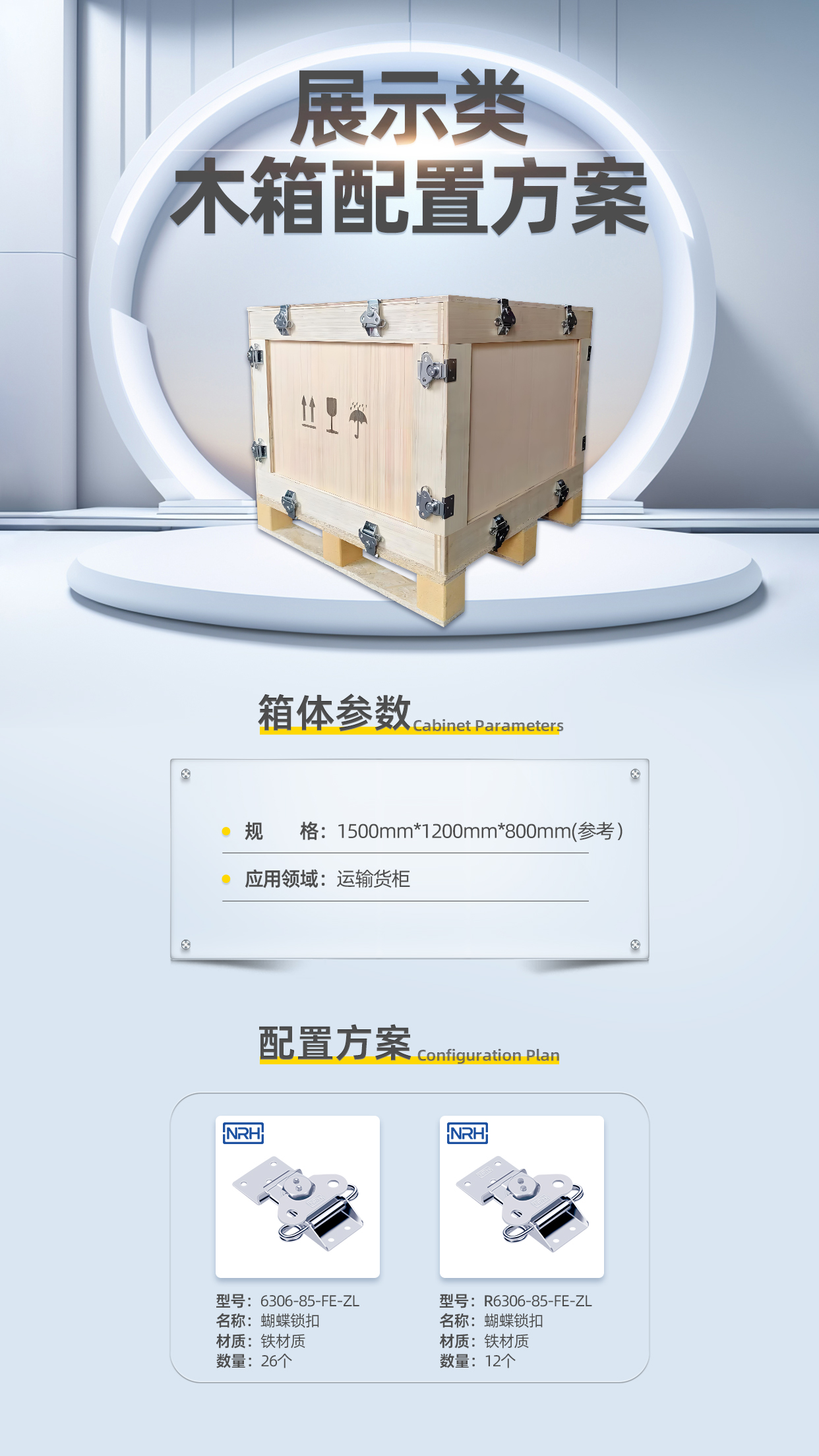
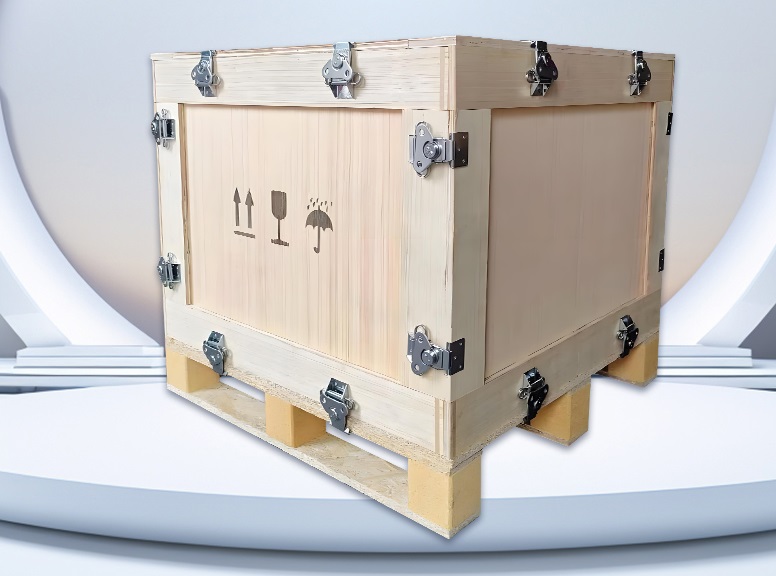
Fig. 1 – Case 13: Wooden crate (1500x1200x800mm) featuring 6306-85-FE-ZL butterfly latches for maximum retention
The wooden crate configuration represents a demanding application for latch hardware. With dimensions of 1500mm x 1200mm x 800mm, this container requires substantial retention force to maintain lid seal during transport. Case specifications include:
- Standard latches: 6306-85-FE-ZL butterfly latches (Iron, Zinc-plated) x 26 units
- Value latches: R6306-85-FE-ZL butterfly latches (Iron, Zinc-plated) x 12 units
- Total hardware: 38 latch assemblies per case
- Board thickness: Minimum 18mm recommended for mounting
The 6306-85-FE-ZL provides 588N tensile strength per latch. The R6306-85-FE-ZL is a value version with identical 588N tensile strength and zinc-plated finish, weighing 192g vs 203g for the standard version. Both models use mechanical lever-over-center locking mechanism with no spring components. This configuration delivers reliable performance for heavy equipment transport, military logistics, and industrial machinery shipping applications.
Case 5 – Roto-Molded Transport Case
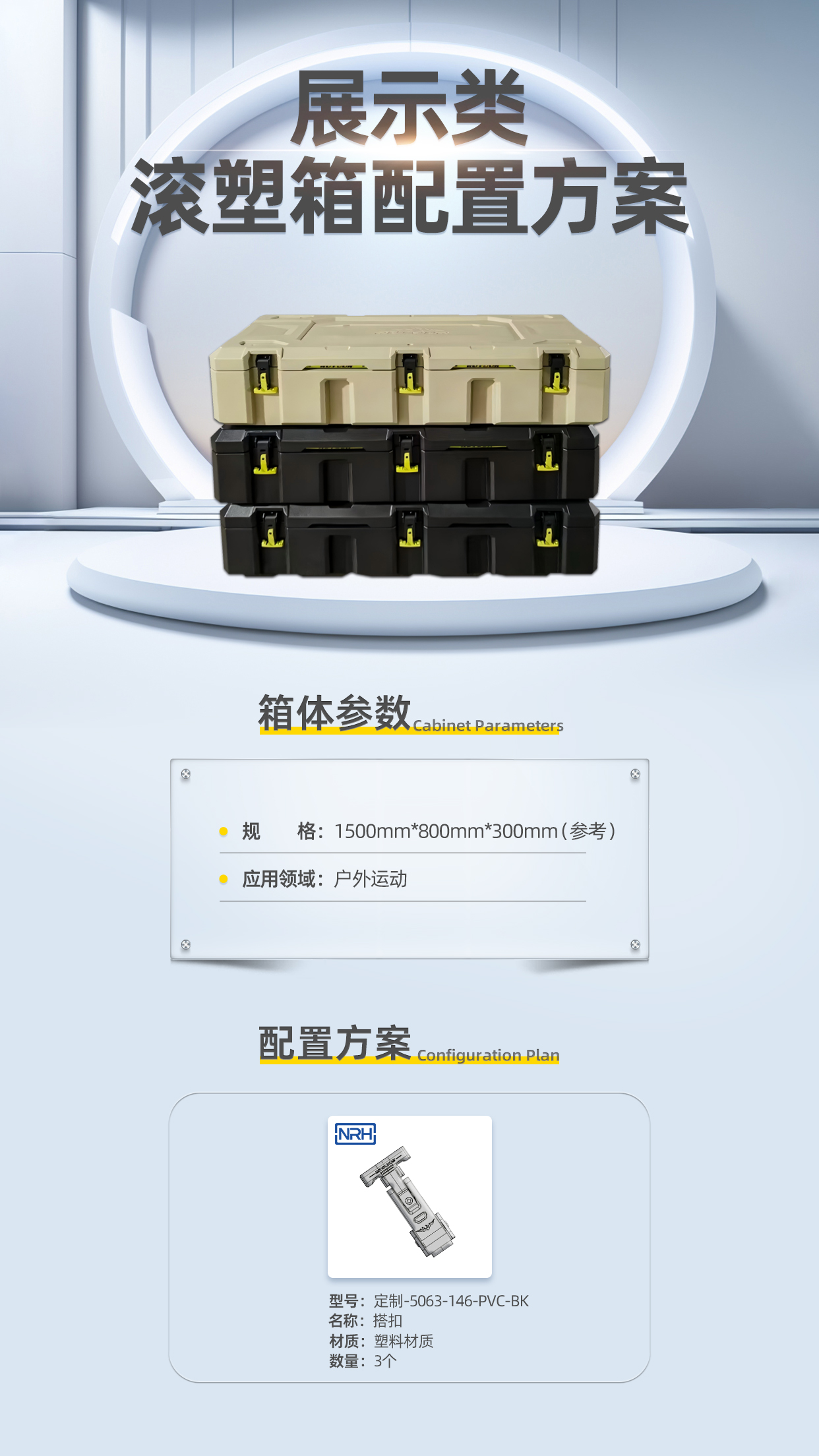
Fig. 2 – Case 5: Roto-molded transport container (1500x800x300mm) with 5063-146-PVC-BK PVC latches surface-mounted on the front panel
The roto-molded case presents different challenges for latch mounting due to hollow wall construction and weight optimization requirements. Case specifications include:
- Case dimensions: 1500mm x 800mm x 300mm
- Latch model: 5063-146-PVC-BK (PVC, Black) x 3 units
- Mounting approach: Surface mounting on case panel
- Latch distribution: 3 units evenly distributed across the front panel
- Application: Outdoor sports equipment, sensitive electronic instruments
These custom PVC latches match the flexibility and appearance requirements of consumer and professional-grade carrying cases. The black PVC construction provides UV resistance and maintains appearance over extended outdoor use. Three mounting points across the front panel provide even closure pressure while minimizing hardware weight.
Product Specifications Comparison
When selecting transit case hardware, compare specifications across the product range to match performance requirements with application conditions.
| Model | Type | Material | Surface | Weight | Tensile Strength | Application |
|---|---|---|---|---|---|---|
| 6306-85-FE-ZL | Butterfly | Iron | Zinc-plated | 203g | 588N | Standard heavy-duty |
| R6306-85-FE-ZL | Butterfly | Iron | Zinc-plated | 192g | 588N | Value / cost-effective |
| 5103-63K-S04-ZG | Latch | SUS304 | Vibratory | 36g | 700N | Stainless steel |
| 5201-106-S04-ZG | Handle | SUS304 | Vibratory | 76g | 35kg load | Handle application |
| 5063-146-PVC-BK | Latch | PVC | Black | – | – | Custom / lightweight |
Performance specifications listed per manufacturer catalog data. The 6306 series butterfly latches use mechanical lever-over-center locking with no springs. The R6306-85-FE-ZL provides identical tensile strength at reduced weight and cost, making it suitable for budget-conscious projects.
Installation Guidelines
Step 1: Mounting Surface Preparation
Begin by verifying the mounting surface condition. The panel must be flat and structurally sound. For wooden cases, measure wood density and confirm it meets minimum requirements for the selected latch hardware. The recommended minimum board thickness is 18mm for butterfly latches. Thinner panels will flex under latch tension, causing premature failure of mounting hardware.
Clean the mounting area to remove sawdust, debris, and any protective coatings that might interfere with hardware contact. Sand rough surfaces smooth and apply appropriate sealer if the case will encounter moisture exposure.
Step 2: Positioning and Alignment
Accurate positioning ensures proper latch function throughout the service life. Mark all latch positions accounting for the full lever travel distance. The strike plate mounting location must provide clearance for the lever mechanism to rotate completely into the locked position.
Maintain minimum 15mm edge distance from panel corners to prevent cracking under latch tension. For cases with multiple latches, verify alignment across all mounting points before drilling. A misaligned latch creates uneven closure pressure and accelerated wear on lever surfaces. For Case 5, the three PVC latches are evenly distributed across the front panel.
Step 3: Pilot Holes and Fastening
Drill pilot holes matching the latch mounting hardware specifications. The 6306-85-FE-ZL and R6306-85-FE-ZL use 7mm x 4.9mm mounting holes. For through-hole mounting, install flat washers under nut heads to distribute load across the mounting surface.
Apply appropriate torque specifications during assembly:
- M4 mounting screws: 2.0-2.5 Nm torque
- M5 mounting screws: 4.0-4.8 Nm torque
- M6 mounting screws: 6.0-8.0 Nm torque
For 6306 series latches, use M4 or M5 screws with 2.0-4.8 Nm torque depending on screw size. Over-torquing can deform the latch body or damage the mounting surface.
Step 4: Functional Testing
After installation, cycle each latch a minimum of 10 times to verify proper operation. The butterfly latch should engage positively with the strike plate, creating audible and tactile confirmation of secure closure. Verify there is no binding, sticking, or incomplete closure during the lever cycle.
Apply gradual pressure to test the closed latch retention. The mechanical lever-over-center mechanism should resist opening until intentionally released by the operator.
Common Installation Pitfalls
- Misalignment between latch and strike plate: Causes premature wear on lever mechanism surfaces and reduces retention force
- Insufficient clearance around moving parts: Leads to binding during thermal expansion in extreme temperature conditions
- Over-tightening mounting hardware: Compresses latch housing and restricts lever travel, causing incomplete engagement
- Mounting on inadequate substrate: Thin panels cannot maintain torque under dynamic transport loads, resulting in loose hardware
- Skipping functional testing: Defective installations discovered during use create safety hazards and cargo damage
Selection Criteria by Application Type
Heavy Industrial Applications (Wooden Crates, Equipment Cases)
Recommended model: 6306-85-FE-ZL / R6306-85-FE-ZL series
Iron construction with zinc plating delivers 588N tensile strength at an economical price point suitable for high-volume shipping applications. Case 13 demonstrates 26 standard latches supplemented by 12 value latches to achieve maximum retention force while optimizing cost. The R6306-85-FE-ZL provides the same tensile strength at lower weight (192g vs 203g) and cost.
Outdoor and Marine Environments
Recommended model: SUS304 stainless steel latches
Stainless steel construction provides excellent corrosion resistance against moisture, salt spray, and chemical exposure. Models like the 5103-63K-S04-ZG deliver 700N tensile strength while maintaining structural integrity and appearance in harsh conditions. The vibratory finish presents a professional appearance suitable for customer-facing equipment cases.
Lightweight Cases (Roto-Molded, Plastic Shell Containers)
Recommended model: Custom PVC latches (5063 series)
Custom configurations like the 5063-146-PVC-BK match the design flexibility required for roto-molded shells while providing adequate retention for sensitive equipment. Three-point mounting across the front panel distributes load across the case walls without adding excessive weight. The black PVC material complements the appearance of professional equipment cases and provides UV resistance for outdoor use.
What Happens If You Choose Wrong?
- Using lightweight PVC latches on heavy wooden crates: PVC latches lack the tensile strength (588N+) needed for heavy equipment transport. The latches will fail under load, potentially causing the lid to open during transit and cargo to spill or become damaged.
- Using butterfly latches on roto-molded cases without reinforcement: Butterfly latches require 18mm minimum substrate thickness for secure mounting. Roto-molded case walls are typically thinner. Without reinforcement plates, the mounting screws will pull through the plastic under transport vibration.
- Installing insufficient latch quantity: Case 13 uses 38 latches on a 1500mm crate. Installing only half that number would create uneven sealing pressure, allowing the lid to warp and compromising the seal. Calculate one latch per 100-150mm of case perimeter for heavy-duty applications.
- Using non-zinc-plated iron in outdoor environments: Uncoated iron rusts rapidly in humid conditions. Zinc plating provides essential corrosion resistance. For marine or coastal environments, specify SUS304 stainless steel.
- Mixing standard and value latches without verifying alignment: While the R6306-85-FE-ZL shares the same mounting hole pattern, verify all latches align properly before final installation. Misaligned latches create uneven closure pressure.
Application Summary
Two distinct transit case configurations demonstrate the range of latch solutions available for industrial packaging applications:
- Case 13 (1500x1200x800mm wooden crate): 38 butterfly latches (6306-85-FE-ZL standard and R6306-85-FE-ZL value versions) provide 588N tensile strength per latch. The 6306 series uses mechanical lever-over-center locking with no springs. Recommended for heavy equipment transport, military logistics, and industrial machinery shipping.
- Case 5 (1500x800x300mm roto-molded case): 3 custom PVC latches (5063-146-PVC-BK) mounted on the front panel surface. Provides lightweight, corrosion-resistant closure for outdoor sports equipment and sensitive electronic instruments.
Key selection factors for transit case latch applications include:
- Tensile strength: 6306 series (588N) for heavy loads; PVC latches for light loads
- Weight: R6306-85-FE-ZL (192g) is 11g lighter than 6306-85-FE-ZL (203g)
- Corrosion resistance: Zinc-plated iron for indoor; SUS304 for outdoor/marine
- Latch quantity: 38 for 1500mm wooden crate; 3 for 1500mm roto-molded case
- Mounting method: Surface mounting for roto-molded; through-hole for wooden crates
- Locking mechanism: Mechanical lever-over-center (no springs in butterfly latches)
Recommended for similar applications: These latch configurations are also well-suited for export shipping containers, military equipment cases, aviation logistics containers, industrial machinery transport crates, and any heavy-duty case requiring secure closure with optimized cost.
Frequently Asked Questions
Q: What is the difference between 6306-85-FE-ZL and R6306-85-FE-ZL?
Data answer: Both provide 588N tensile strength with zinc-plated iron construction. The R6306-85-FE-ZL is a value version weighing 192g (203g for standard) with a slightly more compact body. Both use mechanical lever-over-center locking with no springs. The value version offers identical performance at reduced weight and cost.
Q: Do butterfly latches contain springs?
Data answer: No. The 6306 series butterfly latches use a mechanical lever-over-center locking mechanism with no springs. The wing-shaped lever locks over-center, providing consistent clamping force without spring components.
Q: How many latches should I install on a transit case?
Data answer: Case 13 uses 38 butterfly latches on a 1500x1200x800mm wooden crate. For standard transit cases, calculate one latch per 100-150mm of case perimeter for heavy-duty applications. Reduce spacing to one latch per 200mm for light-duty cases. Case 5 uses 3 PVC latches evenly distributed across the front panel.
Q: Can I surface-mount butterfly latches on roto-molded cases?
Data answer: Butterfly latches require through-hole mounting with minimum 18mm substrate thickness. For roto-molded cases with thin walls, use PVC latches like the 5063-146-PVC-BK with surface mounting. The 5063 series mounts directly on the panel surface without cutting, distributing load across the case wall.
Q: What torque should I apply to butterfly latch mounting screws?
Data answer: For 6306 series latches with M4 screws, apply 2.0-2.5 Nm. For M5 screws, apply 4.0-4.8 Nm. Over-torquing can deform the latch body. Use a calibrated torque wrench for consistent results.
Q: Are these latches suitable for outdoor use?
Data answer: Zinc-plated iron (ZL) provides corrosion resistance for indoor and covered outdoor storage. For exposed outdoor use, coastal environments, or marine applications, specify SUS304 stainless steel models like the 5103-63K-S04-ZG.
Q: How do I distribute PVC latches on a roto-molded case?
Data answer: Case 5 uses 3 PVC latches evenly distributed across the front panel. This provides even closure pressure across the case opening. For larger cases, add additional latches at 300-400mm intervals along the opening edge.
Q: What is the expected service life of these latches in transport applications?
Data answer: With proper installation and maintenance, the 6306 series butterfly latches exceed 10,000 open-close cycles. The mechanical lever-over-center design has no springs to fatigue, extending operational life. PVC latches provide 5+ years of service in normal outdoor use conditions.
Need help choosing the right latch for your transit case? Contact our technical team for specification support and sample requests.
Contact Information:
- TEL and WhatsApp and WeChat: +86 180 1797 5137
- E-MAIL: nrh-gz@nrh.cn
- ADD: Room 1703-1704, Zhongji Mansion, 819 Yinxiang Road, Nanxiang Town, Jiading District, Shanghai, China