

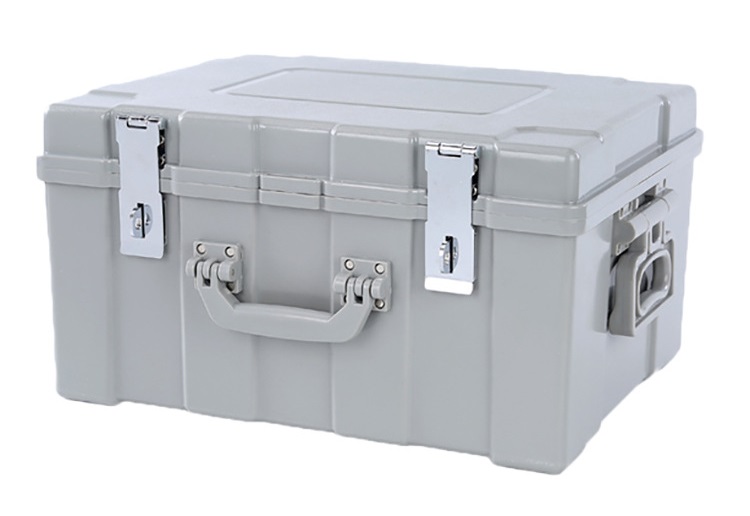
Locking Latches for Secure Banking and ATM Transport Cases
Cash transport cases move between bank branches, ATM sites, and secure storage facilities every day. A failed latch on a transport case means a security breach. For banking and ATM service applications, case hardware is security hardware.
This case study examines the NRH 5901-125K locking latch and 4403-163 handle on a 260 x 370 x 470 mm transport case for bank cash handling, ATM replenishment, and valuable equipment transport. All specifications verified from NRH product specification drawings.
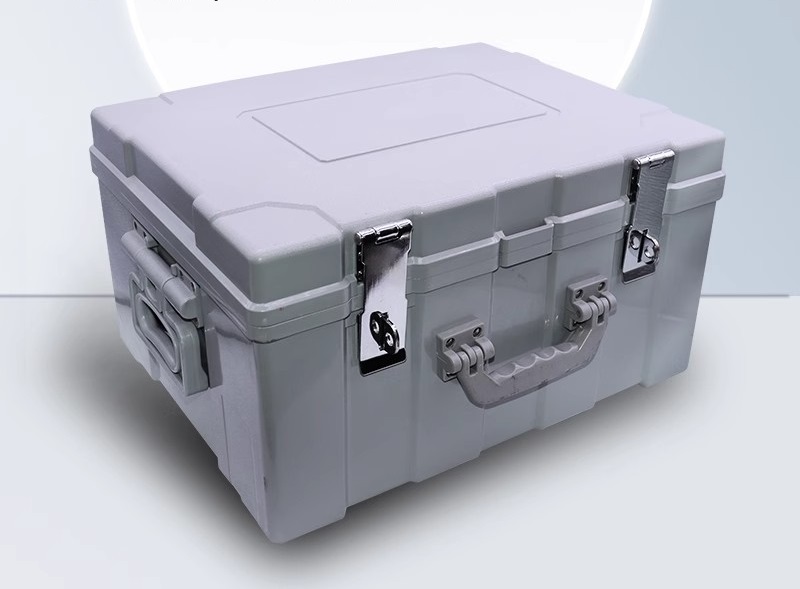
Figure 1: 260 x 370 x 470 mm banking transport case with NRH locking latches and handle
Applicable Buyers
- Security case manufacturers for banking and financial institutions
- ATM service and cash logistics equipment suppliers
- Banking equipment case fabricators
- Secure transport case manufacturers
- Custom case builders for financial and security applications
Key finding: The NRH 5901-125K locking latch delivers secure closure with a built-in lock cylinder for banking transport cases. The 4403-163 handle provides 35kg load capacity at only 102g, keeping the 260 x 370 x 470 mm case portable and manageable. Two 5901-125K latches provide balanced security on both sides of the handle. The 304 stainless steel construction of the 5901-125K ensures corrosion resistance and long-term durability in field service environments.
What Happens If You Choose Wrong
Choosing the wrong hardware for a banking transport case creates four critical failure modes:
- Security breach. A latch without a lock cylinder allows unauthorized access. A latch without adequate holding force can be pried open. For cash and valuable equipment transport, this is an unacceptable risk.
- Latch failure during transport. A latch without sufficient strength can release when the case is dropped or impacted. The case opens, contents spill, and security is compromised. For banking applications, this means loss of assets and regulatory non-compliance.
- Handle breakage. A handle without adequate load capacity will break under the weight of a fully loaded case. A dropped cash case can damage contents and create safety hazards for personnel.
- Corrosion failure. Banking transport cases are exposed to weather during loading and unloading. Plated hardware rusts. Rusted locks seize. Seized locks cannot be opened or closed, rendering the case unusable.
The 5901-125K and 4403-163 eliminate these risks through secure locking, 304 stainless steel construction, proper load rating, and corrosion-resistant design.
Configuration Summary
| Component | Model | Material | Finish | Key Specification | Qty per Case |
|---|---|---|---|---|---|
| Locking Latch | 5901-125K | 304 stainless steel | Brushed | With lock cylinder, 150g | 2 |
| Handle | 4403-163 | Plastic | Black | 35kg load capacity, 102g | 1 |
| Case Body | Custom | Various | – | 260 x 370 x 470 mm | 1 |
Product Specifications
5901-125K Locking Latch
Constructed from 304 stainless steel with a brushed finish, the 5901-125K is a locking latch designed for cases requiring secure closure with key access. Its corrosion resistance makes it suitable for banking and security applications, while the integrated lock cylinder (K variant) accepts a standard key for authorized access. Product weight: 150g.
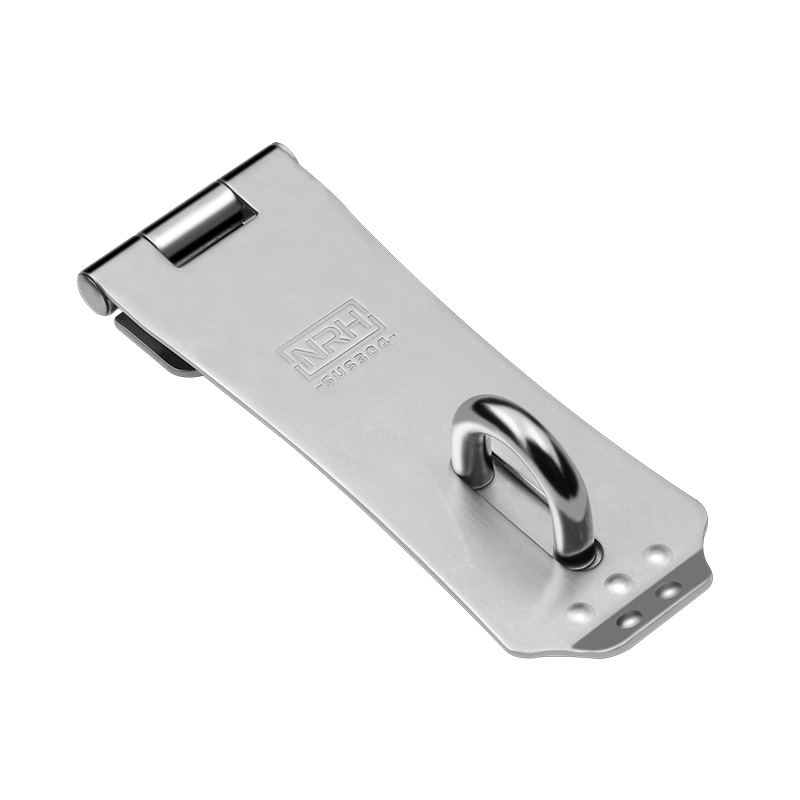
Figure 2: NRH 5901-125K locking latch – 304 stainless steel, brushed finish, with lock cylinder
| Parameter | Specification |
|---|---|
| Model | 5901-125K |
| Type | Locking Latch |
| Material | 304 stainless steel |
| Surface Finish | Brushed |
| Weight | 150g |
| Lock Cylinder | Integrated (K variant) |
| Overall Dimensions | 129.2 x 44.5 x 21mm |
| Mounting Holes | 3 x 4.3mm (body), 4 x 4.3mm (catch) |
4403-163 Handle
This plastic handle is designed for cases requiring lightweight, ergonomic carrying. With a black finish, it provides 35kg load capacity at only 102g. The handle is surface-mounted and requires no panel cutout, making installation simple. Suitable for banking transport cases where weight reduction is important. Product weight: 102g.
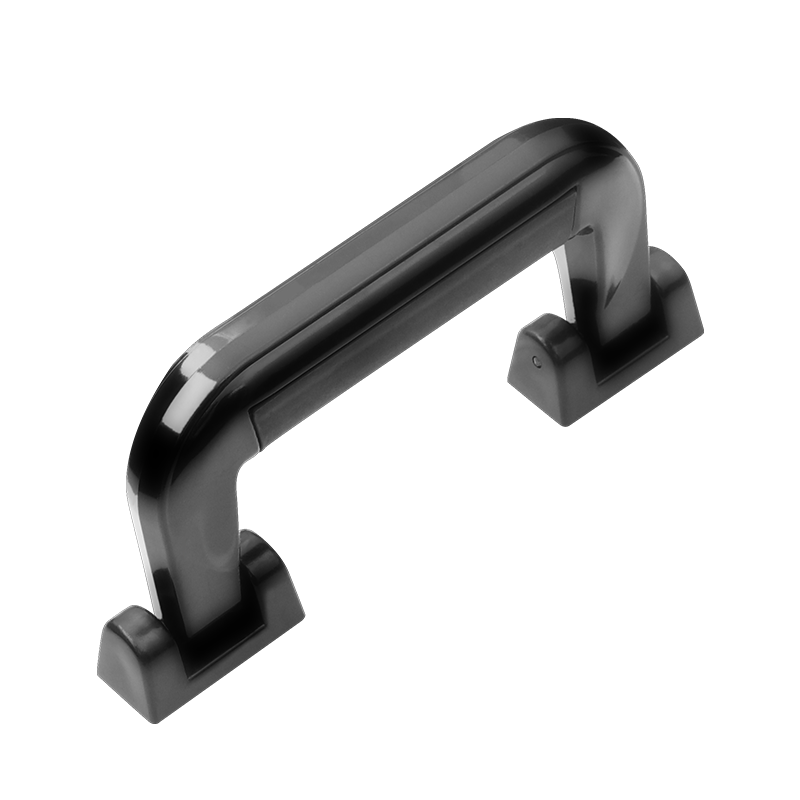
Figure 3: NRH 4403-163 handle – plastic, black finish, 35kg load capacity, 102g
| Parameter | Specification |
|---|---|
| Model | 4403-163 |
| Type | Carrying Handle |
| Material | Plastic |
| Color | Black |
| Weight | 102g |
| Load Capacity | 35kg |
| Overall Dimensions | 161 x 48 x 20.4mm |
| Mounting Holes | 4 x 3.2mm |
Product Comparison
| Feature | 5901-125K Locking Latch | 4403-163 Handle |
|---|---|---|
| Primary Function | Secure closure with lock | Carrying and lifting |
| Material | 304 stainless steel | Plastic |
| Finish | Brushed | Black |
| Weight | 150g | 102g |
| Load Rating | High holding force | 35kg |
| Lock | Integrated lock cylinder | No |
| Installation | Surface mount | Surface mount |
Application Scenarios
Bank Branch Cash Transport
Banks transport cash between branches, central vaults, and commercial clients daily. The 5901-125K’s integrated lock cylinder provides secure closure that can only be opened by authorized personnel with the correct key. Two locking latches on the 260 x 370 x 470 mm case ensure balanced security. The 4403-163 handle at 102g keeps the case lightweight for tellers and couriers making multiple trips.
ATM Replenishment and Service
ATM service technicians carry cash cassettes, receipt paper, and maintenance equipment to ATM sites. Cases are loaded and unloaded multiple times per shift. The 5901-125K’s 304 stainless steel construction resists corrosion from weather exposure during outdoor ATM servicing. The brushed finish hides scratches from frequent handling. The 4403-163 handle provides 35kg capacity for fully loaded service cases.
Valuable Equipment Transport
Financial institutions transport sensitive equipment such as currency counters, validation devices, and secure terminals. The 5901-125K provides secure closure that deters tampering during transport. Two locking latches provide balanced sealing pressure that keeps the case closed even if dropped or impacted. The 4403-163 handle enables comfortable carrying for service personnel moving between locations.
Installation Guide
Tools Required
- Drill with appropriate bit size (4.3mm for 5901-125K, 3.2mm for 4403-163)
- Measuring tape or ruler
- Marker for hole positioning
- Rivet gun or screwdriver
Installation Steps
- Position the hardware. Place the 4403-163 handle centered on the front face of the 260 x 370 x 470 mm case. Place two 5901-125K locking latches symmetrically on both sides of the handle, positioned at equal distances from the left and right edges for balanced security.
- Mark hole locations. Use the hardware mounting flanges as templates. Mark hole positions for the 5901-125K (3 body holes, 4 catch plate holes) and the 4403-163 (4 holes).
- Drill mounting holes. Drill holes at the marked positions. Use a 4.3mm bit for 5901-125K holes and a 3.2mm bit for 4403-163 holes. Ensure holes are clean and burr-free.
- Install the hardware. Secure the 5901-125K locking latches and 4403-163 handle using rivets or screws. For plastic case bodies, use backing plates to distribute load. For metal cases, rivets provide a permanent, vibration-resistant connection.
- Test operation. Verify smooth latch engagement and handle movement. Test the lock cylinder with the supplied key. The latches should engage securely when closed.
Installation Method Comparison
| Method | Advantages | Considerations |
|---|---|---|
| Rivets | Permanent, vibration-resistant, secure | Requires rivet tool; not removable |
| Screws | Removable, adjustable, field-serviceable | Use thread-locker in high-vibration applications |
Key Installation Notes
- Verify load capacity before selecting handle. The 4403-163 is rated at 35kg. If the fully loaded 260 x 370 x 470 mm case exceeds this weight, consider a metal handle with higher load capacity.
- Use backing plates for plastic cases. For cases with thin walls, use backing plates or large washers behind the mounting holes to distribute the clamping load and prevent pull-through.
- Align latch catch plates precisely. The 5901-125K catch plates must align with the latch hooks for proper engagement. Use the closed lid position to mark catch plate locations.
- Test lock function before final assembly. Verify the lock cylinder turns smoothly and the key can be inserted and removed without interference.
Key Takeaways
- The 5901-125K locking latch provides secure closure with an integrated lock cylinder for banking and security applications
- 304 stainless steel construction with brushed finish provides corrosion resistance and a professional appearance
- The 4403-163 handle delivers 35kg load capacity at only 102g, keeping the case portable
- Two locking latches per case provide balanced security on both sides of the handle
- 260 x 370 x 470 mm case size is ideal for bank branch, ATM service, and equipment transport
- Suitable for cash logistics, ATM replenishment, valuable equipment transport, and secure mail
Frequently Asked Questions
What is the 5901-125K latch made from?
Constructed from 304 stainless steel with a brushed finish, providing corrosion resistance without coatings that can chip or flake.
Does the 5901-125K include a lock?
Yes. The K variant includes an integrated lock cylinder that accepts a standard key, providing secure closure for banking and security applications.
How many locking latches should be installed on a case?
Two latches per case is the recommended configuration. This provides balanced security and ensures the case remains closed even if one latch is compromised.
What is the load capacity of the 4403-163 handle?
The 4403-163 handle carries 35kg load capacity (verified from NRH product specification drawings). For cases exceeding this weight, select a metal handle with higher load capacity.
Can the 4403-163 handle be used on heavy cash cases?
Rated at 35kg. If the fully loaded case exceeds this weight, consider a metal handle such as the 4201-100 (25kg) or 4301-100 (50kg) for higher load capacity.
What is the recommended configuration for a 260 x 370 x 470 mm cash case?
Two 5901-125K locking latches (one on each side of the handle) plus one 4403-163 handle centered on the front face. This provides balanced security and ergonomic carrying.
Are these products suitable for outdoor ATM service?
Yes. The 5901-125K’s 304 stainless steel construction resists corrosion from weather exposure. The 4403-163 plastic handle is also weather-resistant and UV-stable for outdoor use.
What fasteners are recommended for installation?
Use M4 rivets or M4 machine screws with large washers. For plastic cases, backing plates are recommended to distribute the load and prevent pull-through. For metal cases, blind rivets provide a permanent connection.
Need Help Choosing?
Selecting the right hardware for a banking transport case means balancing security, load capacity, and weight. If you need guidance on latch quantity, handle selection, or lock configuration for your cash transport case project, we can help.
TEL and WhatsApp and WeChat: +86 180 1797 5137
E-MAIL: nrh-gz@nrh.cn
ADD: Room 1703-1704, Zhongji Mansion, 819 Yinxiang Road, Nanxiang Town, Jiading District, Shanghai, China