

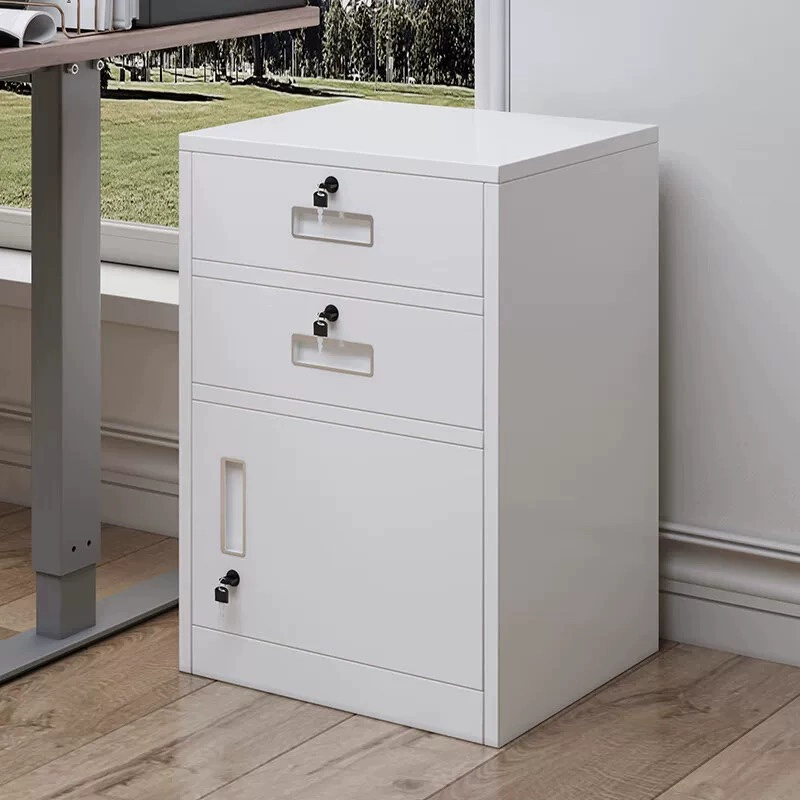
Office File Cabinet Hardware: Zinc Alloy Cam Lock with Stainless Steel Recessed Handle
Quick summary: The 9918B-25-ZN-LGY zinc alloy cam lock paired with the 4605-125-S04-LS 304 stainless steel recessed handle is our go-to hardware combination for standard office file cabinets, under-desk pedestals, and side storage units. It’s not the cheapest option, but it delivers consistent quality, good corrosion resistance for both European and Southeast Asian markets, and a clean flush look that buyers will pay more for. Both products require slot or pocket cutting for installation — here’s what you need to know before you specify them.
Office file cabinets aren’t glamorous. Nobody walks into a furniture showroom and gets excited about a filing cabinet. But if you make them for a living, you know the hardware is what separates a cabinet that feels cheap from one that feels solid. The lock either turns smoothly or it grinds. The handle either sits flush or it catches your sweater. Small things, but they add up.
At NRH Box Hardware, we’ve been supplying locks and handles to office furniture manufacturers for years. One combination we keep recommending — and one that our repeat clients keep ordering — is the 9918B-25-ZN-LGY zinc alloy cam lock with the 4605-125-S04-LS 304 stainless steel recessed handle.
It’s not the cheapest combo and it’s not the fanciest. But for standard office file cabinets — wooden or metal, under-desk or full-size, sold in Europe or Southeast Asia — it just works. And it works consistently, which is what furniture manufacturers actually care about.
Here’s why this pairing works, what the installation actually involves (hint: you do need to cut slots), and what to watch out for if you’re thinking about using these on your next cabinet line.
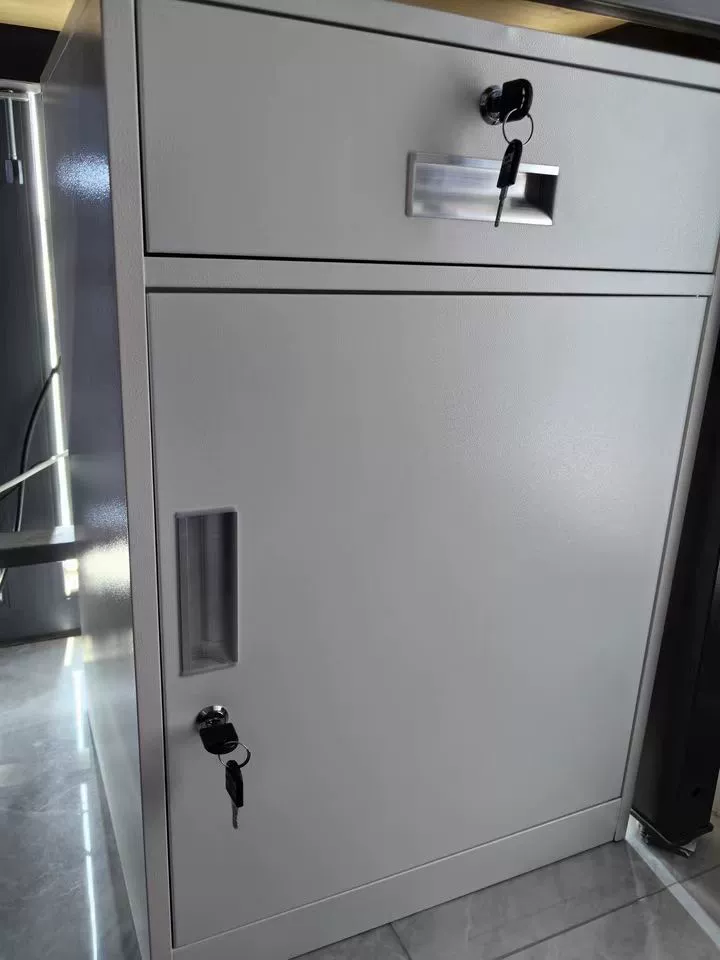
Standard office storage cabinets using 9918B-25 cam locks and 4605-125 recessed handles
What Cabinet Types Do These Work Best On?
This hardware combination is versatile — we’ve seen it used on everything from small mobile pedestals to full-height filing cabinets. But it really shines on three common office cabinet formats.
Mobile File Cabinets with Drawers + Doors
The wider units, usually around 80-100cm wide, with a mix of drawers and cabinet doors. These are popular in executive offices and co-working spaces where you need both locked document storage and open shelving for books or display items. The recessed handles look good on both drawers and doors, which keeps the design consistent across the whole unit. We typically see one lock on the top drawer, sometimes two if the cabinet is for sensitive documents.
Under-Desk Storage Pedestals
60cm wide, three drawers, fits under a standard desk. This is the volume seller — every office needs them, and they sell by the thousands. The top drawer is usually the one with the lock; people keep their phone, wallet, keys, and confidential paperwork there. The lower two drawers are for files and supplies. Recessed handles are especially good on these because there’s no protruding handle to bump your knee against.
Side Cabinets with Door + Drawer Combo
Same 60cm footprint as the under-desk model, but with a cabinet door on one side and stacked drawers on the other. These sit next to desks or against walls, used for both document storage and general office supplies. The white matte versions sell well in European markets; wood-grain finishes are more popular in Southeast Asia.
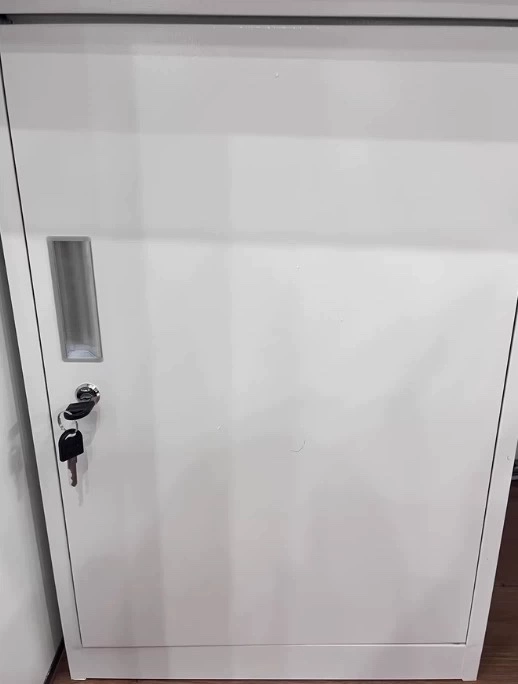
Under-desk storage pedestal with 9918B-25 cam lock on the top drawer
Zinc Alloy Cam Lock for File Cabinets: Specifications and Performance
The 9918B-25 is a zinc alloy cam lock with a bright silver finish, 25mm barrel length. Straightforward piece of hardware — not trying to be anything it’s not.
| Specification | 9918B-25-ZN-LGY |
|---|---|
| Material | Zinc alloy (die-cast) |
| Finish | Bright silver |
| Barrel length | 25mm |
| Mounting hole | 16mm diameter |
| Rotation | 90 degrees |
| Keying options | KA, KD, master key systems |
| Cycle life | 10,000+ turns |
| Panel thickness range | 16-22mm (standard) |
What’s Good About This Zinc Alloy Cam Lock?
The zinc alloy body is die-cast, which means the internal components are precise. You can feel it when you turn the key — no play, no grinding, just a smooth 90-degree rotation. I’ve tested enough cheap locks to know that this smoothness doesn’t happen by accident. It comes from good tooling and consistent material quality, both of which cost a little more upfront but save you returns down the line.
The 25mm barrel is the sweet spot for office furniture. Most panels are 16-22mm thick, so 25mm gives you enough thread to get a secure mount without sticking too far out the back and interfering with drawer slides or file folders. It works on engineered wood, solid wood, and thin-gauge steel — which is helpful for manufacturers who make both wooden and metal cabinets.
Keying options are flexible. Keyed alike, keyed different, master key systems — whatever the project needs. A lot of co-working space orders go with KD (keyed different) for individual lockers plus a master key for management. Corporate offices often go KA (keyed alike) so one key works everything on a floor, with a separate grand master for the whole building.
What Are the Limitations?
Let’s be realistic. This is a cam lock, not a high-security lock. It keeps honest people honest and provides basic privacy for desk drawers and file cabinets. If someone really wants to get in, they can pry a drawer open with a screwdriver. For 95% of office use, that’s perfectly adequate. For storing valuables or highly sensitive documents, you’d want something more heavy-duty — a deadbolt lock or a multi-point locking system.
The bright silver finish is another thing to consider. It looks clean and matches stainless steel handles well, but it does show fingerprints more than a matte finish would. That’s why we also offer this lock in matte black and other finishes — it just depends on the aesthetic you’re going for.
Why Choose Zinc Alloy Over Cheaper Materials?
This is a question we get from cost-sensitive clients: can’t we just use a cheaper steel lock? Sometimes. But usually, the savings aren’t worth it.
Zinc alloy resists corrosion better than plain steel. In humid climates — Southeast Asia, coastal Europe — this matters. A cheap steel lock might work fine for six months, then start rusting around the keyhole. Zinc alloy locks don’t do that. They’re not at the level of stainless steel, but for indoor office use, they’re more than durable enough.
Zinc die-casting also holds tighter tolerances than stamped steel parts. That translates to a better fit, smoother operation, and fewer defective units out of the box. When you’re producing thousands of cabinets, a lower defect rate saves real money in rework and returns.
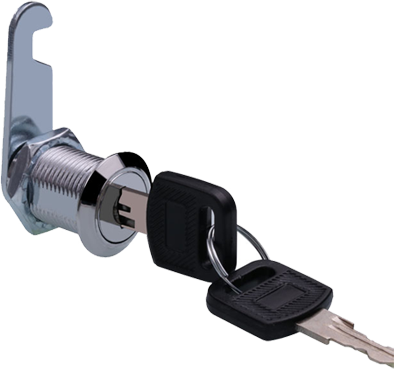
9918B-25-ZN-LGY zinc alloy cam lock with bright silver finish
Stainless Steel Recessed Handle for Office Cabinets: Specs and Benefits
The 4605-125 is a 304 stainless steel recessed handle with a brushed finish, 125mm overall length. “Recessed” means it sits flush with the cabinet surface instead of sticking out like a traditional pull handle. If you haven’t worked with these before, they change the whole look of a cabinet.
| Specification | 4605-125-S04-LS |
|---|---|
| Material | 304 stainless steel |
| Finish | Brushed |
| Overall length | 125mm |
| Grip length | 113mm |
| Mounting pocket size | 106mm x 38mm |
| Mounting holes | 4 x 5mm (countersink 7.5mm) |
| Load rating | 10kg per handle |
| Installation type | Flush / recessed (router pocket required) |
What Makes These Handles a Good Choice?
First, the material: 304 stainless steel. We specify 304 instead of 201 because the corrosion resistance is genuinely better. The price difference per handle isn’t huge — maybe 20-30% more — but the lifespan in humid environments is significantly longer. We’ve seen 201 stainless handles develop rust spots after a year in tropical climates. 304? We have installations from 2019 in Kuala Lumpur that still look fine.
The brushed finish is practical. It hides fingerprints and minor scratches better than polished stainless. For office furniture that gets daily use by multiple people, this is a real advantage. Polished stainless looks amazing in a catalog photo but terrible after two weeks of real-world use.
At 125mm long, the handle is a good size — not so small that it’s cramped, not so big that it overwhelms a standard drawer front. The inner grip length is 113mm, which gives you enough room for a comfortable hold even with larger hands or gloves on. Load rating is 10kg per handle, which is more than enough for fully loaded file drawers.
What Should You Know Before Committing to Recessed Handles?
Recessed handles look great, but they’re not the right choice for every project. A few things to consider:
Installation is more involved. You can’t just drill two holes and screw them on. You need to route a pocket into the panel for the handle to sit in. That means more tooling, more setup time, and a steeper learning curve for your assembly team. For high-volume production, the per-unit cost evens out because the handles themselves are competitively priced. But for small runs, the labor cost might not make sense.
They’re less ergonomic for some users. People with arthritis or limited hand strength often find pull handles easier to grip. If you’re outfitting a healthcare facility, senior center, or accessibility-focused space, pull handles are probably the better call. For standard office use, recessed handles are fine — just not optimal for everyone.
Depth consistency matters. If the routed pocket is even half a millimeter too shallow, the handle sits slightly proud of the surface and you can feel it when you run your hand across. Too deep, and it’s harder to get a grip. Getting this right consistently takes good tooling and good quality control.
Why Did Recessed Handles Take Over Office Furniture?
Five years ago, most office cabinets had pull handles. Today, recessed is the default in most markets we sell into. The shift happened fast, and for different reasons in different regions.
In Europe, it was driven by design. Minimalism was already big in Scandinavian furniture, and it spread south and west. A row of cabinets with flush handles just looks cleaner, more intentional, more expensive. Buyers will pay more for that look. German and Dutch furniture buyers in particular care a lot about these details — they notice if the handle isn’t perfectly flush, and they’ll reject a batch for it.
In Southeast Asia, it’s more about practicality. Office spaces are smaller. Walkways are narrower. Protruding handles catch on bags, shirt sleeves, rolling chairs. I’ve heard more than one facilities manager complain about snagged clothing being a minor but persistent office annoyance. Recessed handles eliminate that problem entirely. They also make it easier to push cabinets close together or into tight spaces.
And for under-desk cabinets specifically? It’s not even a debate anymore. Recessed handles prevent knee contact, which is a real comfort issue when you’re sitting at a desk eight hours a day. We rarely see pull handles specified for under-desk pedestals these days.
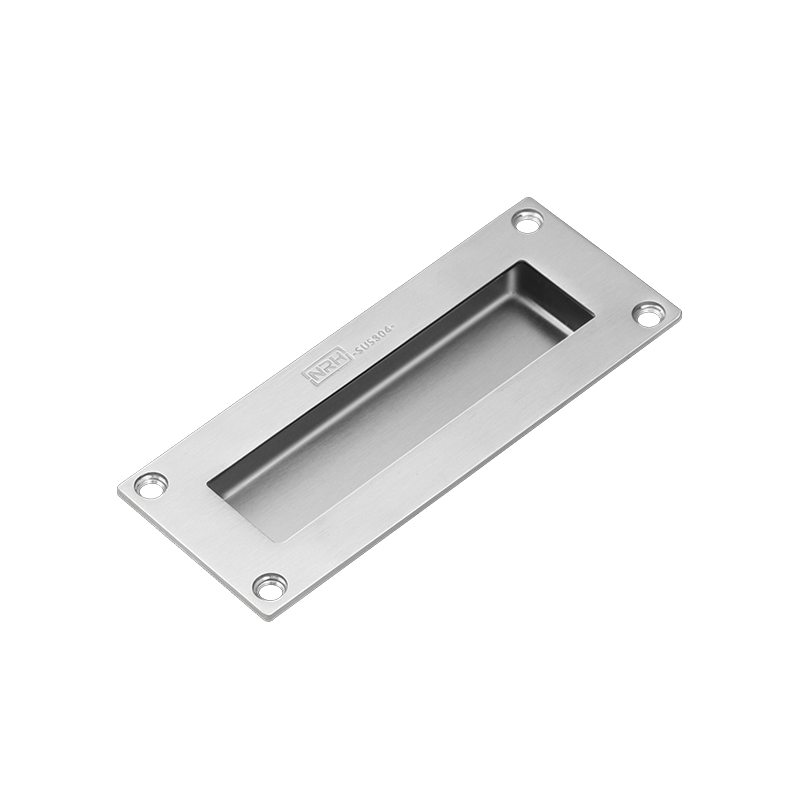
4605-125-S04-LS 304 stainless steel recessed handle with brushed finish
How to Install: Slot Cutting and Step-by-Step Guide
Both of these products require some level of slot or pocket cutting for proper installation. This is the part that trips up manufacturers who are switching from surface-mounted hardware. It’s not hard, but it requires the right tools and a little practice.
How Do You Install a Cam Lock on a File Cabinet?
The cam lock is the simpler of the two. Two main operations:
- Drill the 16mm bore hole. A Forstner bit gives the cleanest edge; a hole saw works too. The key here is keeping the drill straight — if the hole is angled, the lock won’t seat properly and the key will feel stiff.
- Cut the cam arm slot (back side). On the back of the panel, you need a shallow rectangular slot for the cam arm to rotate in. This doesn’t need to be pretty — nobody sees it — but it needs to be deep enough and long enough that the cam turns freely without binding.
From there, it’s just inserting the lock from the front, threading on the nut and washer from the back, tightening it down, and attaching the cam arm. An experienced installer can do a drawer in a few minutes once the prep work is done. Full dimensions are in the product drawing, which we provide on request.
How Do You Install a Recessed Handle on Office Furniture?
This is where you need a router — or better yet, a CNC router for production. The handle body sits in a recessed pocket that you machine into the front face of the panel.
The basic steps:
- Lay out and mark the handle position. For drawers, we typically center horizontally and place it 100-150mm from the top edge, depending on drawer height. For doors, mid-height is standard, though some designers prefer higher placement for ergonomics.
- Route the pocket. For the 4605-125, that’s 106mm x 38mm. The depth is critical — it needs to match the flange thickness of the handle so it sits perfectly flush. Use a template guide or CNC for consistency.
- Drill four 5mm mounting holes from the back side, aligned with the screw positions. Countersink the front to 7.5mm so the screw heads sit below the surface.
- Set the handle in the pocket, install the four screws from the back, and check that it’s sitting flush and level.
The first few will be slow while you dial in the depth. Don’t rush this step — a handle that sits even 0.5mm proud of the surface is noticeable to the touch, and it looks unprofessional.
Production Tips for Slot Cut Installation
If you’re making more than a couple hundred units, invest in a good jig or a CNC program. The consistency you get from automated routing pays for itself quickly in fewer rejects and less rework. We’ve seen factories go from 5-8% installation rejects with hand routers to under 1% with CNC. That’s a lot of saved time and material.
We also recommend doing a full test run with 10-20 units before committing to a full production batch. It gives your team a chance to work out the kinks with the router setup, and you can verify the fit and feel before you’ve cut thousands of panels.
Europe vs. Southeast Asia: Same Hardware, Different Selling Points
One thing I find interesting is that this exact same hardware sells well in both Europe and Southeast Asia, but for almost entirely different reasons. If you’re selling into both markets, you can’t use the same marketing copy for both — you have to emphasize what each market actually cares about.
What Do European Buyers Focus On?
Certifications come first. RoHS, REACH, material composition — if you can’t provide the documentation, you don’t get past the first email. European procurement teams are thorough and they check everything. The 9918B-25 is compliant, so that’s not an issue, but you do need to have the paperwork ready. You can read more about our certifications and compliance documentation here.
Then it’s about design and feel. European buyers notice the small stuff. Is the handle perfectly flush? Does the key turn smoothly? Does the finish match across all the hardware pieces? These details might seem trivial, but they’re what separate a premium product from a budget one in the European market. German buyers in particular have high standards for fit and finish, and they’ll reject an entire shipment if the handles aren’t consistently installed.
Price matters, of course, but it’s usually not the deciding factor. European buyers are more willing to pay a premium for quality, consistency, and good documentation — as long as you can actually deliver on all three.
What Do Southeast Asian Buyers Focus On?
Durability in humid conditions is number one. Nobody wants hardware that rusts in a year, and buyers in Singapore, Malaysia, Thailand, and Indonesia have all been burned by cheap 201 stainless or zinc-plated steel products that don’t hold up. That’s why 304 stainless handles and zinc alloy locks are non-negotiable for most of our SEA clients.
Price is more of a factor in SEA than in Europe. Not the cheapest possible — everyone knows cheap hardware ends up costing more — but definitely value-conscious. The 9918B and 4605-125 hit a good price point: solid quality, reliable, but not so expensive that they push the cabinet price above what the market will bear.
Space is another consideration. Office real estate is expensive in major SEA cities, and furniture needs to work in tight spaces. The flush profile of recessed handles means cabinets can be placed closer together, pushed up against walls, and fit into narrow gaps that would be awkward with protruding handles. It’s a small thing, but it matters when you’re optimizing every square meter of office space.
How Do We Test and Ensure Quality?
We test all our hardware, but I won’t drag you through every detail. The tests that actually matter for office furniture use:
Cycle testing on locks. 10,000 key turns minimum. If a lock is going to fail, it usually fails well before that point. If it passes 10,000 cycles, it’ll probably last the lifetime of the cabinet for normal office use.
Load testing on handles. Tested beyond the 10kg rating. File drawers get heavy, and the last thing you want is a handle pulling out of the door when someone yanks it open.
Salt spray testing. Critical for humid markets. Both the zinc alloy locks and 304 stainless handles go through salt spray testing to verify corrosion resistance. It’s the only reliable way to know how hardware will hold up in coastal or tropical environments.
Dimensional checks. Every batch gets measured against the engineering drawing. When you’re producing thousands of units, even a 0.2mm variation in handle thickness means some will sit flush and some won’t. Consistent dimensions are what make high-volume installation work.
Can You Customize These Products?
The standard 9918B-25-ZN-LGY and 4605-125-S04-LS are catalog items, but they’re not the only options. We do custom work when a project needs it.
For locks: different finishes (matte black, antique brass, polished chrome), different key systems, custom key codes, even laser engraving if you want your logo on the lock face. For handles: different lengths (we’ve done everything from 80mm to 200mm), different materials, different finishes, custom packaging.
For fully custom hardware — a completely new lock or handle design — our engineering team can work with you from concept to prototype to production. Minimums are higher for custom designs, but if you’re building a product line that you’ll sell for years, it’s usually worth the investment to have hardware that’s uniquely yours.
Questions About This Office Cabinet Hardware Combination?
The 9918B-25 cam lock and 4605-125 recessed handle aren’t the right solution for every office furniture project. But for standard file cabinets, under-desk pedestals, and side cabinets sold in European or Southeast Asian markets, they’re a reliable, cost-effective choice that we’ve seen work well project after project.
If you’re working on a cabinet line and trying to figure out what hardware to specify, send us a message. Tell us what you’re building, what market it’s for, and what your priorities are — cost, aesthetics, durability, whatever. We’ll tell you honestly whether this combination is a good fit, or if something else would work better.
You can also browse our full cabinet lock collection and furniture handle range to see what else is available.
NRH Box Hardware — reliable hardware, straight answers, no nonsense.
Frequently Asked Questions
Will a 25mm cam lock fit both wooden and metal cabinets?
Yes. It works with engineered wood (MDF, particle board, plywood), solid wood, and thin-gauge steel filing cabinets. The 25mm barrel is designed for standard panel thicknesses of 16-22mm. If you’re working with thicker panels — 25mm or more — we have longer versions available.
What tools do I need to install recessed handles at production scale?
For anything more than a few dozen units, we recommend a CNC router with proper vacuum hold-down. You’ll also need a drill for mounting holes, a countersink bit, and screwdrivers or an electric screwdriver for assembly. The CNC is the big-ticket item, but it pays for itself quickly in consistency and labor savings. For smaller volumes, a hand router with a good template jig can work too.
Can you supply master key systems for large office buildings?
Yes — we do everything from simple keyed-alike sets up to full tiered master key systems with grand master, master, and individual key levels. Just let us know how many levels you need and the approximate number of locks, and we’ll put together a keying plan.
Do these products meet European compliance standards?
Yes. The zinc alloy cam locks are RoHS compliant and REACH registered. The 304 stainless steel handles meet relevant EU standards for material safety. We provide all necessary documentation with shipments — material test reports, compliance certificates, whatever your procurement team needs.
What’s the lead time for standard office cabinet hardware?
For standard catalog items like the 9918B-25 and 4605-125, we typically ship within 3-7 working days for stock items. For larger orders or custom finishes, lead time is usually 2-4 weeks depending on quantity and the specific customization required.