

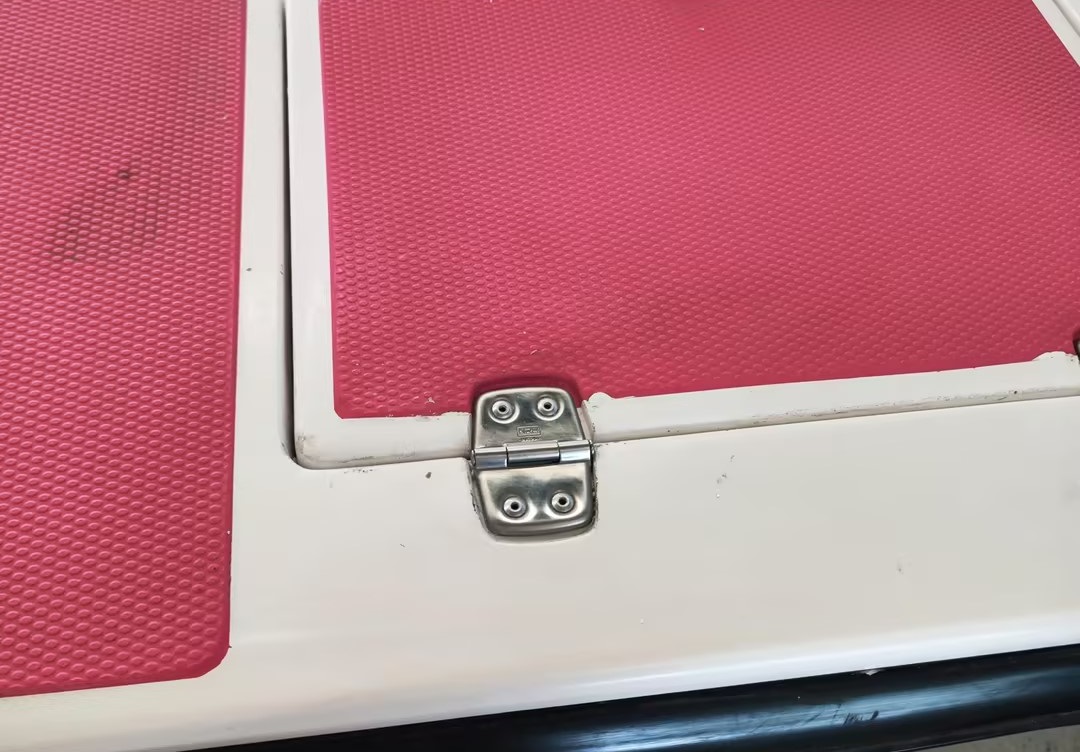
Why Marine and Coastal Environments Require Specialized Corrosion-Resistant Hardware
After years of specifying hardware for coastal and offshore projects, the pattern is clear: standard hardware will not survive two seasons in salt air. Zinc-alloy latches corrode into white powder in under six months on boat decks. Polished hinges that look great at installation turn orange-brown after one wet season near the coast. Marine environments do not give hardware a second chance – the salt, the UV, the constant moisture work 24/7 to destroy every metal component on your case.
This article walks through two real projects: a yacht enclosure built with SUS304 polished hinges, and a rotomolded outdoor case fitted with PVC toggle latches. Two completely different material strategies, both solving the same core problem – corrosion – from different angles.
Applicable Buyers
- Yacht and marine case manufacturers
- Coastal and offshore equipment enclosure fabricators
- Boat builders and marine OEMs
- Rotomolded case manufacturers for outdoor sports
- Custom case builders for marine and coastal applications
Key Finding
SUS304 stainless steel with polished (LG) or satin (ZG) finish provides excellent corrosion resistance for permanent marine installations, significantly outperforming zinc-alloy alternatives in salt spray exposure. PVC toggle latches eliminate electrochemical corrosion entirely for outdoor sports cases at a lower cost, with UV degradation as the primary service life factor. Material selection is the single most important decision for marine case hardware – choose based on environment, aesthetics, and expected service life.
Why Marine Environments Destroy Standard Hardware
Three factors work together to kill hardware on boats, docks, and coastal installations:
1. Salt Spray
Saltwater does not just sit on surfaces – it aerosolizes. On a boat doing 20 knots, salt spray coats every exposed surface continuously. Even on dockside enclosures that never touch water directly, the salt in the air deposits a corrosive film. SUS304 stainless with polished finish provides excellent corrosion resistance in salt spray exposure, far surpassing zinc-alloy with chrome plating, which corrodes rapidly in the same environment. That is the difference between hardware that lasts years and hardware that fails within a single boating season.
2. UV Exposure
On the water there is no shade. UV degrades polymers, fades finishes, and makes rubber gaskets brittle. For plastic hardware like PVC latches, UV is the bigger concern – the material will not corrode, but prolonged UV exposure causes surface chalking and loss of mechanical strength over time. PVC toggle latches have no salt spray failure because they are non-metallic, but UV degradation is a real factor to plan around.
3. Constant Moisture
Marine cases do not dry out. Humidity on boats routinely sits above 80%, and any enclosed case traps condensation. Hardware that is fine in a dry-land application can develop crevice corrosion in these conditions, even without direct saltwater contact. The moisture alone is enough to start corrosion on carbon steel and zinc-alloy components.
Bottom line: if you are building cases for marine or coastal use, material selection is not optional – it is the entire game.
Case Study 46: SUS304 Polished Hinges on a Yacht Enclosure
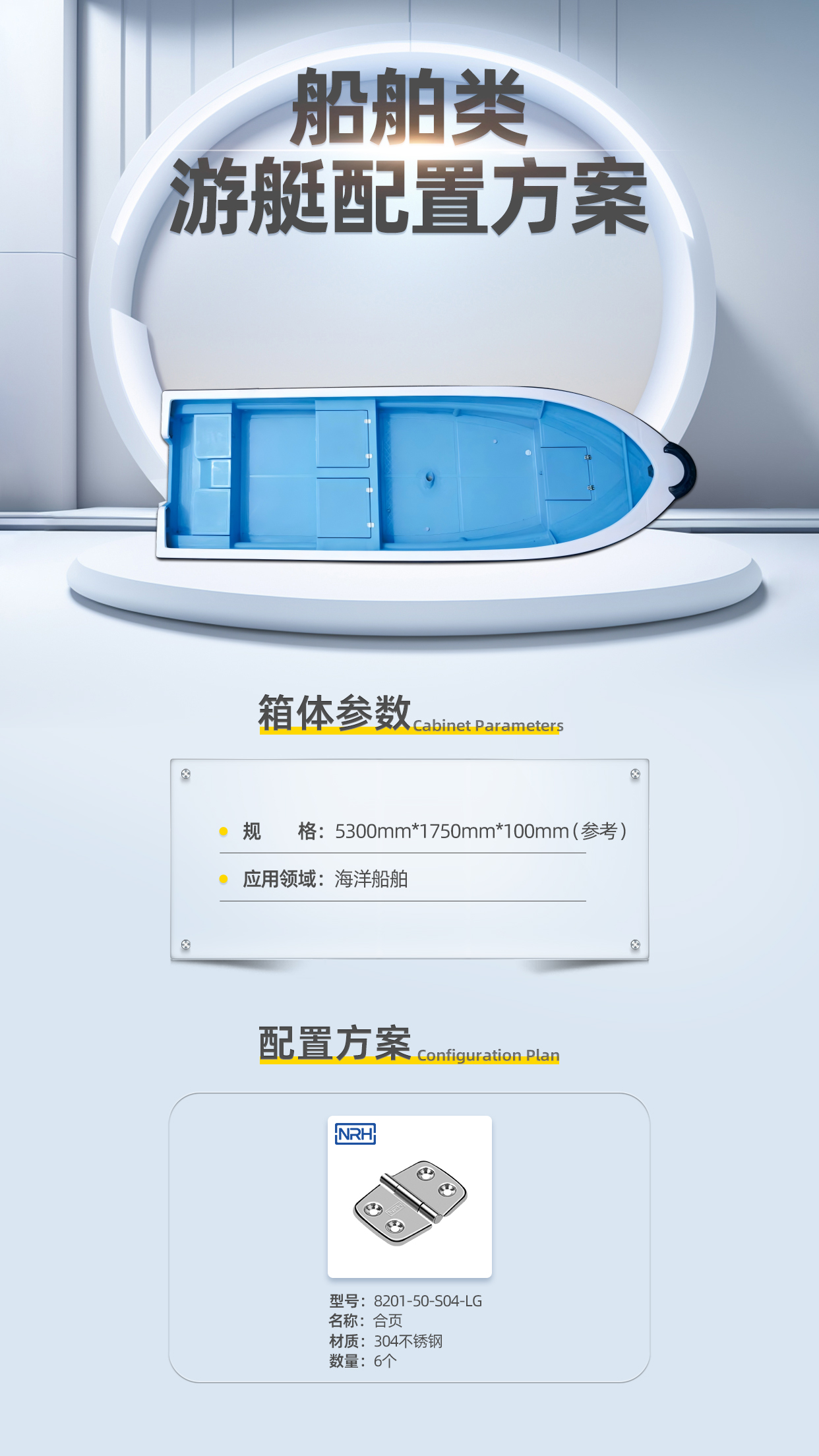
Case 46 – Yacht enclosure fitted with SUS304 polished hinges, 5300 x 1750 x 100mm (reference)
This yacht case is 5300mm x 1750mm x 100mm (reference) – a large, visible panel installation on a vessel where aesthetics matter as much as function.
Hardware Configuration
| Part Number | Product | Material | Finish | Qty |
|---|---|---|---|---|
| 8201-50-S04-LG | Hinge | SUS304 Stainless Steel | Polished / Mirror | 6 |
Why Polished SUS304 Is the Right Call
We could have specified SUS304 with a satin finish and saved a little on cost. Same excellent salt spray resistance. Same corrosion resistance at the metallurgical level. But this is a yacht – the hinges are visible, and the mirror-polished finish (LG designation) serves two purposes.
Aesthetics. On a yacht, hardware is part of the interior finish. A polished hinge reflects light cleanly, matches other stainless fixtures on the boat, and looks like it belongs. A satin hinge looks functional. On a vessel where the owner spent five figures on the interior, that difference matters.
Practical corrosion resistance. A mirror-polished surface on SUS304 actually performs slightly better in salt spray than a brushed surface. The smoother finish has fewer microscopic crevices where salt can deposit and chloride ions can initiate pitting. Both finishes provide excellent corrosion resistance, but polished hardware shows less surface staining after extended real-world exposure. The smooth surface is easier to wipe down, and salt does not cling to it the way it does to brushed finishes.
The 8201-50 hinge is from the 82 series (hinge line), 50mm width – a medium-duty hinge appropriate for panel weight at this scale. Six units on a panel this size provides adequate load distribution.
Hinge spacing matters more than hinge count. Evenly distribute the six hinges across the panel span – do not cluster them at the ends. On a 5300mm panel, we recommend hinge spacing of roughly 750-900mm between units, with the first hinge no more than 150mm from the panel edge. This prevents the panel from flexing at the midpoint, which puts uneven load on the hinge barrels and accelerates wear.
Case Study 5: PVC Toggle Latches on a Rotomolded Outdoor Case
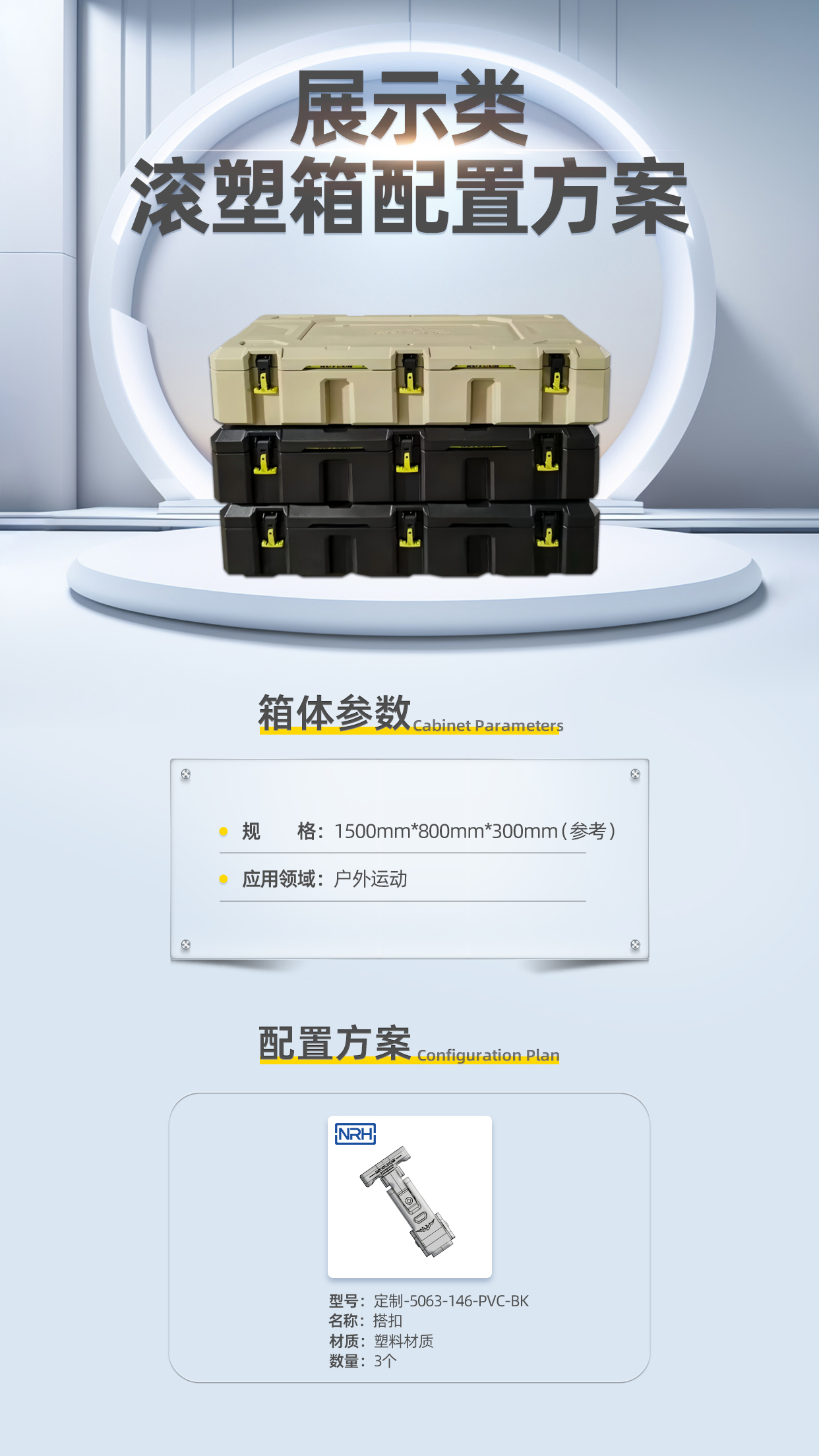
Case 5 – Rotomolded outdoor case with PVC toggle latches, 1500 x 800 x 300mm (reference)
This rotomolded case is a completely different animal. 1500mm x 800mm x 300mm (reference), used in outdoor sports – kayaking, fishing, marine sport events. The case lives on boat decks, in truck beds near the coast, and in wet environments where gear gets hosed down regularly.
Hardware Configuration
| Part Number | Product | Material | Color | Qty |
|---|---|---|---|---|
| 5063-146-PVC-BK | Adjustable Toggle Latch | PVC (Plastic) | Black | 3 |
Why Non-Metallic PVC Makes Sense Here
Three latches on a 1500mm case. No metal anywhere in the latch mechanism. Here is why this works:
Zero electrochemical corrosion. PVC is immune to the electrochemical corrosion that affects metal hardware. No metal means no rust, no plating failure, no galvanic corrosion, no staining on the case body. Saltwater cannot corrode something that contains no metal.
Matches the rotomolded case aesthetic. Rotomolded cases have a rugged, functional look. Polished stainless hinges would look incongruous on a matte plastic case. Black PVC latches blend with the case body and look like they belong there.
Cost-effective for high-wear applications. This case will get banged around, dropped, exposed to saltwater, hosed off, and banged around again. A PVC latch that costs a fraction of a stainless equivalent is the pragmatic choice. When a latch eventually breaks from mechanical abuse (not corrosion), replacing it does not hurt.
Key point on UV: UV degradation is the real concern, not corrosion. Extended sun exposure causes surface chalking and gradual loss of impact strength. If this case sits on a boat deck in the tropics year-round, expect the latches to need replacement every 2-3 years due to UV, not corrosion. For seasonal use, they will last significantly longer.
Two-Case Comparison
| Factor | Case 46 – Yacht (SUS304 Polished) | Case 5 – Rotomolded (PVC) |
|---|---|---|
| Environment | Marine/offshore, permanent installation | Outdoor sports, intermittent saltwater exposure |
| Material Strategy | Corrosion-resistant metal with premium finish | Non-metallic – eliminates electrochemical corrosion |
| Salt Spray Resistance | Excellent (SUS304) | N/A (non-metallic, no corrosion) |
| UV Concern | Minimal (stainless is UV-stable) | Primary degradation factor |
| Aesthetic Priority | High – visible on yacht interior | Low – functional, rugged appearance |
| Unit Cost | Higher (SUS304 + polished finish) | Lower (PVC) |
| Expected Service Life | 5+ years with proper maintenance | 2-3 years in constant UV; longer in seasonal use |
Selection Considerations for Marine and Coastal Hardware
1. Know Your Salt Spray Performance
- SUS304-LG (Polished): Excellent corrosion resistance in salt spray exposure
- SUS304-ZG (Satin): Excellent corrosion resistance in salt spray exposure
- FE-ZL (Zinc-alloy): Rapid corrosion in salt spray exposure
- PVC: Immune to electrochemical corrosion
That performance gap tells you everything. On a boat or coastal installation, zinc-alloy hardware is a liability. SUS304 stainless steel provides the durability required for marine environments, while PVC eliminates corrosion concerns for non-metallic applications.
2. Polished vs. Satin Stainless
Both polished (LG) and satin (ZG) SUS304 finishes provide excellent salt spray resistance. The difference is practical: polished surfaces are easier to clean, show less salt staining, and look better on visible installations. Satin is fine for hidden or industrial applications where appearance does not matter.
3. PVC’s Blind Spot: UV Degradation
PVC toggle latches solve the corrosion problem completely but introduce UV degradation. Extended sun exposure causes surface chalking, color fading, and gradual loss of impact resistance. For cases stored indoors between uses, UV is not a major concern. For cases that live on deck year-round in tropical latitudes, expect to replace PVC latches every 2-3 years.
4. Match Your Fasteners
The best SUS304 hinge is useless if mounted with carbon-steel screws that rust and bleed. Always match fastener material to hardware material. On marine projects, specify SUS304 screws with SUS304 hinges.
5. Avoid Galvanic Corrosion
When two different metals are in contact in a saltwater environment, the less noble metal corrodes preferentially. Keep your hardware material consistent – all stainless or all non-metallic. Mixing metals in marine environments is asking for trouble.
6. Maintenance Matters
SUS304 is corrosion-resistant, not corrosion-proof. In marine environments, stainless hardware needs periodic fresh-water rinsing to remove salt deposits. A quick rinse after saltwater exposure keeps polished stainless looking good for years. We also recommend a light coat of marine-grade stainless protectant on polished hardware at the start of each season.
Frequently Asked Questions
Can I use zinc-alloy hardware on a boat if it is chrome-plated?
You can, but we would not recommend it. Chrome-plated zinc-alloy corrodes rapidly in salt spray environments. Once the plating is scratched – and on a boat, it will be – the underlying zinc-alloy deteriorates quickly. Specify SUS304 from the start.
What is the difference between SUS304 and SUS316 for marine hardware?
SUS316 contains molybdenum, giving it superior resistance to pitting corrosion in chloride environments. It is the gold standard for permanent marine installations below the waterline. For case hardware above deck, SUS304 is generally sufficient with proper maintenance.
How long do PVC toggle latches last in marine environments?
Corrosion is not the issue – PVC is immune to electrochemical corrosion. UV degradation is the limiting factor. In seasonal use, PVC latches can last 5+ years. In constant outdoor exposure in tropical UV conditions, expect 2-3 years.
Why polished finish instead of satin for yacht hinges?
Two reasons. First, aesthetics – polished stainless matches other fixtures on the vessel. Second, practical corrosion resistance – polished surfaces have fewer microscopic crevices where salt can deposit, clean more easily, and show less staining.
Can I mix stainless hinges with PVC latches on the same case?
Yes. There is no galvanic issue because PVC is non-metallic. The combination works well on cases that need the aesthetic and longevity of stainless hinges with the cost-effectiveness and corrosion immunity of PVC latches.
Do rotomolded cases need special hardware considerations?
Yes. Rotomolded cases have thicker walls and often use through-bolt mounting. PVC latches are a natural fit because they match the non-corrosive nature of the case body.
What about hardware for freshwater vs. saltwater marine use?
Freshwater is far less aggressive than saltwater. But our recommendation is the same: specify as if it were saltwater. The cost difference between SUS304 and zinc-alloy is small compared to the cost of replacement.
Need Help Choosing?
Marine and coastal hardware selection comes down to matching the right material strategy to your case, your environment, and your budget. SUS304 polished hinges for visible yacht installations where aesthetics and long-term corrosion resistance both matter. PVC toggle latches for working cases where cost-effectiveness and zero corrosion risk are the priorities. Sometimes a combination of both on the same case.
We specify marine hardware every day. If you are not sure which material, finish, or product series is right for your application, reach out – we will talk through your specific environment and case requirements.
NRH Box Hardware
Email: nrh-gz@nrh.cn
WhatsApp: +86 180 1797 5137
Address: Room 1703-1704, Zhongji Building, No. 819 Yinxiang Road, Nanxiang Town, Jiading District, Shanghai, China