

Butterfly Latch Guide: Double-Lever Locking Mechanism for Heavy-Duty Cases & Flight Cases
A butterfly latch is a double-lever locking mechanism that secures heavy case lids using two symmetrical wing handles rotating around a central pivot. When both wings are pressed together, the internal linkage draws a hook downward. This hook engages a keeper on the case body and pulls the lid tight. The result is high clamping force distributed evenly across the seal.
Standard butterfly latch dimensions run approximately 88.5 x 85 x 25.5 mm for the latch body and 51.2 x 38 mm for the keeper. Load ratings reach up to 100 kg per unit on reinforced models, with tensile load ratings such as 392 N for the 6101-108-1 model.
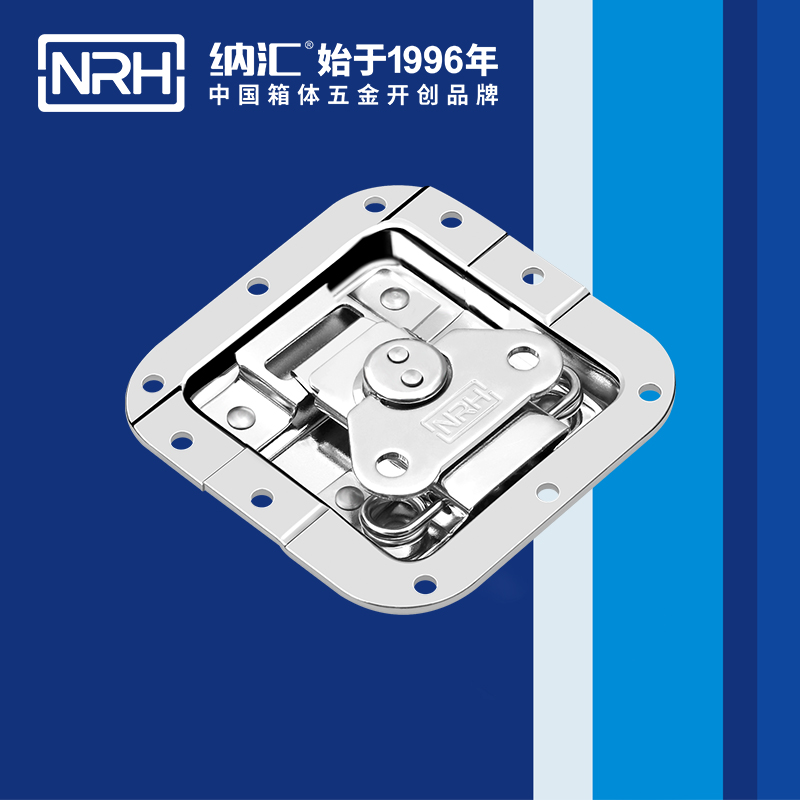
How the Butterfly Latch Mechanism Works
The butterfly latch gets its name from the two wing-shaped levers that extend outward when unlocked. These wings resemble a butterfly with open wings. The operating cycle is straightforward:
Locking: Press both wings together toward the center axis. The internal drive plate rotates around a central anchor pin. This rotation pulls a hooked claw downward. The claw catches the keeper pin on the case body and draws the lid into a tight seal. A buffer spring inside the mechanism absorbs shock and prevents accidental release due to vibration.
Unlocking: Pull both wings outward away from center. The drive plate reverses direction. The hook disengages from the keeper and the lid releases. The wing rotation gives the operator enough leverage to break even tightly compressed seals with minimal finger pressure.
The double-lever design distributes force across two pivot points instead of one. Through the coordinated action of the fixed anchor pin, drive anchor pin, drive plate, and driven plate, the latch achieves smooth extension and retraction of the hook with reduced operating force. This gives butterfly latches reliable vibration resistance for most transport applications, especially when combined with the pressure spring that prevents unintended disengagement under shock and vibration. The symmetrical load path also reduces wear on the anchor pins and extends service life.
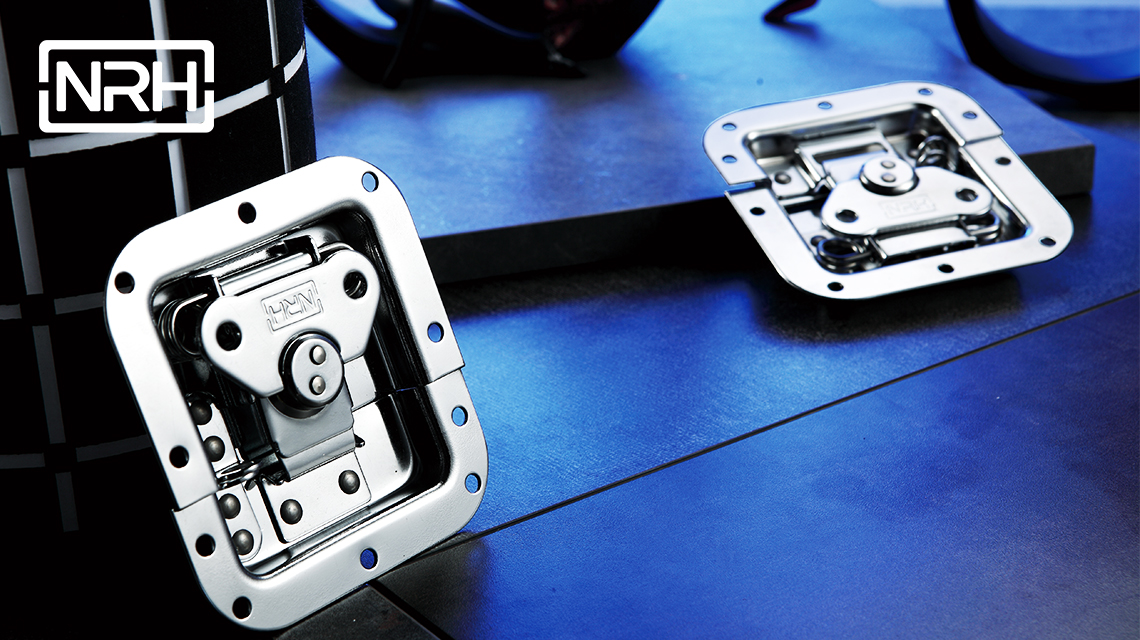
Key Components of a Butterfly Latch
A typical butterfly latch assembly includes the following parts:
- Wing levers (2): The two symmetrical handles the operator grips. Chrome-plated or zinc-finished for corrosion protection.
- Central pivot pin: The axle around which both wings rotate. Hardened steel for load bearing.
- Drive plate: Connects the wing rotation to the hook. Slides inside the latch housing to convert rotary motion into linear pull.
- Hook or claw: The element that engages the keeper on the case body. Pulls downward when wings close.
- Buffer spring: Absorbs vibration and maintains tension. Prevents the hook from disengaging under shock loads.
- Pressure spring: Provides secondary retention force that resists accidental opening due to transport vibration.
- Base plate: The mounting surface with pre-drilled holes for rivets, screws, or spot welding.
- Keeper (catch plate): The stationary receiver mounted on the case body. The hook locks onto this piece.
The NRH 6101 series uses this dual-spring design (buffer spring + pressure spring) per manufacturer catalog data.
Butterfly Latch vs Toggle Latch: Key Differences
Many buyers ask whether to use a butterfly latch or a toggle latch for their case project. Both are popular choices for flight cases and transport enclosures. The differences matter when you need specific performance characteristics.
| Feature | Butterfly Latch | Toggle Latch |
|---|---|---|
| Lever Design | Two opposing wing levers | Single lever arm |
| Force Distribution | Symmetrical, even pressure | Asymmetric, single-side pull |
| Vibration Resistance | High (dual-spring design + symmetrical load path) | Moderate (over-center cam) |
| Operating Motion | Wing rotation | Over-center lever snap |
| Compression Seal | Excellent, uniform clamp | Good, point-pressure clamp |
| Padlock Option | Common on center axis (‘K’ suffix) | Available on select models |
| Typical Load Rating | Up to 100 kg per unit; 392 N tensile | 294 N to 980 N tensile |
| Best For | Heavy cases, military, medical, aviation | General flight cases, toolboxes |
Choose a butterfly latch when your case requires strong compression sealing, high vibration resistance, or padlock security. Choose a toggle latch when you need quick one-handed access, adjustable tension, or a lower-profile mounting solution.
Butterfly Latch Materials and Surface Finishes
Butterfly latches are manufactured in several material and finish combinations. Each option suits a different operating environment:
Iron with chrome plating: The most common configuration. Chrome provides a bright, corrosion-resistant surface. Ideal for indoor equipment cases and general-purpose transport boxes. The NRH 6101-108-1 and 6101-108K-1 use this finish.
Iron with blue zinc plating: Blue zinc offers good corrosion protection at a lower cost than chrome. Used on select models. Suitable for aviation cases and aluminum enclosures.
Iron with electroblack finish: Black electroplating gives a low-profile appearance and moderate corrosion resistance. Common on tactical and military cases where visual discretion matters.
Stainless steel 304: Maximum corrosion resistance for marine, medical, and food-industry applications. Stainless steel butterfly latches withstand salt spray and repeated cleaning cycles. The NRH 6318 series and 6308-100 (stainless steel with vibratory finish) use 304 stainless steel.
Store all butterfly latch hardware in a dry location. Avoid acid-based cleaners and power polishing tools that can damage the plating layer.
Common Applications for Butterfly Latches
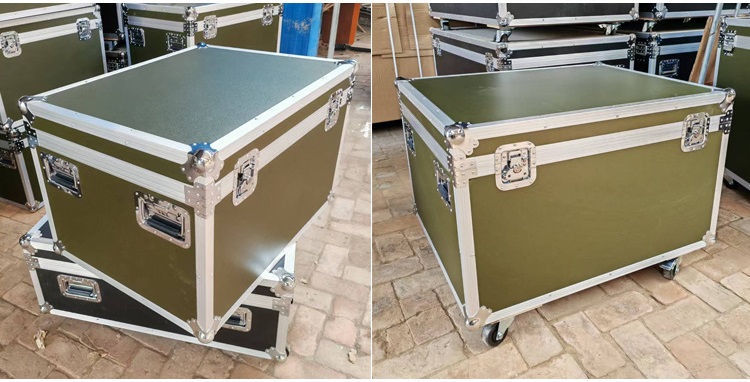
Butterfly latches serve across a wide range of industries that demand secure, vibration-resistant case closure:
Military and defense cases: Butterfly latches meet the rigorous demands of military transport. Their dual-lever mechanism with pressure spring resists accidental opening from rough handling and vehicle vibration. Lockable models prevent unauthorized access to sensitive equipment.
Aviation and flight cases: Audio equipment, lighting rigs, and precision instruments travel in flight cases fitted with butterfly latches. The even clamping force protects gasket seals that keep out dust and moisture during air freight.
Medical equipment cases: Portable medical devices and diagnostic instruments require sealed enclosures. Butterfly latches compress lid gaskets uniformly, maintaining sterility and protecting delicate optics.
Fire and emergency equipment: Fire suppression cases and emergency response kits use butterfly latches for fast deployment. The wing rotation allows gloved hands to open cases quickly in high-stress situations.
Industrial machinery enclosures: Vibration-heavy environments such as factory floors and construction sites benefit from the dual-spring butterfly latch design. The buffer spring prevents the hook from walking loose under sustained oscillation.
Rotomolded shipping cases: Heavy-duty rotomolded containers for international shipping rely on butterfly latches due to their high load capacity and padlock compatibility.
NRH 6101 Butterfly Latch Series: Complete Specifications
NRH Box Hardware produces the 6101 series butterfly latches for heavy-duty case applications. The 6101 series is an embedded/flush-mount design that requires slotting or cutout on the case surface for proper installation.
| Model | Material | Finish | Lock Hole | Weight (g) | Tensile Load (N) |
|---|---|---|---|---|---|
| 6101-108-1 | Iron | Chrome | None | 230 | 392 |
| 6101-108K-1 | Iron | Chrome | ø8.5 | 243 | 392 |
| 6101-108K-3 | Iron | Chrome | ø8.5 | 239 | 392 |
| 6101-78 | Iron | Chrome | None | 129 | N/A |
Model suffix notes: The ‘K’ suffix indicates a padlock-compatible variant with a ø8.5 mm lock hole on the center axis.
Key features of the 6101 series:
- Dual-spring retention system (buffer spring + pressure spring)
- Precision transmission mechanism for smooth operation with minimal force
- Recessed lock core design for impact protection
- Excellent vibration resistance for transport applications
- Available in chrome-plated iron with padlock-compatible options
Recessed Lock Core Design
The NRH 6101 series features a recessed lock core that sits below the surface of the base frame. This design significantly reduces the risk of impact damage during stacking, transport, and handling – a common failure point on traditional surface-mount latches. The recessed installation also gives the case a smoother, more professional appearance while preventing the latch from catching on other objects during transit.
Surface-Mount Alternative: 6308 Series
For applications requiring direct surface mounting without slotting, NRH offers the 6308 series butterfly latches. The 6308 series is a surface-mount design that can be installed directly onto the case surface without cutout work. Available in stainless steel with vibratory finish (6308-100) and other configurations, this series is ideal for thinner case walls, retrofit applications, or situations where machining the case surface is not feasible.
Installation Guide
Installing a butterfly latch requires basic hand tools and careful measurement. Follow these steps:
- Position the keeper: Mark the keeper location on the case body. The keeper must align with the latch hook when the lid is closed.
- Mount the keeper: Secure the keeper with rivets or screws. Confirm it sits flat against the mounting surface.
- Position the latch body: Close the lid and mark where the latch base plate contacts the lid surface. Verify the hook reaches the keeper with the correct overlap.
- Drill pilot holes: Drill through the pre-marked mounting holes on the latch base plate. Use a drill bit matched to your fastener size.
- Fasten the latch: Insert rivets or screws and tighten. Do not overtighten, as this can deform the base plate and affect the internal linkage travel.
- Test operation: Open and close the latch several times. Confirm the hook engages the keeper cleanly and the wings lock securely. Adjust keeper position if the hook skips or binds.
Important Usage Notes:
- Never modify the factory hole spacing on the latch body. Changing the mounting pattern can misalign the internal drive plate and reduce the clamping force.
- Do not clean with acidic solutions or abrasive polishing tools on plated surfaces.
- Do not disassemble or replace internal parts arbitrarily.
- Always operate within the rated load capacity to avoid damage.
- For welding applications, use unfinished parts first to avoid heat damage to the plating layer.
Storage: Store in a dry location. Do not stack in damp, cold areas to prevent rust or oxidation.
How to Select the Right Butterfly Latch
When purchasing or replacing butterfly latches, consider the following criteria:
- Material: Prefer metal materials (steel, stainless steel, zinc alloy) for durability. Stainless steel 304 offers maximum corrosion resistance for marine and outdoor applications.
- Size: Ensure the latch size matches the existing slot on your case. Standard dimensions are approximately 88.5 x 85 x 25.5 mm for the latch body.
- Finish: Chrome plating for indoor/general use; zinc plating for cost-effective protection; stainless steel for outdoor/marine environments.
- Locking Option: Choose non-locking, padlock-compatible (‘K’ suffix with ø8.5 mm hole), or key-lock based on security needs.
- Mounting Type: Embedded/flush-mount (6101 series, requires slotting) vs surface-mount (6308 series, no cutout required).
Maintenance Tips
Butterfly latches require minimal maintenance, but a few best practices extend their service life:
- Inspect the hook and keeper for wear every 6 months in high-use environments.
- Apply a light machine oil to the central pivot pin if operation becomes stiff.
- Do not use acidic cleaners or abrasive polishing tools on plated surfaces.
- Replace worn buffer springs promptly to maintain vibration resistance.
- Store spare latches in a dry area to prevent plating degradation before installation.
- Do not exceed the rated load capacity.
Frequently Asked Questions
What is a butterfly latch?
A butterfly latch is a double-lever locking mechanism that secures heavy case lids using two symmetrical wing handles rotating around a central pivot. When the wings are pressed together, the internal linkage draws a hook downward to pull the lid tight against the case body.
What materials are butterfly latches made from?
Butterfly latches are typically manufactured from iron with chrome plating or zinc plating, stainless steel 304 for corrosion resistance, or carbon steel with electroblack finish. Material choice depends on the operating environment and load requirements.
Can butterfly latches be locked with a padlock?
Yes. Many butterfly latch models feature a central padlock hole or key-lock mechanism (indicated by the ‘K’ suffix, e.g., 6101-108K-1 with ø8.5 mm lock hole). Lockable variants prevent unauthorized access and are common in military, medical, and high-value equipment cases.
What load capacity do butterfly latches support?
Standard butterfly latches support load ratings up to 100 kg per unit. For example, the NRH 6101-108-1 has a tensile load rating of 392 N. Heavy-duty models with reinforced iron or stainless steel construction can handle even higher loads. Always check the specific model rating before installation.
How do you install a butterfly latch?
Mount the latch body to the case lid using rivets, screws, or spot welding through the pre-drilled holes. Position the keeper on the case body aligned with the latch hook. For embedded designs like the 6101 series, the case surface requires slotting or cutout. For surface-mount designs like the 6308 series, direct installation without cutout is possible.
Are butterfly latches suitable for outdoor use?
Yes, when made from stainless steel 304 or zinc-plated iron. Stainless steel variants resist corrosion in marine and humid environments. Zinc-plated models offer good protection for general outdoor use but may degrade in prolonged saltwater exposure.
What is the difference between the NRH 6101 and 6308 series?
The 6101 series is an embedded/flush-mount butterfly latch that requires slotting or cutout on the case surface for installation. The 6308 series is a surface-mount design that can be installed directly onto the case without cutout work. Choose 6101 for cases where the latch can be recessed into the surface, and 6308 for thinner case walls or applications where surface machining is not feasible.
What does the ‘K’ suffix mean on NRH butterfly latch models?
The ‘K’ suffix indicates a padlock-compatible variant with a lock hole on the center axis (e.g., 6101-108K-1 with ø8.5 mm hole).
Need help choosing? Contact NRH Box Hardware at nrh-gz@nrh.cn or call +86 180 1797 5137. Our engineers can recommend the right butterfly latch model for your case project and provide free samples for evaluation.