

What Is a D-Ring Tie Down Anchor? Load Ratings, Types and Installation Methods
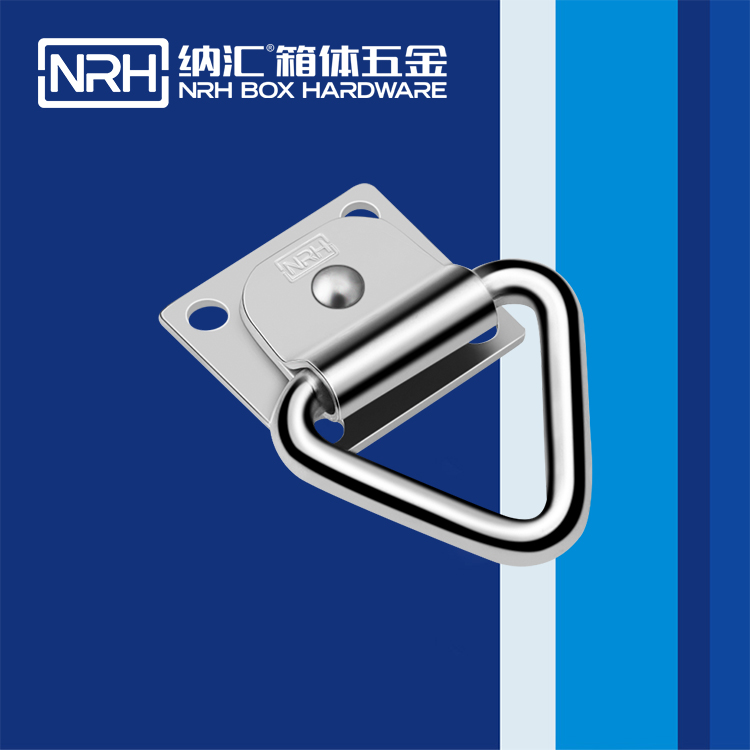
A D-ring tie down anchor is a metal loop shaped like the letter “D,” mounted on a surface to provide a secure attachment point for straps, hooks, or cables. These anchors are standard hardware on transport cases, toolboxes, truck beds, and cargo trailers, available in load ratings from 15 kg to over 120 kg depending on size, material, and mounting style.
This guide covers the main D-ring types from NRH’s product line, explains how load ratings work, and provides installation guidance for each variant.
How D-Ring Tie Down Anchors Work
A D-ring anchor transfers tension forces from a strap or cable into the mounting surface. The D-shaped loop allows straps to slide freely while the flat back plate distributes force across a wider area than a simple hook.
The working load limit (WLL) is the maximum force an anchor should bear during normal use. This number is always lower than the breaking strength, the point where the hardware fails. The safety margin between WLL and breaking strength typically runs at a 2:1 or 3:1 ratio per manufacturer catalog data. Never exceed the WLL, even if the anchor looks sturdy enough.
Load capacity depends on three factors: the ring diameter (larger rings handle more force), the base plate thickness (thicker plates resist deformation), and the mounting method (through-bolt mounts carry more than surface screws).
NRH D-Ring Series Overview
NRH offers D-ring tie down anchors across multiple series, with load ratings ranging from 15 kg to 120 kg. Materials include 304 stainless steel and iron, with various surface finishes to suit different operating environments.
4360 Series – Heavy-Duty D-Ring
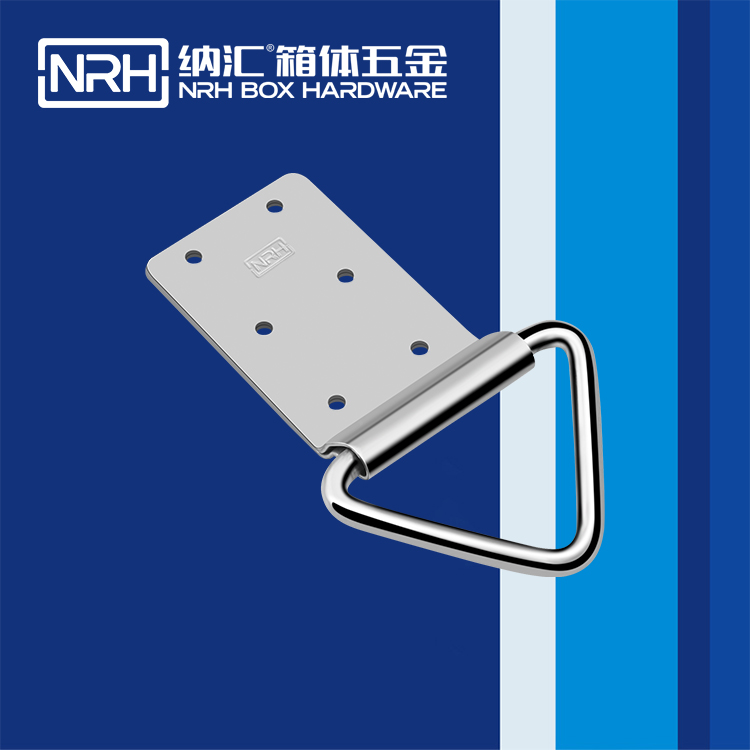
Model 4360-92 is the highest-capacity D-ring in the NRH line, rated at 120 kg WLL. Constructed from 304 stainless steel with a polished finish, this 286 g anchor measures 169 mm in length and features six mounting holes for secure installation. The polished stainless surface provides excellent corrosion resistance for marine, outdoor, and demanding industrial applications.
Applications: Heavy cargo securement, marine environments, outdoor equipment, shipbuilding, and industrial machinery.
4355 and 4356 Series – Medium-Duty D-Rings
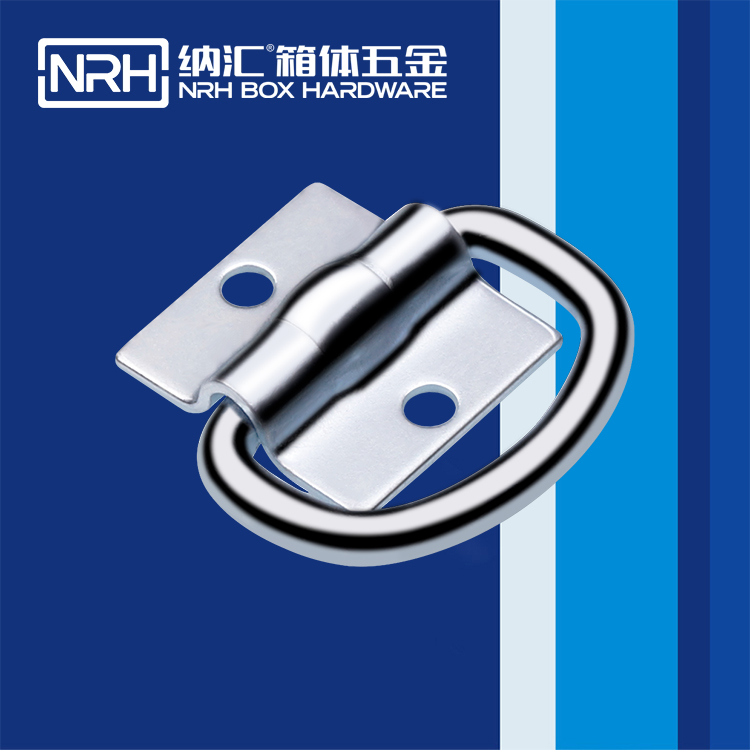
The 4355-56 and 4356-55 models are both rated at 40 kg WLL. Both are constructed from iron with blue zinc plating, which provides good corrosion resistance for indoor and sheltered outdoor use.
Model 4355-56 weighs 63 g and features a compact design suitable for medium-duty applications. Model 4356-55 weighs 176 g with a larger footprint, offering the same 40 kg load rating with increased surface area for mounting stability.
Applications: Transport cases, military containers, medical equipment cases, aviation cases, and general cargo securement.
4361 Series – Medium-Duty D-Rings
The 4361 series offers 304 stainless steel construction with different surface finishes.
Model 4361-44 features a vibratory finish and is rated at 30 kg WLL. Weighing 41 g, this model suits applications where a matte, non-reflective surface is preferred.
Model 4361-46 is constructed from iron with nickel plating, rated at 20 kg WLL. Weighing only 15 g, this compact D-ring is ideal for lightweight applications where minimal hardware weight is important.
Model 4361-50 also uses iron with nickel plating, rated at 15 kg WLL. Weighing 32 g, this model provides a smaller footprint for light-duty securing tasks.
Applications: Light to medium cargo securement, compact enclosures, equipment cases, and applications where weight reduction is important.
4363 Series – Medium-Duty D-Ring
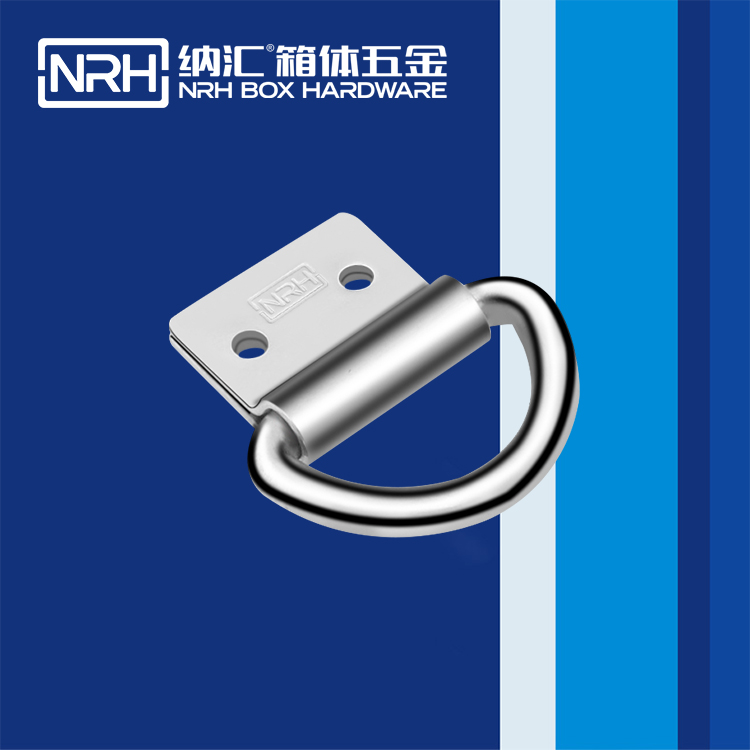
Model 4363-44 features 304 stainless steel construction with a bright polished finish and is rated at 30 kg WLL. Weighing 57 g, this model offers the same load capacity as the 4361-44 with a different aesthetic finish.
Applications: Visible applications where appearance matters, medical equipment, food processing equipment, and cleanroom environments.
4364 Series – Compact D-Ring
Model 4364-25 is the smallest D-ring in the NRH line, rated at 15 kg WLL. Constructed from iron with nickel plating, this 5 g anchor is ideal for ultra-light applications and tight spaces where larger rings cannot fit.
Applications: Ultra-light cargo securement, small enclosures, tight spaces, and applications where minimal hardware footprint is critical.
D-Ring Selection Guide
Use this decision framework to choose the right D-ring for your application based on load requirement, environment, and available space.
| Model | Material | Finish | Weight | Load Rating |
|---|---|---|---|---|
| 4360-92 | 304 Stainless | Polished | 286 g | 120 kg |
| 4355-56 | Iron | Blue Zinc | 63 g | 40 kg |
| 4356-55 | Iron | Blue Zinc | 176 g | 40 kg |
| 4361-44 | 304 Stainless | Vibratory | 41 g | 30 kg |
| 4363-44 | 304 Stainless | Bright Polish | 57 g | 30 kg |
| 4361-46 | Iron | Nickel | 15 g | 20 kg |
| 4361-50 | Iron | Nickel | 32 g | 15 kg |
| 4364-25 | Iron | Nickel | 5 g | 15 kg |
Material and Surface Finish Options
NRH D-rings are available in two base materials with multiple surface finishes. The choice depends on the operating environment and aesthetic requirements.
304 Stainless Steel provides excellent corrosion resistance for outdoor, marine, and chemically exposed environments. The 4360-92, 4361-44, and 4363-44 models use 304 stainless construction.
- Polished finish (4360-92): Bright, mirror-like surface. Ideal for visible applications where appearance matters and for marine environments where salt spray resistance is critical.
- Vibratory finish (4361-44): Matte, non-reflective surface. Suitable for tactical, military, and industrial applications where glare reduction is beneficial.
- Bright polish (4363-44): High-gloss finish that combines corrosion resistance with a decorative appearance.
Iron with surface plating offers cost-effective options for indoor and sheltered outdoor applications.
- Blue zinc plating (4355-56, 4356-55): Provides good corrosion resistance at moderate cost. The blue tint is a visual indicator of chromate passivation.
- Nickel plating (4361-46, 4361-50, 4364-25): Offers a bright silver appearance with moderate corrosion protection. Suitable for indoor applications where cost is a priority.
Load Ratings: Understanding WLL vs. Breaking Strength
Two numbers define a D-ring’s strength: working load limit (WLL) and breaking strength. Understanding the difference prevents equipment damage and cargo loss.
Working Load Limit (WLL) is the maximum load you should apply during normal, repeated use. This is the number you design around. NRH D-rings are rated with WLLs from 15 kg to 120 kg. Exceeding the WLL may not cause immediate failure, but it fatigues the metal and shortens the anchor’s service life.
Breaking Strength is the force at which the anchor fails. This number is always higher than the WLL, typically 2 to 3 times higher. The ratio between them is the safety factor per manufacturer catalog data.
For example, a D-ring with a 40 kg WLL and a 3:1 safety factor has a breaking strength around 120 kg. You strap at 40 kg or below. You never plan around the breaking strength.
Three things reduce real-world load capacity below the rated WLL:
- Improper installation: Undersized fasteners or wrong hole patterns
- Angled loads: Side loading reduces capacity significantly
- Material degradation: Rust, cracks, or deformation from previous overloading
Always inspect D-rings before each use.
Installation Methods
Installation quality directly affects load performance. A properly rated D-ring fails when mounted with the wrong hardware or an inadequate surface.
Through-Bolt Mounting
Through-bolt is the strongest method. Bolts pass through the mounting surface and secure with nuts and washers on the opposite side. This distributes clamping force across both sides of the panel. Use through-bolts on thick case walls, truck beds, and trailer floors. Match bolt grade to the load – Grade 5 or higher for heavy applications. Always use washers to prevent the bolt head or nut from digging into the surface.
For the 4360-92 (120 kg rating), through-bolt mounting with M5 or larger fasteners is recommended. For lighter models, M4 fasteners may be sufficient.
Surface Screw Mounting
Surface screws are faster to install but hold less load. The screw threads grip only the material they are driven into. On aluminum cases, use self-tapping screws designed for metal. On wood, use lag bolts with washers. Pre-drill pilot holes to prevent material splitting. Surface mounting is adequate for light to medium loads where through-bolt access is not available.
Weld-On Mounting
Some heavy-duty D-rings like the 4360-92 are designed for welding directly to steel surfaces. This eliminates fastener holes entirely and creates the strongest possible bond. Weld-on D-rings are common on steel trailers and industrial equipment. The weld must penetrate fully – a cold or incomplete weld creates a hidden failure point.
Common Installation Mistakes to Avoid:
- Using undersized fasteners: A 120 kg D-ring needs M5 or larger bolts. M3 screws will fail.
- No backing plate on thin panels: Thin aluminum or plastic requires a reinforcement plate.
- Side loading: Straps should pull in line with the ring. Angled pulls reduce capacity by up to 50 percent.
- Overtightening fasteners: Can deform the base plate and stress the mounting surface.
D-Ring vs. Other Tie-Down Options
Understanding how D-rings compare to other tie-down anchors helps you choose the right hardware for your application.
| Feature | D-Ring | Tie-Down Hook | Lashing Ring |
|---|---|---|---|
| Load capacity | 15-120 kg | 20-50 kg | 100-500 kg |
| Strap compatibility | Straps, hooks, carabiners | Straps only | Straps, chains, cables |
| Flush when not in use | No | Yes | Yes |
| Installation complexity | Moderate | Low | High |
| Best for | Cases, toolboxes, truck beds | Temporary tie-downs | Heavy cargo, containers |
Application Recommendations
| Application | Recommended Model | Load Rating |
|---|---|---|
| Heavy cargo, marine, outdoor | 4360-92 | 120 kg |
| Medium cargo, general transport | 4355-56 or 4356-55 | 40 kg |
| Marine/outdoor, medium load | 4361-44 or 4363-44 | 30 kg |
| Light cargo, small enclosures | 4361-46 | 20 kg |
| Compact spaces, light-duty | 4361-50 or 4364-25 | 15 kg |
Not sure which D-ring is right for your project?
Get a free recommendation from our engineering team with load calculations and installation guidance.
Frequently Asked Questions
What is a D-ring tie down anchor used for?
A D-ring tie down anchor provides a secure attachment point on cases, vehicles, and trailers. You hook straps, bungee cords, or cables through the ring to hold cargo in place during transport.
How much weight can a D-ring hold?
NRH D-rings range from 15 kg to 120 kg working load limit (WLL) depending on the model, material, and size. The 4360-92 handles the highest load at 120 kg. The 4364-25 handles 15 kg for light-duty applications. Always check the specific model rating before installation.
What is the difference between WLL and breaking strength?
WLL is the safe maximum load for repeated use. Breaking strength is the force that causes the anchor to fail. Breaking strength is typically 2-3 times the WLL. Design your tie-down system around the WLL, never the breaking strength.
What materials are NRH D-rings made from?
NRH D-rings are available in 304 stainless steel and iron. Stainless steel models (4360-92, 4361-44, 4363-44) offer maximum corrosion resistance for outdoor and marine use. Iron models with zinc or nickel plating (4355-56, 4356-55, 4361-46, 4361-50, 4364-25) provide cost-effective options for indoor and sheltered environments.
Can I use a D-ring in saltwater environments?
Yes, but only 304 stainless steel models should be used in saltwater environments. The 4360-92, 4361-44, and 4363-44 are built for corrosive environments with appropriate surface finishes that resist pitting and rust. Iron-based D-rings with zinc or nickel plating will corrode in saltwater exposure.
How do I install a D-ring tie down anchor?
Installation methods include through-bolt mounting (strongest, recommended for heavy loads), surface screw mounting (faster, for light to medium loads), and weld-on mounting (for permanent steel surface installation). Use fasteners matched to the load rating and pre-drill pilot holes for surface screws. Always use washers to prevent damage to the mounting surface.
How do I maintain D-ring anchors?
Inspect D-rings before each use. Look for cracks, deformation, rust, or loose fasteners. Tighten any mounting hardware that has vibrated loose. Replace anchors that show signs of metal fatigue or corrosion damage. For stainless steel models, occasional cleaning with mild soap and water maintains the surface finish.
What size D-ring do I need for my case?
Match the ring size and load rating to your cargo weight and case dimensions. Heavy gear over 100 kg requires the 4360-92 (120 kg rating). Medium loads up to 40 kg work with 4355-56 or 4356-55. Light loads under 20 kg suit the 4361-46 or smaller models. Always verify the WLL meets your load requirement with a safety margin.
Need help choosing? NRH Box Hardware supplies D-ring tie down anchors in stainless steel and iron. Contact the team for product specifications, load data, and volume pricing.
Email: nrh-gz@nrh.cn
WhatsApp: +86 180 1797 5137
Address: Room 1703-1704, Zhongji Building, No. 819 Yinxiang Road, Nanxiang Town, Jiading District, Shanghai, China