

Corner Protector Guide: Types, Materials, and Installation for Transit Cases
Applicable Buyers
This guide is for case builders, product designers, engineers, and maintenance professionals selecting corner protectors for transit cases, road cases, flight cases, and equipment enclosures. Corner protectors are among the most frequently replaced hardware components in case maintenance because case corners absorb the highest force during handling, stacking, and transport. This article compares the four main corner protector types, explains material options, and provides installation guidance.
Key Finding: Corner protectors are the primary defense against impact damage on transit cases. The four main types – ball corners, flat corners, three-sided corners, and L-shape protectors – serve different purposes. Ball corners offer the best impact protection for touring cases. Flat corners are flush-mounted for tight-space applications. Three-sided corners provide maximum edge coverage for heavy-duty cases. L-shape protectors reinforce long edges between corners. Material choice matters: chrome-plated iron is the industry standard for durability and cost; stainless steel offers superior corrosion resistance for demanding environments. Proper installation with correct rivet spacing and edge preparation determines whether a corner protector actually protects the case.
Corner protectors are metal or plastic fittings mounted on the vertices of transit cases, road cases, and flight cases to absorb impact and prevent structural damage. They are among the most frequently replaced hardware components in case maintenance because case corners absorb the highest force during handling and stacking. This guide covers the four main corner protector types, compares materials, and explains proper installation.
Ball Corner Protectors
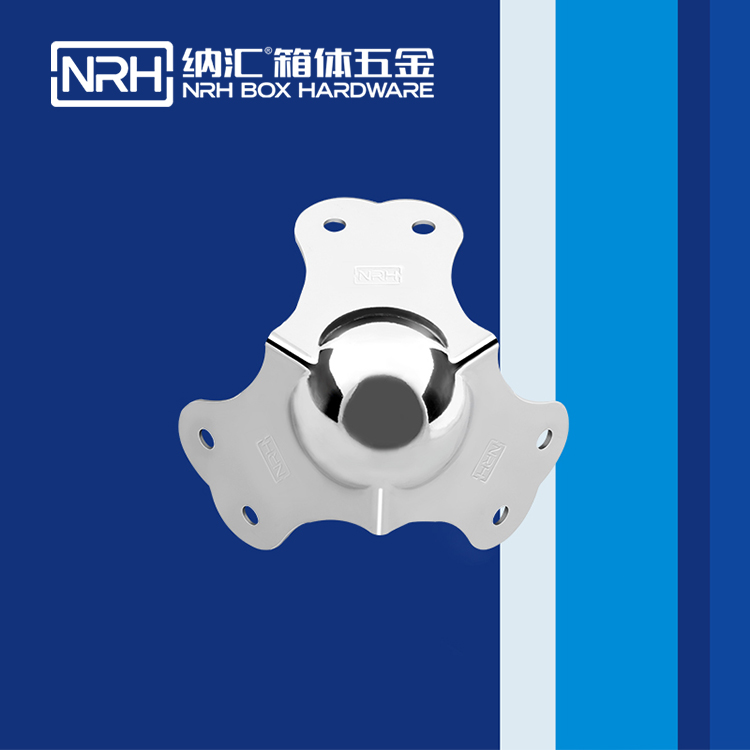
Figure 1: 7101 series ball corner protector installed on a transit case, featuring a domed impact-absorbing design. (Image source: NRH Box Hardware)
The ball corner is the most widely used corner protector in the road case industry. Its dome-shaped design distributes impact force evenly across the curved surface instead of concentrating it on a single edge. This shape reduces dent transfer to the case panel beneath.
Ball corners mount on the external vertex of a case where three panels meet. Each unit has three pre-drilled holes – one on each face – for rivet or bolt attachment. A standard ATA-style flight case typically requires eight ball corners, one for each vertex.
Ball corners suit applications where cases are stacked, dropped, or slid across truck beds. Touring audio, lighting, and backline cases almost always use ball corners. The rounded shape also prevents the case from scratching walls, vehicle interiors, and other cases during transport.
7101 Series – Ball Corner Specifications
The 7101 series is NRH’s ball corner product line, featuring a domed design that provides integrated edge-to-edge protection. The ball corner connects the case body to the panel surface, providing structural rigidity at the corners.
| Model | Material | Finish | Weight | Thickness | Key Dimensions | Hole Spec |
|---|---|---|---|---|---|---|
| 7101-66 | Iron | Chrome | 95g | 1.5mm | 41.5 x 14.5 | 6 x 4.8 |
| 7101-66-1 | Iron | Chrome | 90g | 1.4mm | 39.5 x 21 | 6 x 5.2 |
| 7101-66-2 | Iron | Chrome | 81g | 1.5mm | 38.5 x 14.5 | 6 x 5.2 |
| 7101-66-3 | Iron | Chrome | 81g | 1.5mm | 38.5 x 14.5 | 6 x 5.2 |
| 7101-40 | Iron | Chrome | 29g | – | 24 x 9.5 | 6 x 5 |
| 7101-47-1 | Iron | Chrome | 44g | 1.2mm | 32.5 | 3 x 5 |
| 7101-53 | Iron | Chrome | 47g | – | 38.8 | 3 x 4.8 |
| 7101-53-1 | Iron | Chrome | 57g | 1.2mm | 38.8 x 52.5 x 8.5 | 3 x 4.5 |
Design Variants Explained:
- 7101-66: Standard ball corner with domed surface. Suitable for general touring case applications where maximum impact protection is required.
- 7101-66-1: Concave surface variant. The surface features an inward-curved design that reduces weight while maintaining structural integrity. Provides a distinct aesthetic compared to the standard dome shape.
- 7101-66-2: Crimped-edge variant. The edges are reinforced with a crimping or bending process to enhance edge strength and prevent deformation under impact.
- 7101-66-3: Concave surface and crimped-edge combination. Offers both the weight-reducing concave design and the edge reinforcement of the crimped structure.
Applications: Flight cases, military cases, aluminum cases, tool cases, instrument cases, guitar cases, medical cases, insulated cases.
Flat Corner Protectors
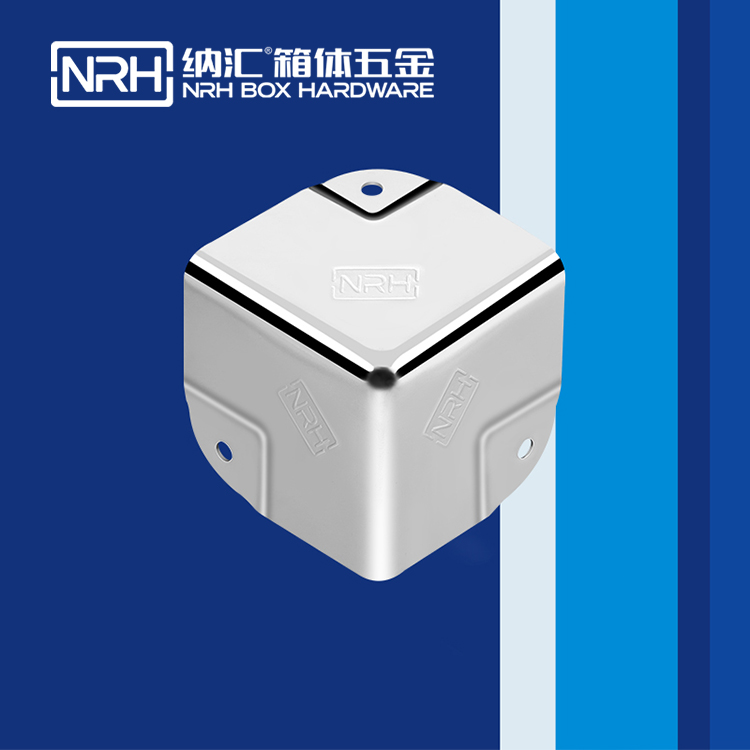
Figure 2: 7201 series flat corner protector with flush-mounted block design. Flat corners sit flush against the case surface for tight-space applications. (Image source: NRH Box Hardware)
Flat corners sit flush against the case surface. They do not protrude like ball corners. This low-profile design works best for cases that need to slide into tight spaces – rack cabinets, vehicle compartments, or shelving units where every millimeter counts.
The flat corner has a block-shaped plan view that covers the corner vertex without adding height. The trade-off is less impact absorption: flat corners transfer more force directly to the panel because they lack the dome geometry that deflects impact energy. They are primarily used for panel connection and structural reinforcement rather than impact protection.
Flat corners are common on 19-inch rack cases, DJ coffins, and slimline utility cases. Choose flat corners when case height must stay minimal or when cases are stored in confined compartments.
7201 Series – Flat Corner Specifications
The 7201 series is NRH’s flat corner product line. The flat, block-shaped design provides a clean, low-profile appearance while reinforcing the case corner.
| Model | Material | Finish | Weight | Thickness | Key Dimensions | Hole Spec |
|---|---|---|---|---|---|---|
| 7201-35 | Iron | Chrome | 20g | 0.8mm | 28 | 3 x 4 |
| 7201-35-1 | Iron | Chrome | 21g | 1.0mm | 27.5 x 23.5 | 3 x 4 |
| 7201-35-2 | Iron | Chrome | 21g | 1.0mm | 27.5 x 23.5 | 3 x 4 |
| 7201-40 | Iron | Chrome | 26g | 1.0mm | 28.1 x 40 | 3 x 4.2 |
| 7201-40 | 304 SS | Vibratory | 22g | 1.0mm | 28.1 x 40 | 3 x 4.2 |
| 7201-40-1 | Iron | Chrome | 25g | 0.9mm | 28.1 | 3 x 4 |
| 7201-40-1 | 304 SS | Vibratory | 22g | 0.9mm | 28.1 x 40 | 3 x 4 |
| 7201-40-2 | Iron | Chrome | 25g | 0.9mm | 28.1 x 40 | 3 x 4 |
| 7201-40-2 | 304 SS | Vibratory | 22g | 0.9mm | 28.1 x 40 | 3 x 4 |
| 7201-50 | Iron | Chrome | 45g | 0.8mm | 40 x 50 | 3 x 4.3 |
| 7201-50 | 304 SS | Vibratory | 36g | – | 40 x 50 | 3 x 4 |
| 7201-50-1 | Iron | Chrome | 52g | 1.0mm | 40 x 50 | 3 x 4 |
| 7201-50-2 | Iron | Chrome | 52g | – | 40 x 50 | 3 x 4 |
Design Variants Explained:
- Standard (no suffix): Basic flat corner with flush surface. Suitable for general rack cases and utility cases.
- -1 suffix: Concave surface design. The surface curves inward, reducing weight while providing a distinct aesthetic.
- -2 suffix: Convex surface design. The surface curves outward, offering a slightly raised profile that may provide additional impact deflection.
Note on Naming: The 7201 series is sometimes called “aluminum case corner” because of its common use on aluminum flight cases. However, the material is typically iron with chrome plating or 304 stainless steel with vibratory finish.
7401 Series – Korean-Style Flat Corner
In addition to the standard 7201 series, NRH offers the 7401 series, a variation of the flat corner design with a distinctive square, flat block shape that sits flush against the case surface. It serves the same low-profile reinforcement function as the 7201 series but with a different visual appearance.
The 7401 series is particularly popular on small-format cases and applications where a clean, minimalist aesthetic is desired.
| Model | Material | Finish | Weight | Thickness | Key Dimensions | Hole Spec |
|---|---|---|---|---|---|---|
| 7401-22 | Iron | Chrome | 5g | 0.5mm | 12 | 3 x 3.5 |
| 7401-22-1 | Iron | Chrome | 5g | 0.5mm | 12 | 3 x 3.5 |
| 7401-28 | Iron | Chrome | 7g | 0.5mm | 15 x 27 | 3 x 4 |
| 7401-28-1 | Iron | Chrome | 7g | 0.5mm | 15 x 10.5 | 3 x 3.5 |
| 7401-37 | Iron | Chrome | 14g | 0.6mm | 20 x 35 | 3 x 4.6 |
| 7401-37-1 | Iron | Chrome | 15g | 0.7mm | 20 x 35 x 15.8 | 3 x 4.2 |
| 7401-41 | Iron | Chrome | 41g | 1.5mm | 24.5 | Holes 3×4 / Countersink 3×6.7 |
| 7401-41 | Iron | Zinc | 42g | 1.5mm | 22.5 | Holes 3×3.2 / Countersink 3×7 |
Three-Sided Corner Protectors
Three-sided corner protectors wrap around three faces of the case vertex – the top and two sides. This design provides more surface coverage than a ball corner or flat corner. The extended coverage protects the edges where panels meet, which are the most vulnerable to splitting and delamination.
Three-sided corners are the right choice for heavy-duty cases that carry valuable or fragile cargo. Medical equipment cases, military transport cases, and broadcast equipment cases often use three-sided corners because edge protection matters as much as vertex protection in those applications.
Three-Sided Corner Specifications
- Material: Iron or Stainless Steel
- Finish: Chrome Plated, Color Coating
- Type: Special / irregular corner
- Function: Wraps around three faces for maximum edge coverage
- Mounting: Rivets, screws, or spot welding based on hole pattern
- Applications: Military cases, insulated cases, medical cases, flight cases, heavy-duty cases
L-Shape Corner Protectors
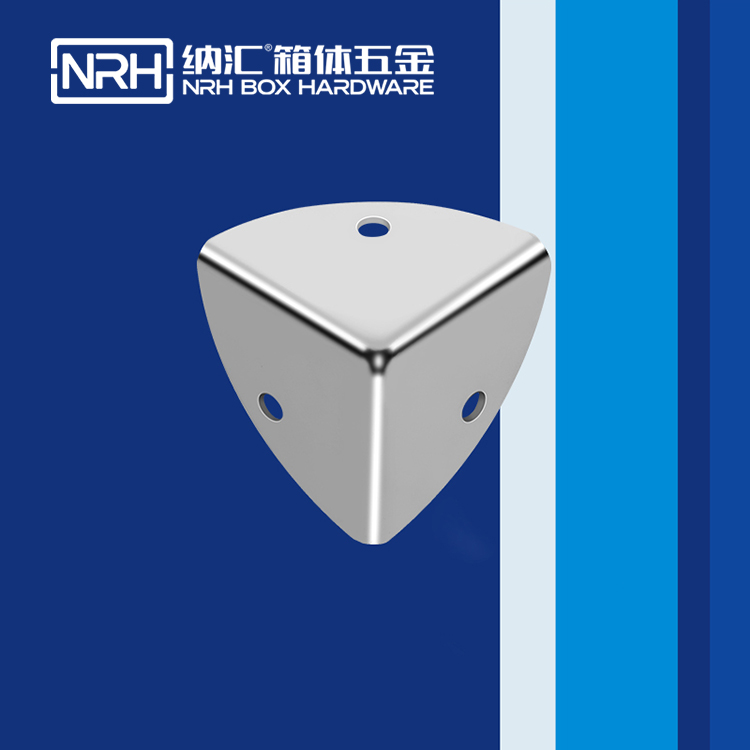
Figure 3: L-shape corner protector on a flight case edge, reinforcing the seam where two panels meet. (Image source: NRH Box Hardware)
L-shape corner protectors cover two perpendicular faces of a case edge – not the vertex where three panels meet, but the seam where two panels join along an edge. They guard the edge corners and prevent panel separation at the joint.
L-shape protectors are often combined with ball or flat corner protectors on the same case. Ball corners go on the vertices; L-shape protectors reinforce the long edges between them. This combination is standard on large cases – amp racks, monitor wedges, and multi-unit rolling cases – where edge damage is common.
L-Shape Corner Specifications
- Material: Iron or Stainless Steel
- Finish: Chrome Plated, Brushed, Color Coating
- Type: Edge protector
- Function: Connects two sides of the case together, reinforces seams
- Mounting: Rivets, screws, or spot welding based on hole pattern
- Applications: Flight cases, aluminum cases, tool cases, large transit cases
Corner Protector Selection Guide
Choosing the right corner protector depends on three factors: impact exposure, space constraints, and case size.
| Factor | Ball Corner (7101) | Flat Corner (7201) | Korean Flat (7401) | Three-Sided | L-Shape |
|---|---|---|---|---|---|
| Impact protection | High | Low | Low | High | Medium |
| Profile height | Tall | Flush | Flush | Medium | Low |
| Edge coverage | Vertex only | Vertex only | Vertex only | 3 faces | 2 faces |
| Weight range | 29-95g | 20-52g | 5-42g | Medium | Light |
| Aesthetic style | Domed, polished | Block, industrial | Square, sleek | Wraparound | Angled |
| Typical use | Touring cases | Rack cases | Small cases | Heavy-duty | Edge reinforcement |
High-impact environments: Use ball corners (7101 series) or three-sided corners. Both absorb significant force. Three-sided corners add edge protection that ball corners lack.
Tight-space storage: Use flat corners (7201 series or 7401 series). The flush profile lets cases slide into racks and compartments without interference.
Large cases (over 6U): Combine corner protectors on vertices with L-shape protectors on long edges. This dual approach covers both impact points and vulnerable seams.
Aesthetic preference: For a clean, modern look, consider Korean-style flat corners (7401 series) with their square, sleek appearance. For a classic, industrial look, choose standard flat corners (7201 series).
Materials: Iron Chrome vs. Stainless Steel vs. Plastic
The models described above are available in different materials. Here is how they compare.
Iron, chrome-plated: The industry standard. Iron provides rigidity and impact resistance. Chrome plating adds corrosion resistance and a polished finish. Chrome-plated iron corners cost less than stainless steel and last longer than plastic. The main downside is weight – iron is heavier than aluminum and plastic.
304 Stainless Steel, vibratory finish: Available on many models as an alternative to chrome-plated iron. Offers superior corrosion resistance for marine, chemical, or high-humidity environments. Stainless steel does not rust even when the surface is scratched, unlike chrome-plated iron. The vibratory finish provides a uniform matte surface that hides minor scratches and does not show fingerprints. The trade-off is higher cost and slightly lighter weight (stainless steel 7201-50 is 36g vs iron 45g).
Iron, zinc-plated: Available on select models like the 7401-41. Offers good corrosion resistance at a lower cost than stainless steel. Zinc plating provides sacrificial protection – the zinc layer corrodes before the iron substrate. The trade-off is a less polished appearance than chrome.
Plastic (polypropylene or ABS): The lightest and cheapest option. Plastic corners absorb some impact through flex but crack under heavy loads. They suit lightweight cases that see gentle handling – not road cases. Plastic also degrades under UV exposure and temperature extremes, which limits outdoor use.
Installation Techniques
Proper installation determines whether a corner protector actually protects the case. Poorly installed corners shift, gap, and fail under stress.
Fastener selection: Use rivets for permanent installation. Use machine screws with lock nuts for removable installation. Rivets create a tight, permanent bond that does not vibrate loose. Machine screws allow field replacement but need lock nuts or thread-locking compound to prevent loosening.
Hole alignment: Mark mounting holes through the corner protector onto the case panel before drilling. Use a center punch to prevent drill bit wander. Drill pilot holes slightly smaller than the rivet diameter for a tight fit.
Edge preparation: The case corner must be clean and free of debris before installation. Any gap between the protector and the panel allows moisture and debris to accumulate, which accelerates corrosion and weakens the bond.
Spacing: Space rivets evenly along the mounting surface. Do not arbitrarily change the hole spacing of the product to avoid unnecessary damage.
Edge distance: Maintain sufficient edge distance from the rivet center to the material edge to prevent pull-through or splitting. The rivet should be positioned far enough from the edge to allow the material to fully support the rivet head.
Welding note: If welding is required, use unplated (raw) products for the welding operation. High temperatures from welding can damage plated finishes.
Storage: Store corner protectors in a dry location. Do not store in damp or humid areas to prevent rust or oxidation.
Key Takeaways
- Ball corners (7101 series) offer the highest impact protection and are standard on touring cases. The dome shape distributes impact force across a curved surface. Weights range from 29g to 95g depending on size and design variant.
- Flat corners (7201 series) sit flush against the case surface for tight-space applications. They are primarily used for panel connection rather than impact protection. Available in concave (-1) and convex (-2) surface variants.
- Korean-style flat corners (7401 series) offer the same low-profile function with a different aesthetic – a square, sleek appearance. Available in sizes from 22mm to 41mm with weights from 5g to 42g.
- Three-sided corners provide maximum edge coverage for heavy-duty cases, wrapping around three faces of the vertex.
- L-shape protectors reinforce long edges between corners.
- Chrome-plated iron is the industry standard for durability and cost. 304 stainless steel with vibratory finish offers superior corrosion resistance and a matte appearance at a higher cost.
- Proper installation with correct rivet spacing and edge preparation determines whether the protector actually protects the case.
- Always verify mounting hole patterns against your case panel before installation. Do not arbitrarily change product hole spacing.
Frequently Asked Questions
What is a corner protector on a transit case?
A corner protector is a metal fitting mounted on the corners of a transit case to absorb impact and prevent damage. It is the primary defense against dents and structural failure at the most vulnerable points of the case.
What is the difference between a ball corner and a flat corner?
Ball corners have a dome shape that protrudes from the case surface and distributes impact force. Flat corners sit flush against the case surface and add no height. Ball corners offer better impact protection; flat corners fit into tight spaces where a dome would interfere.
What are the different types of corner protectors?
The main types are: ball corners (7101 series, dome-shaped, best impact protection), flat corners (7201 series, flush-mounted, block-shaped), Korean-style flat corners (7401 series, square, sleek appearance), three-sided corners (wrap around three faces, maximum edge coverage), and L-shape protectors (reinforce long edges between corners).
Can I mix different corner types on one case?
Yes. Many case builders use ball corners on the vertices and L-shape protectors on the side edges. This combination gives high-impact protection where it matters most while reinforcing seams along the edges. Avoid mixing materials (e.g., iron and plastic) on the same case, because different expansion rates can cause fit issues.
How do I install corner protectors on a plywood case?
Mark the mounting holes through the protector onto the plywood. Drill pilot holes slightly smaller than the rivet diameter. Set the corner protector in place and drive rivets through each hole. Use washers on the inside of the case to prevent the rivet from pulling through the plywood.
Are chrome-plated iron corners rust-proof?
No. Chrome plating resists surface corrosion under normal conditions. If the plating gets scratched or chipped, the iron beneath will rust. For marine or high-humidity environments, inspect corners regularly and replace any with damaged plating. Stainless steel corners are an alternative for extreme conditions.
What size corner protector do I need?
Match the protector size to the case panel thickness and extrusion profile. A 50mm corner fits most standard cases. Smaller sizes (22mm, 28mm, 35mm, 37mm, 40mm, 41mm) are available for compact cases. Check the mounting hole spacing against your extrusion profile before ordering.
How many corner protectors does one case need?
A standard rectangular case has 8 vertices. Most builds use 8 corner protectors (one per vertex). L-shape edge protectors are added along long edges as needed.
Need help choosing? Whether you need ball corners, flat corners, or edge protectors for your transit cases, NRH can help you find the right products. Contact the team for technical support and product selection guidance:
TEL & WhatsApp & WeChat: +86 180 1797 5137
E-MAIL: nrh-gz@nrh.cn
ADD: Room 1703-1704, Zhongji Building, No. 819 Yinxiang Road, Nanxiang Town, Jiading District, Shanghai, China