

Stainless Steel Butt Hinge Guide: 304 vs 201, Sizing, and Installation
Quick Answer: A butt hinge is a two-leaf pivot hardware that connects a lid or door to a frame, with both leaves sitting flush when closed. NRH offers two stainless steel options: the 8403 series (304 stainless steel) for outdoor, marine, and humid environments (5-20kg load capacity per pair), and the 8404 series (201 stainless steel) for indoor, dry applications where cost savings are a priority (10-20kg load capacity per pair). Choose based on your environment and load requirements.
Applicable Buyers
This guide is for case builders, product designers, engineers, and procurement professionals selecting butt hinges for cases, enclosures, cabinets, and equipment lids. NRH offers two stainless steel butt hinge series: the 8403 series (304 stainless steel) and the 8404 series (201 stainless steel). This article covers specifications, load ratings, material comparisons, sizing calculations, and installation methods.
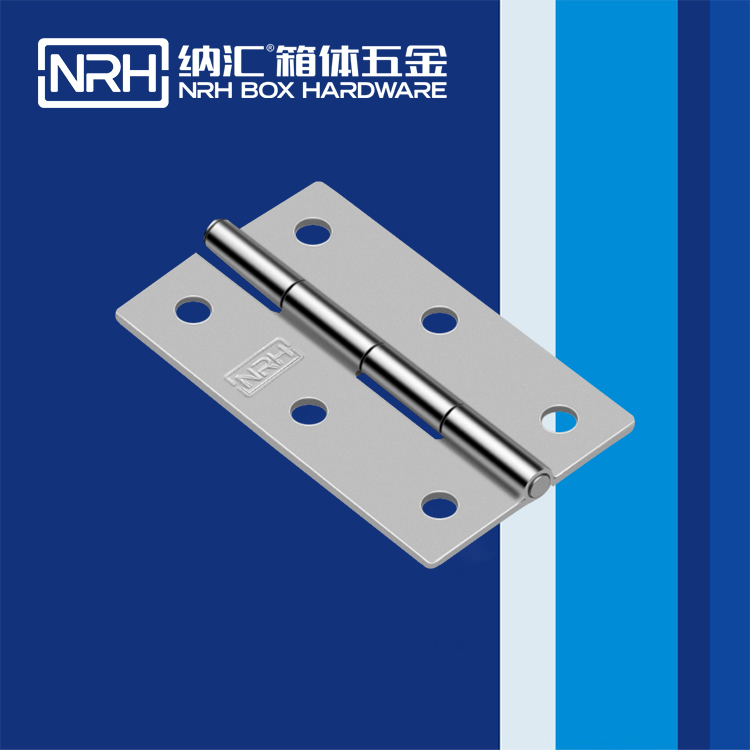
Figure 1: NRH 8403 series stainless steel butt hinge with vibratory finish. The 304 stainless steel construction provides superior corrosion resistance for demanding environments. (Image source: NRH Box Hardware)
Key Finding: NRH offers two stainless steel butt hinge families for general-purpose case applications. The 8403 series is manufactured from 304 stainless steel with a vibratory finish, providing superior corrosion resistance for outdoor, marine, and humid environments. The 8404 series is manufactured from 201 stainless steel with a vibratory finish, offering a cost-effective solution for indoor and dry applications. Load ratings range from 5kg to 20kg per pair (two hinges mounted vertically). The numerical suffix (25, 38, 50, 65, 75) indicates hinge length in millimeters. Choose 304 stainless steel for demanding environments; choose 201 stainless steel for cost-sensitive indoor applications where maximum corrosion resistance is not required.
A butt hinge is a two-leaf pivot hardware that connects a door or lid to a frame. Two flat rectangular plates (leaves) are joined by a central pin that passes through interlocking knuckle barrels, creating a rotation axis. One leaf attaches to the case lid, the other to the case body. When mounted, both leaves sit flush against their respective surfaces, keeping the hinge profile minimal. This low-profile design is why butt hinges are widely used in case hardware where external protrusion must stay low.
8403 Series – 304 Stainless Steel Butt Hinges
The 8403 series is manufactured from 304 stainless steel with a vibratory finish. 304 stainless steel contains approximately 18% chromium and 8% nickel, providing excellent corrosion resistance for demanding environments. The vibratory finish creates a uniform matte surface that hides minor scratches and does not show fingerprints, making it ideal for field-use cases.
Load ratings in the table below are per pair when two hinges are mounted vertically (longitudinal installation). For single-hinge installations, reduce the load rating by 50%.
| Model | Material | Finish | Weight | Dimensions (L x W) | Thickness | Load Rating (per pair) | Hole Spec |
|---|---|---|---|---|---|---|---|
| 8403-25 | 304 SS | Vibratory | 6g | 25 x 28 | 0.8mm | 5kg | 4 x 3.4 (through) |
| 8403-38 | 304 SS | Vibratory | 12g | 38 x 29.5 | 0.8mm | 10kg | 4 x 3.4 |
| 8403-50 | 304 SS | Vibratory | 18g | 50 x 38 | 0.8mm | 15kg | 4 x 4.5 |
| 8403-65 | 304 SS | Vibratory | 24g | 63 x 43 | 0.7mm | 10kg | 6 x 4.4 (pin: 5.2mm) |
| 8403-75 | 304 SS | Vibratory | 29g | 75 x 50 | 0.85mm | 20kg | 6 x 4.5 |
Key Features:
- 304 stainless steel construction with vibratory finish
- Superior corrosion resistance for outdoor, marine, and humid environments
- Simple pivot action – no spring or stay mechanism
- Surface mount installation with rivets, screws, or spot welding
- Available in five sizes from 25mm to 75mm
Best for: Outdoor cases, marine equipment, humid environments, and applications requiring maximum corrosion resistance. Also suitable for premium indoor applications where durability is prioritized.
8404 Series – 201 Stainless Steel Butt Hinges
The 8404 series is manufactured from 201 stainless steel with a vibratory finish. 201 stainless steel contains approximately 1-1.5% nickel with manganese substitution, making it a cost-effective alternative to 304 stainless steel. The R prefix (e.g., R8404-25) indicates the 201 stainless steel variant.
The 8404 series features a combination of through holes and countersunk holes, allowing for flush screw mounting – ideal for applications where screw heads must sit flush with the hinge surface.
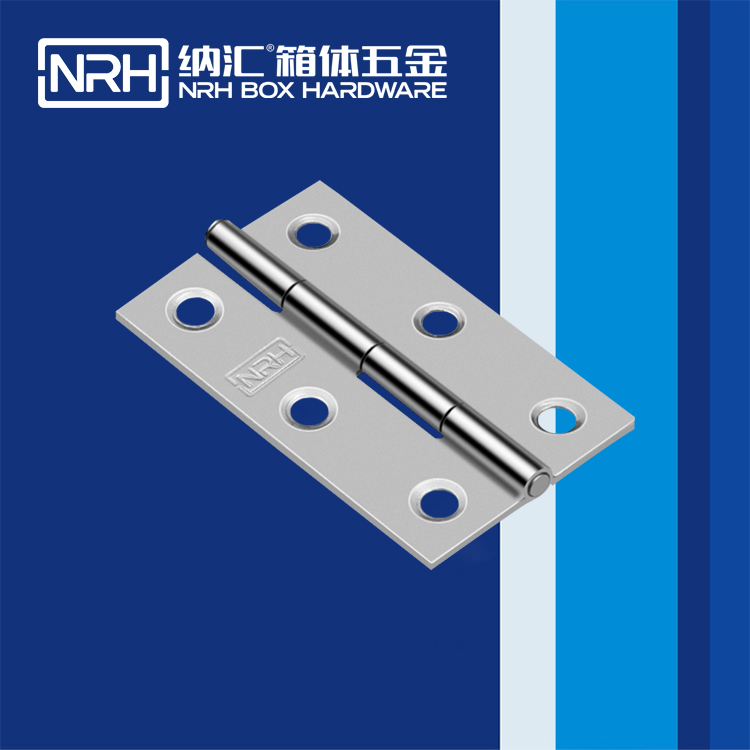
Figure 2: NRH 8404 series stainless steel butt hinge with vibratory finish. The 201 stainless steel construction offers a cost-effective solution for indoor and dry applications. (Image source: NRH Box Hardware)
| Model | Material | Finish | Weight | Dimensions (L x W) | Load Rating (per pair) | Hole Spec |
|---|---|---|---|---|---|---|
| R8404-25 | 201 SS | Vibratory | 7g | 25 x 28 | 10kg | Through 4-4 / Countersink 4-7 |
| R8404-38 | 201 SS | Vibratory | 12g | 38 x 29.5 | 13kg | Through 4-4.5 / Countersink 4-8 |
| R8404-50 | 201 SS | Vibratory | 20g | 50 x 38 | 15kg | Through 4-5 / Countersink 4-7 |
| R8404-65 | 201 SS | Vibratory | 33g | 63 x 43 | 18kg | Through 6-4.8 / Countersink 6-8 |
| R8404-75 | 201 SS | Vibratory | 56g | 75 x 50 | 20kg | Through 6-5 / Countersink 6-8 |
Key Features:
- 201 stainless steel construction with vibratory finish
- Cost-effective alternative to 304 stainless steel
- Adequate corrosion resistance for indoor and dry environments
- Simple pivot action – no spring or stay mechanism
- Through holes and countersunk holes for flush mounting
- Available in five sizes from 25mm to 75mm
Best for: Indoor cases, dry environments, and applications where cost savings are a priority over maximum corrosion resistance.
304 vs 201 Stainless Steel: Which to Choose
Understanding the difference between 304 and 201 stainless steel is critical for proper hinge selection. Here is a direct comparison based on material composition:
| Comparison | 304 Stainless Steel (8403) | 201 Stainless Steel (8404) |
|---|---|---|
| Nickel Content | 8-10.5% | 1-1.5% |
| Chromium Content | ~18% | ~13% |
| Corrosion Resistance | Excellent | Good (indoor use) |
| Recommended Environment | Outdoor, marine, humid | Indoor, dry |
| Cost | Higher | Lower |
Real-world performance difference: The corrosion resistance gap between 304 and 201 stainless steel is significant in actual applications. 201 stainless steel’s lower nickel content (1-1.5% vs 8-10.5%) and reduced chromium (~13% vs ~18%) make it more susceptible to surface rust when exposed to moisture, salt spray, or humid conditions. For indoor applications with controlled humidity, 201 provides adequate performance at a lower cost. For outdoor, coastal, or high-humidity applications, 304 is the recommended choice. The material selection should be based on the specific application environment.
Service life considerations: Hinge service life is influenced by multiple factors including load cycles, environmental conditions, and maintenance. 304 stainless steel offers superior corrosion resistance for demanding environments. 201 stainless steel is suitable for indoor, dry applications. For specific service life expectations based on your application, contact NRH with your application details for application-specific guidance.
Selection rule: If the case will be exposed to moisture, salt spray, or outdoor conditions, choose 304 stainless steel. For indoor, dry environments where cost savings are important, 201 stainless steel provides adequate performance at a lower cost.
What Happens If You Choose the Wrong Hinge
Choosing the wrong hinge material or size can lead to premature failure, safety hazards, and costly replacements. Here are the most common failure scenarios:
Material mismatch: Installing a 201 stainless steel hinge in a coastal or high-humidity environment can lead to surface rust over time. The lower nickel content (1-1.5%) and reduced chromium content (~13%) of 201 stainless steel do not provide sufficient corrosion resistance for outdoor or marine applications. In contrast, 304 stainless steel with its higher nickel (8-10.5%) and chromium (~18%) content resists corrosion in these demanding environments.
Under-specifying load rating: Using a hinge with insufficient load capacity will cause the hinge pin to bend or the leaf to deform under load. The lid will sag, misalign with the case body, and fail to seal properly. In extreme cases, the hinge may shear entirely, causing the lid to fall unexpectedly. For example, a 25mm hinge rated at 5kg should not be used on a 10kg lid.
Over-specifying size: While less critical than under-sizing, using a hinge that is unnecessarily large adds weight and cost without benefit. A 75mm hinge on a small lightweight case is oversized – it adds unnecessary bulk and increases the case weight.
Incorrect installation: Even the correct hinge will fail if installed improperly. Using the wrong fastener type, drilling holes incorrectly, or misaligning the leaves can cause premature wear and failure. Always verify the mounting hole pattern against your case panel before installation.
Butt Hinge Sizing Guide
Correct sizing prevents lid sag, uneven gaps, and premature wear. Use the load ratings in the tables above to match the hinge to your lid weight.
Load Rating Reference
- 5kg capacity: 8403-25 (small, lightweight lids)
- 10kg capacity: 8403-38, 8403-65, R8404-25 (medium lids)
- 13-15kg capacity: 8403-50, R8404-38, R8404-50 (medium-heavy lids)
- 18-20kg capacity: 8403-75, R8404-65, R8404-75 (heavy lids)
Number of Hinges per Lid
Most case lids use two butt hinges – one near each end. For lids longer than 600mm, add a third hinge at the midpoint. The maximum unsupported span between hinge points should not exceed 300mm.
Model Number Reference
The numerical suffix in the model name (25, 38, 50, 65, 75) indicates the hinge length in millimeters. For example, 8403-25 is a 25mm hinge, 8403-75 is a 75mm hinge. Longer hinges provide more mounting surface and better load distribution.
How to Install a Butt Hinge
Proper installation separates a hinge that lasts thousands of cycles from one that fails prematurely. NRH hinges are installed based on the product’s actual hole spacing specifications, using rivets, screws, or spot welding. Follow these steps for both aluminum and roto-molded cases.
Step 1: Gather Your Tools
You will need: butt hinges (quantity based on lid size and weight), pencil or marker, measuring tape, drill, screwdriver, and suitable fasteners (rivets or screws).
Step 2: Mark the Placement
Measure and mark the hinge locations on both the case body and the lid. For standard cases, place hinges approximately 50-75mm from each end, with an optional third hinge in the center for longer lids.
Step 3: Pre-drill Pilot Holes
Clamp the hinge leaf to the mounting surface. Mark all fastener holes with a center punch. Drill pilot holes sized for the chosen fasteners. For aluminum cases with rivets, drill to the rivet diameter minus 0.1mm for an interference fit.
Step 4: Mount the Hinges
Mount the case-body leaf first. Close the hinge, position the lid, and clamp the lid leaf in place. Open and close the lid to verify smooth operation and even gaps before driving the final fasteners.
Step 5: Fastener Choice
- Rivets: Most common method for permanent installation. Use blind rivets or pop rivets sized to match the hinge hole diameter.
- Screws: Use machine screws with lock nuts for removable installation. For 8404 series, use countersunk screws to sit flush with the hinge surface.
- Spot welding: For permanent, high-strength connections on steel cases.
Step 6: Test the Lid
With the hinges installed, test the lid 20 times. Listen for binding, grinding, or squeaking. Check that the lid closes flat with even gaps along all edges.
Common Installation Mistakes to Avoid
Even the correct hinge will fail if installed improperly. Here are the most common installation errors:
- Incorrect fastener type: Using fasteners that do not match the hinge hole diameter or material can cause loosening or damage over time.
- Misaligned leaves: If the two leaves are not properly aligned, the hinge will bind, causing uneven wear and premature failure.
- Drilling holes that do not match the hinge specifications: Always verify the mounting hole pattern against your case panel before drilling.
- Over-tightening fasteners: Excessive torque can deform the hinge leaf or damage the mounting surface.
How to avoid these mistakes: Always verify the mounting hole pattern against your case panel before installation. Use the recommended fastener type (rivets for permanent installation, machine screws with lock nuts for removable installation). Test the lid operation before final tightening to ensure smooth operation.
Important Notes
- Do not use rainwater, acid solutions, or harsh chemicals to clean the hinges.
- Do not use grinding machines or polishing tools on the product.
- Do not arbitrarily change the hole spacing of the product to avoid unnecessary damage.
- Do not arbitrarily remove or replace product components.
- Always select the hinge based on the load rating for your application.
- If welding is required, use unplated (raw) products for the welding operation. High temperatures from welding can damage plated finishes.
- Store hinges in a dry location. Do not store in damp or humid areas to prevent rust or oxidation.
Selection Guide: Matching Hinge to Application
| Application | Recommended Material | Recommended Model | Reason |
|---|---|---|---|
| Small case, lightweight lid (under 5kg) | 304 SS | 8403-25 | Smallest size, lowest weight |
| Medium case, indoor use, cost-sensitive | 201 SS | R8404-25 or R8404-38 | 201 stainless steel, lower cost |
| Medium case, outdoor or humid | 304 SS | 8403-38 or 8403-50 | 304 stainless steel, corrosion resistance |
| Heavy lid (15-20kg), demanding environment | 304 SS | 8403-75 | 20kg capacity, 304 stainless steel |
| Heavy lid, indoor use, cost-sensitive | 201 SS | R8404-75 | 20kg capacity, 201 stainless steel |
Key Takeaways
- 304 stainless steel butt hinges (8403) offer maximum corrosion resistance for outdoor, marine, and humid environments. Load ratings from 5kg to 20kg per pair.
- 201 stainless steel butt hinges (8404) offer cost-effective performance for indoor, dry applications. Load ratings from 10kg to 20kg per pair.
- Both series feature a vibratory finish that hides minor scratches and provides a uniform matte appearance.
- Load ratings are per pair when two hinges are mounted vertically. Single-hinge installations should use 50% of the rated capacity.
- Choose 304 stainless steel for demanding environments; choose 201 stainless steel for cost-sensitive indoor applications.
- Hinge length (25-75mm) determines mounting surface area – longer hinges provide better load distribution.
- Proper installation with correct fastener choice and alignment determines whether a hinge performs reliably over time.
- Always verify mounting hole patterns against your case panel before installation.
Frequently Asked Questions
What is a butt hinge?
A butt hinge is a two-leaf pivot hardware that connects a door or lid to a frame. Two flat rectangular plates (leaves) are joined by a central pin that passes through interlocking knuckle barrels, creating a rotation axis. When mounted, both leaves sit flush against their respective surfaces.
What is the difference between 304 and 201 stainless steel butt hinges?
304 stainless steel contains 8-10.5% nickel and approximately 18% chromium, providing superior corrosion resistance for outdoor and humid environments. 201 stainless steel contains 1-1.5% nickel with manganese substitution, offering a cost-effective alternative for indoor, dry applications. 201 stainless steel has lower corrosion resistance and is more prone to rust in humid environments.
Does a butt hinge have a spring or stay function?
No. Standard butt hinges provide simple pivot action with no spring or stay mechanism. The lid closes under gravity or latching force. For hold-open applications, consider support hinges (like the NRH 8131 series).
How do I choose between 304 and 201 stainless steel?
Choose 304 stainless steel for outdoor, marine, or humid environments. Choose 201 stainless steel for indoor, dry environments where cost savings are a priority. For specific application guidance, contact NRH.
How many hinges do I need per lid?
Two hinges for lids up to 600mm long, three for longer lids. The maximum span between hinge points should not exceed 300mm.
What do the numbers in the model name mean (25, 38, 50, 65, 75)?
The numbers indicate the hinge length in millimeters. Longer hinges provide more mounting surface and better load distribution.
What is the vibratory finish?
Vibratory finish is a tumbling process that creates a uniform matte surface. It hides minor scratches, reduces glare, and does not show fingerprints.
What is the load capacity of NRH butt hinges?
Load ratings range from 5kg to 20kg per pair (two hinges mounted vertically). For single-hinge installations, reduce the rating by 50%.
Can butt hinges be used on roto-molded cases?
Yes. Butt hinges can be mounted to roto-molded cases using stainless steel self-tapping screws with washers to distribute clamp load. Wall thickness should be at least 3.0mm.
How do I install NRH butt hinges?
Install based on the product’s actual hole spacing specifications using rivets, screws, or spot welding. Mount the case-body leaf first, then position the lid and mount the lid leaf. Verify smooth operation before final tightening.
What should I avoid when cleaning NRH hinges?
Do not use rainwater, acid solutions, or harsh chemicals to clean the hinges. Avoid using grinding machines or polishing tools on the product.
Need help choosing? Whether you need 304 stainless steel or 201 stainless steel butt hinges for your cases and enclosures, NRH can help you find the right products. Contact the team for technical support and product selection guidance:
TEL & WhatsApp & WeChat: +86 180 1797 5137
E-MAIL: nrh-gz@nrh.cn
ADD: Room 1703-1704, Zhongji Building, No. 819 Yinxiang Road, Nanxiang Town, Jiading District, Shanghai, China