

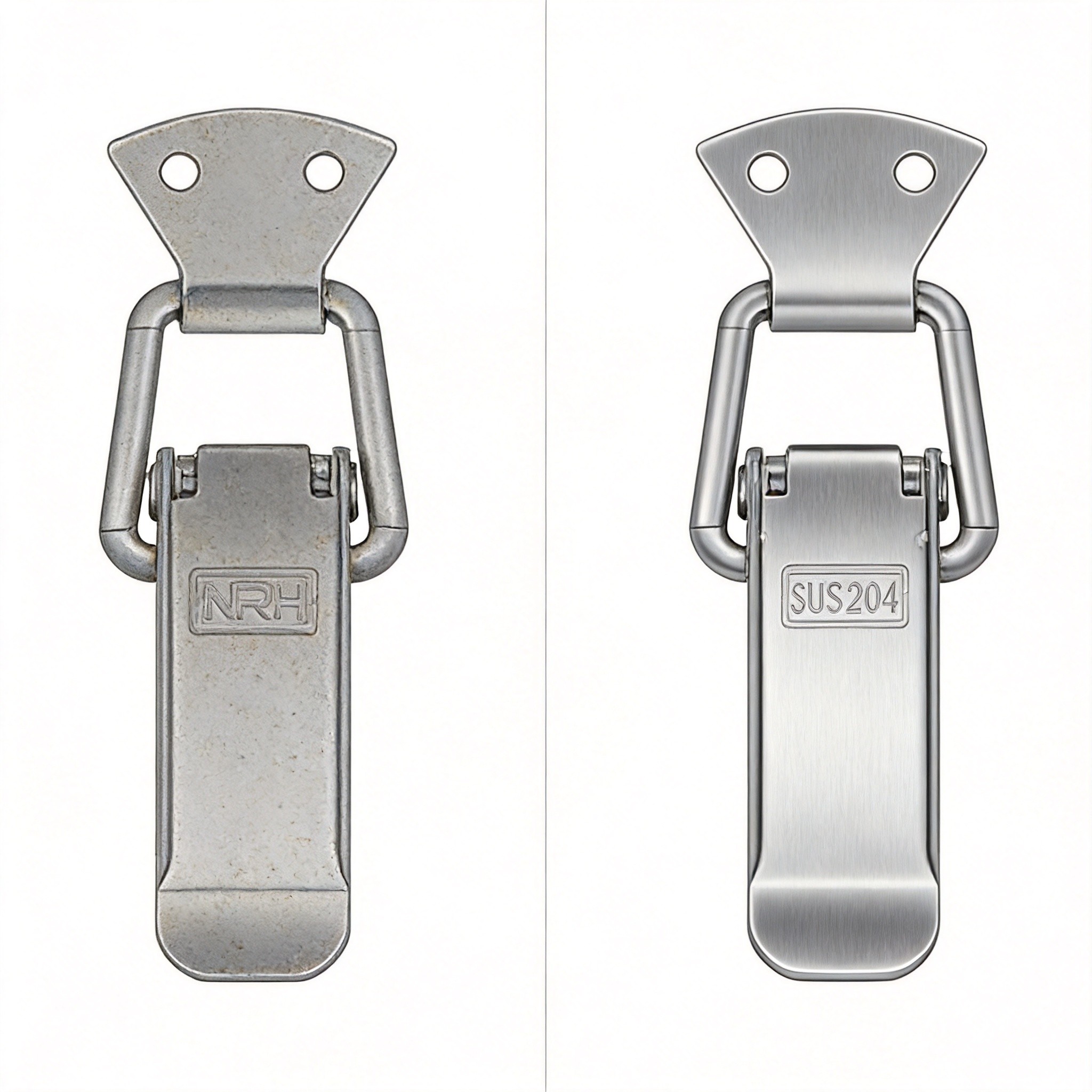
Mild Steel vs Stainless Steel Case Hardware: When Cost-Effective Is the Right Choice
Here’s a fact that surprises most buyers: the FE-ZL zinc-plated mild steel latch you’re specifying for an indoor cabinet will likely outlast the cabinet itself. On paper, stainless steel looks like the obvious winner – 72-96 hours of neutral salt spray resistance versus 24-48 hours for zinc-plated mild steel. But paper doesn’t account for the reality that most case hardware operates indoors, in climate-controlled facilities, where 24-48 hours of salt spray resistance translates to years of trouble-free service.
Specifying SUS304 for a server rack latch that never sees moisture is not engineering – it is waste. Let’s break this down with real numbers, not marketing claims.
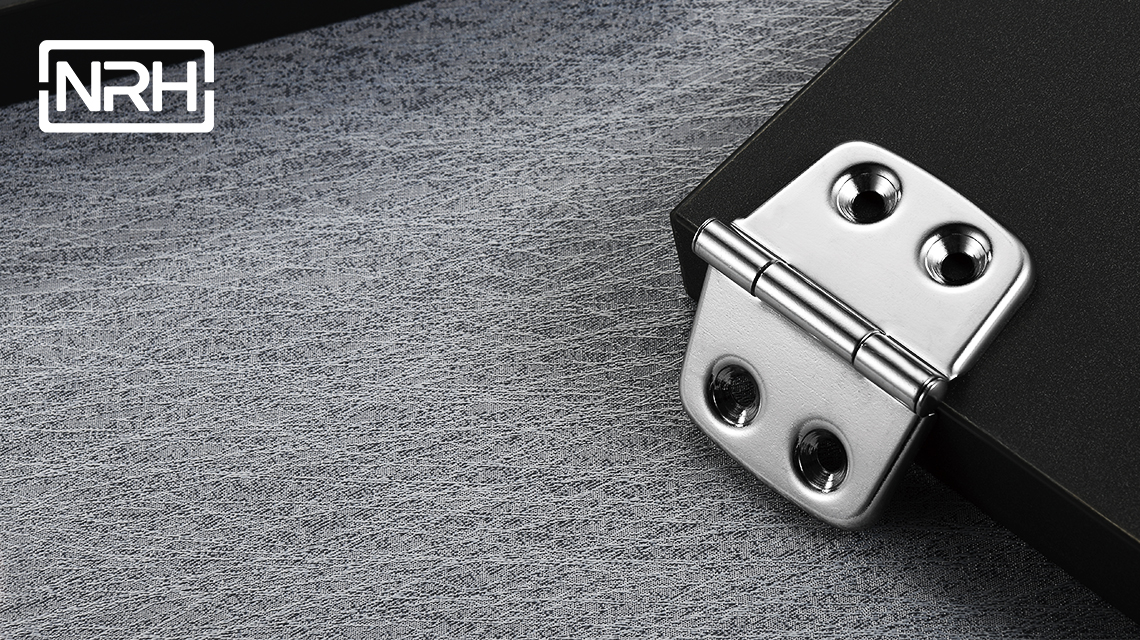
Salt Spray Test Comparison: FE-ZL vs SUS304 vs FE-CR (NSS Hours)
FE-ZL (Zinc plating – NSS): 24-48 hours | FE-NI (Nickel plating – NSS): 24-48 hours
FE-CR (Chrome plating – NSS): 48-72 hours | SUS304 (Stainless – NSS): 72-96 hours
FE-ZL+PE (Zinc + chromate – NSS): 48-72 hours | SUS316 (Marine grade – NSS): 120-200 hours
What this really means: 1 hour of NSS exposure is roughly equivalent to 1 day of natural indoor exposure. 24-48 hours of NSS represents 1-2 months of continuous fog, but in real indoor conditions, years of service. NSS is an accelerated comparison tool, not a service life predictor.
What Is Salt Spray Testing? NSS vs AASS vs CASS Explained
Before diving into material comparisons, it is important to understand what salt spray testing actually measures – and what it does not.
Neutral Salt Spray (NSS) per ASTM B117 is the industry standard. It exposes parts to a continuous 5% sodium chloride fog at 35 degrees C, pH 6.5-7.2. The hours to first white rust (zinc oxidation) or red rust (base steel corrosion) are recorded. This is an accelerated test. 1 hour of NSS exposure is roughly equivalent to 1 day of natural indoor exposure. The salt concentration is several times higher than any natural environment, and the fog is continuous – not intermittent like rain or condensation.
Two additional test methods are used for more aggressive evaluation:
- AASS (Acetic Acid Salt Spray): Acetic acid is added to the salt solution, lowering pH to approximately 3. This tests acid resistance and corrosion progression. Corrosion rate is roughly 3x faster than NSS.
- CASS (Copper-Accelerated Acetic Acid Salt Spray): Copper chloride is added to the AASS solution. Corrosion rate is roughly 8x faster than NSS. Used primarily for evaluating decorative chrome plating porosity and corrosion resistance.
For most case hardware applications, NSS is the relevant test. AASS and CASS are reserved for automotive, marine, and highly corrosive environments. The data in this article is based on NSS testing per ASTM B117.
Mild Steel vs Stainless Steel: Material Properties & Corrosion Mechanisms
Mild steel (low-carbon steel, typically Q235 or SPCC in case hardware) provides high tensile strength at low material cost. The trade-off is corrosion susceptibility. Without surface treatment, bare mild steel begins rusting within hours of humidity exposure. That is why case hardware never ships bare – it always carries a protective finish.
Four surface treatments dominate the mild steel hardware segment:
- FE-ZL (zinc electroplating): Sacrificial zinc layer 5-15 microns thick. The zinc corrodes preferentially, protecting the iron substrate. NSS rating: 24-48 hours. Cost index: baseline (1.0x).
- FE-NI (nickel plating): Barrier layer with warm silver appearance. Provides moderate corrosion protection. NSS rating: 24-48 hours. Cost index: 1.1-1.3x.
- FE-CR (chrome plating over nickel undercoat): Decorative finish with improved corrosion protection. Nickel barrier plus hard chrome top layer. NSS rating: 48-72 hours. Cost index: 1.2-1.5x.
- FE-ZL+PE (zinc plating with chromate passivation): Adds a trivalent chromate conversion layer over zinc plating. Extends NSS performance to 48-72 hours. Cost index: 1.2-1.4x.
Stainless steel takes a fundamentally different approach. SUS304 (18% chromium, 8% nickel) forms a self-healing chromium oxide passive layer. No plating exists to chip, wear through, or consume. The surface protects itself indefinitely. SUS304-ZG (vibratory finish) rates 72-96 hours in NSS testing per ASTM B117. SUS316 adds molybdenum for chloride pitting resistance, pushing NSS performance to 120-200 hours in marine environments, per manufacturer catalog data.
Corrosion Resistance Comparison: NSS Ratings for FE-ZL, FE-CR & SUS304
| Finish Code | Material | Surface Treatment | NSS (ASTM B117) | Typical Service |
|---|---|---|---|---|
| FE-ZL | Mild steel | Zinc electroplate | 24-48 hours | Indoor, dry |
| FE-NI | Mild steel | Nickel plating | 24-48 hours | Indoor, dry |
| FE-CR | Mild steel | Chrome over nickel | 48-72 hours | Indoor, semi-sheltered |
| FE-ZL+PE | Mild steel | Zinc + chromate | 48-72 hours | Indoor, light outdoor |
| S04-ZG | SUS304 | Vibratory finish | 72-96 hours | Outdoor, wet |
| S04-LG | SUS304 | Mirror polish | 72-96 hours | Outdoor, decorative |
| S16-ZG | SUS316 | Vibratory finish | 120-200 hours | Marine, chemical |
The salt spray gap is narrower than many assume – 24-48 hours for FE-ZL versus 72-96 hours for SUS304. But remember: these are NSS hours under continuous fog at 35 degrees C. Indoor hardware never experiences anything close to these conditions. In a typical indoor environment at 40-60% relative humidity, an FE-ZL latch functions for 5-8 years without visible corrosion.
Cost Comparison: FE-ZL vs SUS304 Unit Price & Total Cost of Ownership
Mild steel hardware carries a significant unit cost advantage. Across common latch and handle configurations, SUS304 variants typically run 2.0-3.5x the price of FE-ZL equivalents. On a 5,000-unit order, that difference compounds into thousands of dollars.
Unit price alone misses the full picture. Total cost of ownership factors in replacement cycles, maintenance labor, downtime, and disposal. The critical question: will the mild steel part need replacement during the enclosure’s service life?
Indoor climate-controlled applications: No. FE-ZL hardware typically outlasts the enclosure it mounts on. Total cost of ownership equals unit cost.
Semi-sheltered applications (covered loading docks, warehouse bays): Possibly. Humidity cycling can degrade zinc plating over 5-8 years. FE-CR or FE-ZL+PE may be the better mild steel choice here.
Outdoor exposed applications (rooftop cabinets, roadside enclosures): Yes. UV, rain, and pollution accelerate zinc consumption. Replacement every 2-4 years is common. SUS304 eliminates these cycles. Stainless wins on total cost within the first replacement event.
Marine and coastal applications: Salt exposure destroys zinc plating within months. SUS316 becomes the rational choice. No mild steel finish survives this environment economically.
How to Choose the Right Material: Application Environment Guide
Matching material to environment eliminates both waste and failure. Here is a decision framework:
Choose FE-ZL When
- The enclosure operates indoors with climate control (data centers, labs, factory floors).
- Relative humidity stays below 70% and no direct water contact occurs.
- The enclosure service life is 5-8 years or less (most commercial and industrial enclosures).
- Unit cost matters more than maximum corrosion margin (high-volume procurement, competitive bidding).
- The hardware sits inside a sealed enclosure where ambient exposure is minimal.
Example: A 5101-96-FE-ZL butterfly latch for a server rack internal bracket – cost-effective and more than adequate for the environment.
Choose FE-CR or FE-ZL+PE When
- Appearance matters alongside improved protection (display cases, consumer-facing enclosures).
- The environment is semi-sheltered with occasional condensation (warehouses, vehicle interiors).
- You need 48-72 hours salt spray performance at a fraction of stainless cost.
Example: A 5101-96-FE-CR butterfly latch for a lab instrument case that sees occasional cleaning – better corrosion resistance with a premium appearance.
Choose SUS304 When
- The enclosure sees outdoor exposure, rain, or humidity cycling above 80%.
- Salt or chemical exposure is expected (coastal installations, food processing, medical housings).
- Service life exceeds 10 years without hardware replacement.
- Regulatory standards mandate stainless (medical, pharma, food-grade enclosures).
Example: A 5101-96-S04-ZG butterfly latch for an outdoor telecom cabinet exposed to seasonal rain.
Choose SUS316 When
- The installation is marine, offshore, or within 1 km of saltwater.
- Chloride pitting is the primary failure mode (pool equipment, desalination enclosures).
- Chemical exposure includes acids that attack the SUS304 passive layer.
Example: A 5101-96-S16-ZG butterfly latch for a coastal weather monitoring station.
Mixed Material Procurement Strategy: When to Use FE-ZL and SUS304 Together
Smart hardware specification does not mean one material for every part. Mixed-material strategies optimize cost without sacrificing performance:
- External hardware on outdoor enclosures: SUS304 for exposed latches, handles, and corner protectors.
- Internal hardware on the same enclosures: FE-ZL for hinges, brackets, and captive fasteners inside the sealed cabinet.
- High-wear components: FE-CR for latches opened frequently – chrome resists galling better than zinc plating under repeated friction.
- Low-cycle components: FE-ZL for corner protectors installed once and rarely touched.
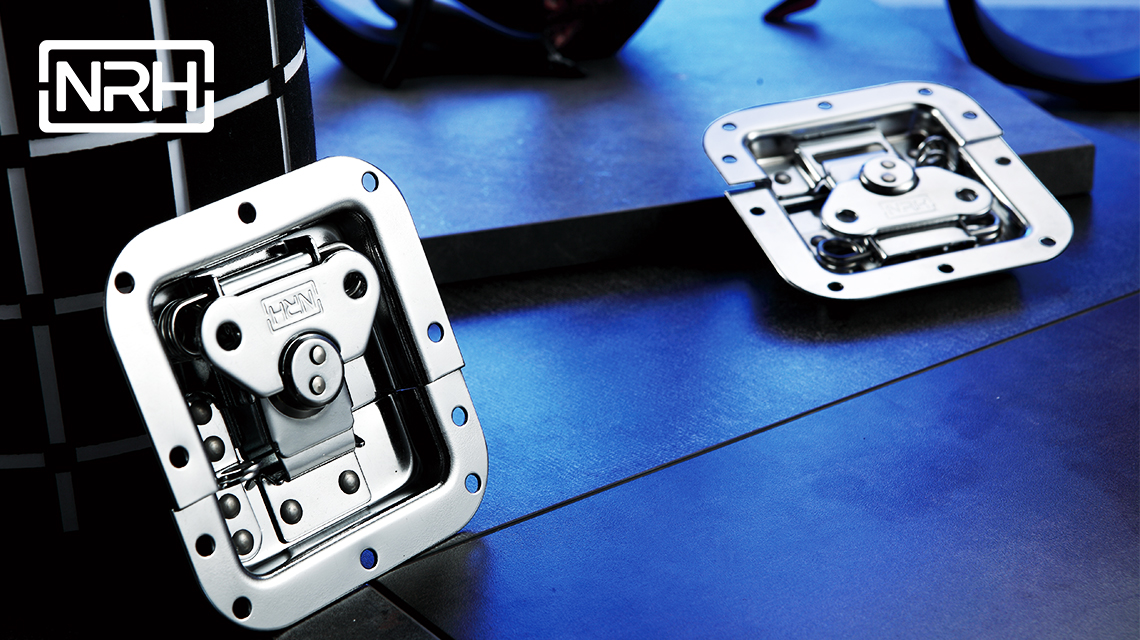
This approach reduces total hardware cost by 25-40% compared to an all-stainless specification, with zero impact on service life or reliability.
Total Cost of Ownership Calculator
| Factor | FE-ZL | SUS304 |
|---|---|---|
| Unit cost index | 1.0x | 2.0-3.5x |
| NSS rating (ASTM B117) | 24-48 hours | 72-96 hours |
| Expected service (indoor) | 5-8 years | 15+ years |
| Expected service (outdoor) | 2-4 years | 10-15 years |
| Replacement cost | Part + labor + downtime | Typically none |
| Maintenance | Periodic inspection | Minimal |
If the enclosure service life is 5-8 years indoors, FE-ZL total cost equals unit cost. No replacement needed. SUS304 total cost is 2-3.5x unit cost with no additional benefit realized. Mild steel wins decisively.
If the service life is 10 years in a semi-outdoor environment, FE-ZL may need one replacement at year 5-6. If total FE-ZL cost including replacement stays below SUS304 unit cost, mild steel still wins. If replacement pushes total cost above SUS304, stainless becomes the better investment.
Key Takeaways
- FE-ZL mild steel rates 24-48 hours in NSS testing (ASTM B117); SUS304-ZG rates 72-96 hours. But indoor hardware never experiences NSS conditions, making the gap largely irrelevant for climate-controlled applications.
- FE-CR and FE-ZL+PE offer intermediate performance at 48-72 hours NSS, filling the gap between basic zinc plating and full stainless steel.
- SUS304 hardware runs 2.0-3.5x the price of FE-ZL equivalents. In indoor environments with 5-8 year service life, total cost of ownership favors mild steel because neither material needs replacement.
- NSS testing is an accelerated comparison tool – 1 hour NSS is roughly equivalent to 1 day natural exposure. Do not interpret NSS hours as service years.
- Mixed-material strategies (SUS304 for exposed parts, FE-ZL for internal parts) reduce total hardware cost by 25-40% without sacrificing reliability.
Frequently Asked Questions (FAQ)
Is mild steel hardware reliable for indoor enclosures?
Yes. FE-ZL zinc-plated mild steel provides reliable service for 5-8 years in indoor, climate-controlled environments. The 24-48 hour neutral salt spray rating addresses conditions far more aggressive than any indoor setting. Corrosion failure in these applications is extremely rare.
When does stainless steel become cost-justified?
Stainless steel justifies its premium when hardware faces outdoor exposure, humidity cycling above 80%, salt or chemical contact, or when service life exceeds 10 years without replacement. Industry regulations mandating stainless for medical, food-grade, or pharma enclosures also trigger the upgrade.
Can I mix FE-ZL and SUS304 hardware on the same enclosure?
Absolutely. Mixed-material specification is a proven cost optimization strategy. Use SUS304 for externally exposed latches and handles, and FE-ZL for internal hinges, brackets, and captive hardware. This approach cuts total hardware cost by 25-40% with no impact on service reliability.
What does neutral salt spray testing actually measure?
Neutral salt spray testing (NSS) per ASTM B117 is an accelerated corrosion test. Parts are exposed to a continuous 5% sodium chloride fog at 35 degrees C. The hours to first rust are measured. 1 hour of NSS exposure is roughly equivalent to 1 day of natural indoor exposure – meaning 24-48 hours of NSS represents years of real-world indoor service.
What is the difference between NSS, AASS, and CASS testing?
NSS (neutral salt spray) uses 5% NaCl at pH 6.5-7.2 – the industry standard for general corrosion comparison. AASS (acetic acid salt spray) acidifies the solution to pH ~3 for testing acid resistance. CASS (copper-accelerated acetic acid salt spray) adds copper chloride – roughly 8x more aggressive than NSS – used for decorative chrome evaluation.
How does zinc plating with chromate passivation compare to basic FE-ZL?
Chromate passivation adds a conversion layer over zinc plating that slows zinc consumption and extends NSS performance to 48-72 hours. The cost increase is modest (1.2-1.4x over basic FE-ZL). This option suits semi-sheltered environments where basic zinc plating provides insufficient margin but SUS304 pricing is difficult to justify.
What surface finish options exist for stainless steel hardware?
SUS304 hardware offers vibratory finish (ZG code, satin matte) and mirror polish (LG code, high gloss). Both rate 72-96 hours in NSS testing per ASTM B117. SUS316 with vibratory finish rates 120-200 hours for marine environments.
How do I decide between FE-ZL and FE-CR for my application?
Choose FE-CR when appearance matters (chrome provides a brighter finish) and the environment includes occasional condensation or handling wear. Choose FE-ZL when cost is the primary driver and the hardware operates in dry indoor conditions. FE-CR offers better NSS performance (48-72 hours versus 24-48 hours for FE-ZL) and resists surface abrasion better due to the harder chrome top layer.
Need help selecting the right material for your enclosure hardware? Get a free material recommendation for your specific application. Contact the NRH team at nrh-gz@nrh.cn or WhatsApp at +86 180 1797 5137. The full product catalog is available at nrh.hk.