

Hardware Compliance for Importers: RoHS, REACH, ISO 9001 and Military Standards
Applicable Buyers
This guide is for importers, procurement professionals, and engineers sourcing case hardware for regulated markets. If you are buying latches, hinges, handles, or D-rings for electronics enclosures, defense applications, or European markets, compliance with RoHS, REACH, ISO 9001, and military standards is not optional. This article explains each standard, what it requires, and how to verify compliance before you order.
Key Finding: Hardware compliance is not a single certificate – it is a stack of verifiable documents. RoHS requires ISO 17025 lab test reports for ten restricted substances. REACH requires SVHC disclosure updated every six months – the candidate list reached 247 substances as of January 2025. ISO 9001 requires an accredited certificate covering the production site. Military standards (MIL-SPEC, GJB) require material traceability and lot-specific test data. Importers who verify all four layers before ordering avoid customs holds, product recalls, and contract disputes. Surface treatments and polymer components are the highest-risk areas – base metal compliance alone is never sufficient.
Ten restricted substance groups fall under RoHS 3. The EU REACH candidate list exceeds 240 substances as of 2025. Hardware importers who skip compliance checks face customs holds, product recalls, and contract voids. This guide maps every major standard that applies to case hardware – latches, hinges, handles, and D-rings – and shows exactly what to verify before you source.
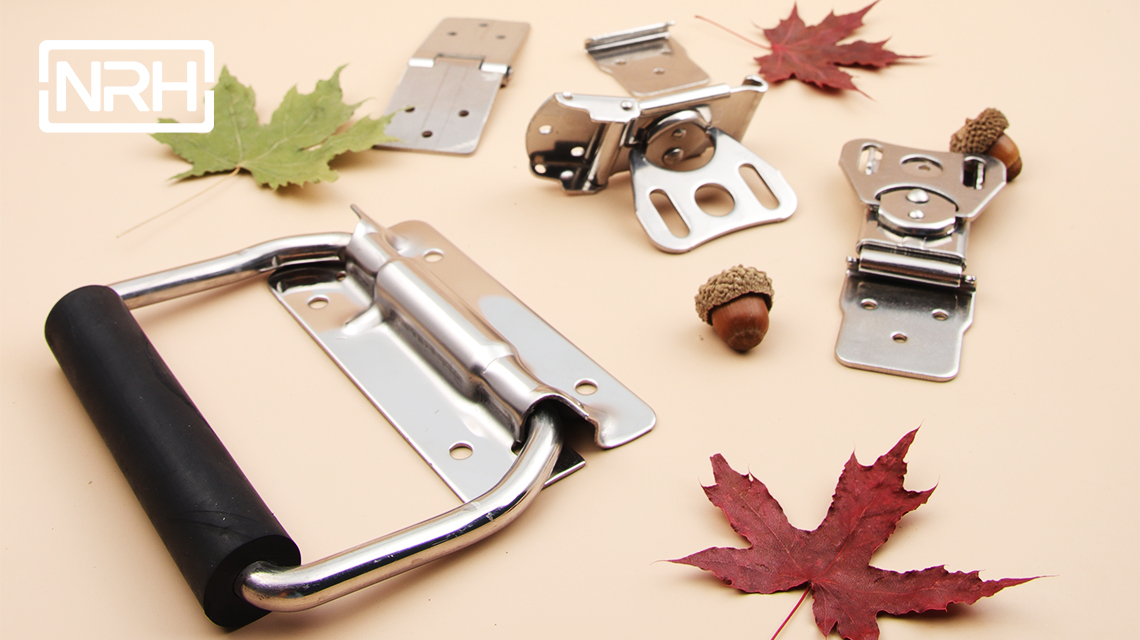
Figure 1: Case hardware components undergoing compliance testing in an ISO 17025 accredited laboratory. (Image source: NRH Box Hardware)
RoHS Compliance: Restriction of Hazardous Substances
RoHS (Directive 2011/65/EU, amended by RoHS 3 – Directive 2015/863) limits ten substance groups in electrical and electronic equipment (EEE). The limits are strict: cadmium at 0.01% by weight, all other restricted substances at 0.1%.
What RoHS Covers in Case Hardware
Any latch, hinge, or handle installed in EEE falls under RoHS scope. That includes server rack latches, telecom cabinet handles, and medical enclosure hinges. Even a D-ring mounted on an electronic case must comply if the end product is classified as EEE.
The restricted list includes lead (Pb), mercury (Hg), cadmium (Cd), hexavalent chromium (Cr6+), polybrominated biphenyls (PBB), polybrominated diphenyl ethers (PBDE), and four phthalates (DEHP, BBP, DBP, DIBP). Surface treatments are the most common risk area for RoHS compliance. Chrome plating can introduce hexavalent chromium. PVC grips may contain phthalates. Solder on latch assemblies can exceed lead limits.
Real-World Example
The draw latch model 5101-96-S04-ZG, built from SUS304 stainless steel, is commonly specified for aluminum case applications. For RoHS compliance verification, request an ISO 17025-accredited lab test report tied to the specific part number and production batch. The PVC-recessed handle 4504-195-1-PVC-BK can be supplied with RoHS-compliant materials, subject to order quantity and pricing confirmation. RoHS screening is specifically required for the polymer grip, where phthalates and flame retardants are the primary risk points. Contact NRH for specific material declarations and test report availability.
How to Verify RoHS Compliance
- Request a RoHS test report from an ISO 17025-accredited lab – not a self-declaration.
- Confirm the report covers all ten substance groups, including the four phthalates added by RoHS 3.
- Match the report to the exact part number. Generic category reports do not count.
- Check the report date. Results older than 12 months may not reflect current production batches.
REACH Compliance: Registration, Evaluation, Authorization and Restriction of Chemicals
REACH (EC 1907/2006) applies to all chemical substances manufactured or imported into the EU above one tonne per year. It is broader than RoHS. Any case hardware component sold in the EU must comply – regardless of whether the end product is EEE.
SVHC: The Moving Target
The Candidate List of Substances of Very High Concern (SVHC) grows every six months. On January 21, 2025, ECHA added five new substances, bringing the total to 247 SVHCs. Importers must disclose SVHC content above 0.1% weight-by-weight in any article. Failure to disclose triggers legal liability under REACH Article 33.
For case hardware, the highest-risk areas are surface treatments and polymer components. Chrome plating, zinc plating with passivation, and PVC grips can all introduce SVHC-listed substances. The butterfly latch model 6101-108-FE-CR, an iron latch with chrome surface treatment, is used on electrical enclosures and industrial cases. REACH compliance must be confirmed for the plating layer specifically.
REACH vs RoHS: Where They Overlap
RoHS sets concentration limits on specific substances in EEE. REACH requires disclosure and potential authorization of SVHCs in any product. A component can be RoHS-compliant but still contain an SVHC above 0.1%. Both frameworks apply simultaneously. Compliance with one does not guarantee compliance with the other.
Verification Steps for REACH Compliance
- Ask the supplier for a full REACH SVHC declaration covering the latest candidate list update.
- Request an SVHC screening test report if the declaration is missing or vague.
- For surface-treated parts, ask specifically about chromium compounds, nickel release, and any plating bath additives.
- Re-check every six months when ECHA updates the candidate list.
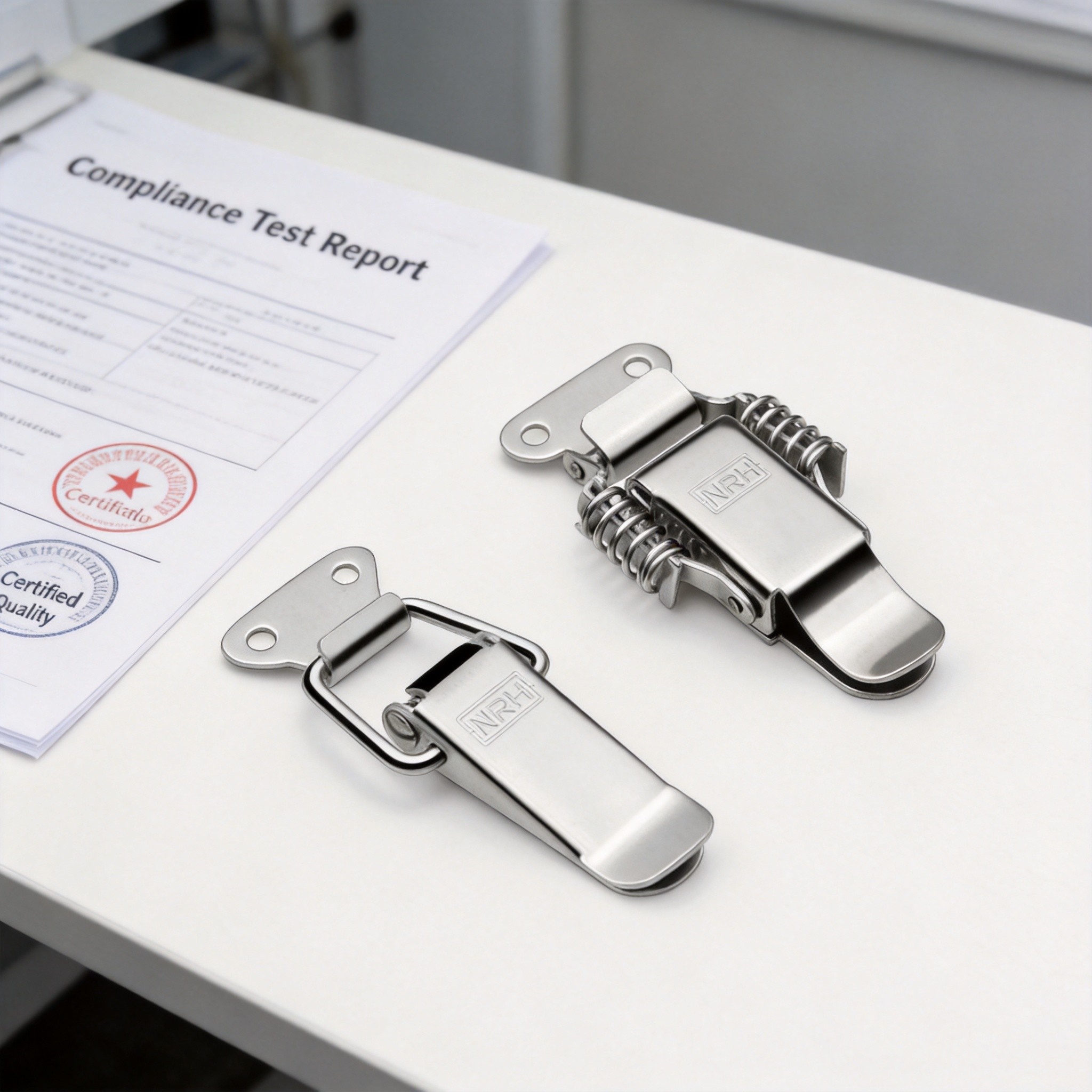
Figure 2: Compliance certificates and test reports – including RoHS, REACH, and ISO 9001 documentation – are essential for hardware import verification. (Image source: NRH Box Hardware)
ISO 9001: Quality Management System for Hardware Manufacturing
ISO 9001:2015 does not test products. It certifies that a manufacturer operates a quality management system that consistently delivers products meeting customer and regulatory requirements. For importers, ISO 9001 certification means the factory has documented processes for incoming material inspection, production control, and outgoing quality checks.
NRH (Shanghai NRH Hardware Products Co., Ltd.) holds ISO 9001 certification, confirming that its quality management system meets international standards. The company’s manufacturing operations – including the production of latches, handles, hinges, and corner protectors – operate under documented quality control procedures.
Why ISO 9001 Matters for Hardware Quality
A latch that fails in the field can cause equipment damage, safety hazards, or warranty claims. ISO 9001 reduces that risk by enforcing traceability and process control. When a defect surfaces, the manufacturer can trace the batch, the material lot, and the production shift – then correct the root cause.
The support hinge model 8131-70-0-S04-ZG, manufactured from SUS304 stainless steel, is produced under ISO 9001-certified processes. This means dimensional checks, material certificates, and load test records are documented per batch.
What to Check on an ISO 9001 Certificate
- Verify the certificate is current and issued by an accredited registrar (UKAS, ANAB, or equivalent).
- Confirm the certificate scope includes the product category you are buying – not just corporate overhead functions.
- Ask for the latest surveillance audit report if you need deeper assurance.
- Confirm the certificate covers the actual production facility, not just the sales office.
Military Standards and GJB: Defense-Grade Hardware Requirements
Military standards define performance thresholds that go far beyond commercial requirements. For case hardware, two frameworks matter most: U.S. MIL-SPEC (MIL-DTL, MIL-STD) and China’s GJB (Guojun Biao – national military standard).
MIL-SPEC Hardware
MIL-SPEC documents specify material grades, dimensional tolerances, corrosion resistance, and load ratings for hardware used in defense applications. MIL-DTL-5514 covers latches. MIL-H-9858 covers hinges. These specs demand traceable material certifications, salt spray test results, and proof load testing – all documented lot by lot.
Importers sourcing for defense contracts must verify that the manufacturer can provide full traceability from raw material to finished product. A commercial-grade latch will not satisfy a MIL-SPEC callout on a contract drawing.
GJB Standards
China’s GJB standards mirror the intent of MIL-SPEC for hardware used in Chinese military and aerospace programs. GJB 150 series covers environmental testing. GJB 360 covers electrical and electronic hardware. For case hardware, GJB testing includes vibration, shock, salt spray, and cyclic load testing.
NRH also holds GJB (national military standard) certification, confirming its capability to supply hardware for defense and aerospace applications. The spring latch model 5103-70K-S04-ZG undergoes load testing to GJB standards, verifying tensile performance under conditions that simulate real-world shock and vibration in defense enclosures.
Verification Checklist for MIL-SPEC and GJB
- Confirm the specific standard number on the purchase order and the test report.
- Request test reports from accredited labs – not factory in-house test data.
- Verify material traceability: heat numbers, mill certificates, and plating batch records.
- Ask for first-article inspection (FAI) reports per AS9102 if aerospace is the end use.
Compliance Verification Checklist for Hardware Importers
Use this checklist before placing any order for case hardware intended for regulated markets.
| Check Item | RoHS | REACH | ISO 9001 | MIL-SPEC / GJB |
|---|---|---|---|---|
| Test report from ISO 17025 lab | Yes | Yes | N/A | Yes |
| Report matches exact part number | Yes | Yes | N/A | Yes |
| Report date within 12 months | Yes | Yes | N/A | Yes |
| SVHC disclosure for current list | N/A | Yes | N/A | N/A |
| ISO 9001 certificate covers production site | N/A | N/A | Yes | Recommended |
| Material traceability (heat/mill certs) | Recommended | Recommended | Yes | Yes |
| Salt spray / corrosion test data | If Cr6+ risk | If SVHC risk | Recommended | Yes |
| FAI report (AS9102) for aerospace | N/A | N/A | N/A | Yes |
Common Compliance Gaps Importers Miss
- Surface treatment compliance: The base metal may be compliant, but the plating or coating may introduce restricted substances.
- Polymer components: PVC, rubber, and plastic grips need separate phthalate and SVHC screening.
- Supplier certificate vs. product certificate: An ISO 9001 certificate for the factory does not prove a specific product is RoHS-compliant.
- Expired test reports: REACH updates its candidate list twice a year. A report from 18 months ago may be outdated.
Key Takeaways for Hardware Compliance
- RoHS compliance requires ISO 17025 lab test reports covering all ten restricted substances, tied to the exact part number.
- REACH requires SVHC disclosure updated every six months. The candidate list reached 247 substances as of January 2025.
- ISO 9001 certifies the management system – not the product. NRH holds ISO 9001 certification, ensuring documented quality processes across its manufacturing operations.
- Military standards (MIL-SPEC, GJB) require lot-specific traceability and accredited test reports, not just a general compliance claim. NRH also holds GJB certification for defense and aerospace applications.
- Surface treatments and polymer components are the highest-risk areas for all four compliance frameworks. Always request material breakdowns.
- Do not accept generic declarations. Require test reports that match the part number, production batch, and current regulatory version.
Frequently Asked Questions
Does RoHS apply to case hardware used in non-electronic enclosures?
No. RoHS applies only to hardware installed in electrical and electronic equipment. However, if the same latch might end up in an electronic case, many importers choose RoHS-compliant variants to avoid SKU complexity.
What happens if my hardware fails a REACH audit at a European port?
Customs can detain the shipment, require re-export, or order destruction at your cost. The importer of record bears full liability under REACH.
Is ISO 9001 certification enough to guarantee product quality?
No. ISO 9001 certifies the management system, not the product itself. You still need product-specific test reports for load rating, material composition, and compliance. NRH’s ISO 9001 certification provides assurance that documented quality processes are in place, but each shipment should still be verified with product-specific documentation.
Can a single test report cover RoHS and REACH together?
Some labs offer combined screening that addresses both, but the reports are separate. RoHS tests for ten restricted substances. REACH screens for SVHCs on the current candidate list. Both must appear on the report.
Do GJB standards apply to non-military products?
GJB standards are written for military and aerospace applications. However, some commercial buyers specify GJB-tested hardware for high-reliability use cases – medical transport cases, offshore equipment, and industrial safety enclosures.
How often should I re-verify compliance documentation?
At minimum, re-verify annually for RoHS and ISO 9001. For REACH, re-verify every six months or whenever ECHA updates the candidate list. For MIL-SPEC / GJB, re-verify with each new production lot.
Are stainless steel hardware components automatically RoHS-compliant?
Not automatically. SUS304 and SUS316 base material is typically compliant, but surface treatments, lubricants, and plating on the same part can introduce restricted substances. Always verify the full bill of materials, not just the base alloy.
What is the fastest way to confirm a supplier’s compliance capability?
Ask for three documents upfront: (1) a recent RoHS test report tied to a specific part number, (2) a REACH SVHC declaration for the current candidate list, and (3) a valid ISO 9001 certificate covering the production site. If the supplier cannot produce all three within 48 hours, find another source.
Need help choosing? Compliance requirements vary by market, end use, and product category. Contact NRH Box Hardware for documentation support, test reports, and part-specific compliance data:
TEL & WhatsApp & WeChat: +86 180 1797 5137
E-MAIL: nrh-gz@nrh.cn
ADD: Room 1703-1704, Zhongji Building, No. 819 Yinxiang Road, Nanxiang Town, Jiading District, Shanghai, China