

Vibratory Finishing vs Mirror Polishing: Which Surface Treatment Is Right for Your Hardware?
Quick Answer: ZG (vibratory finishing) produces a uniform satin texture that hides fingerprints and scratches – ideal for field equipment and high-use applications. LG (mirror polishing) delivers a high-gloss, reflective surface – ideal for medical, display, and premium aesthetic applications. NRH offers both finishes on 304 stainless steel hardware. Choose ZG for durability and low maintenance; choose LG when visual impact is the priority.
Applicable Buyers
This guide is for case builders, product designers, engineers, and procurement professionals selecting surface treatments for stainless steel hardware. NRH offers two primary finishes on its 304 stainless steel products: ZG (vibratory finishing) and LG (mirror polishing). This article covers process principles, visual and performance differences, cost considerations, and application-specific selection guidance – all based on real NRH product data.
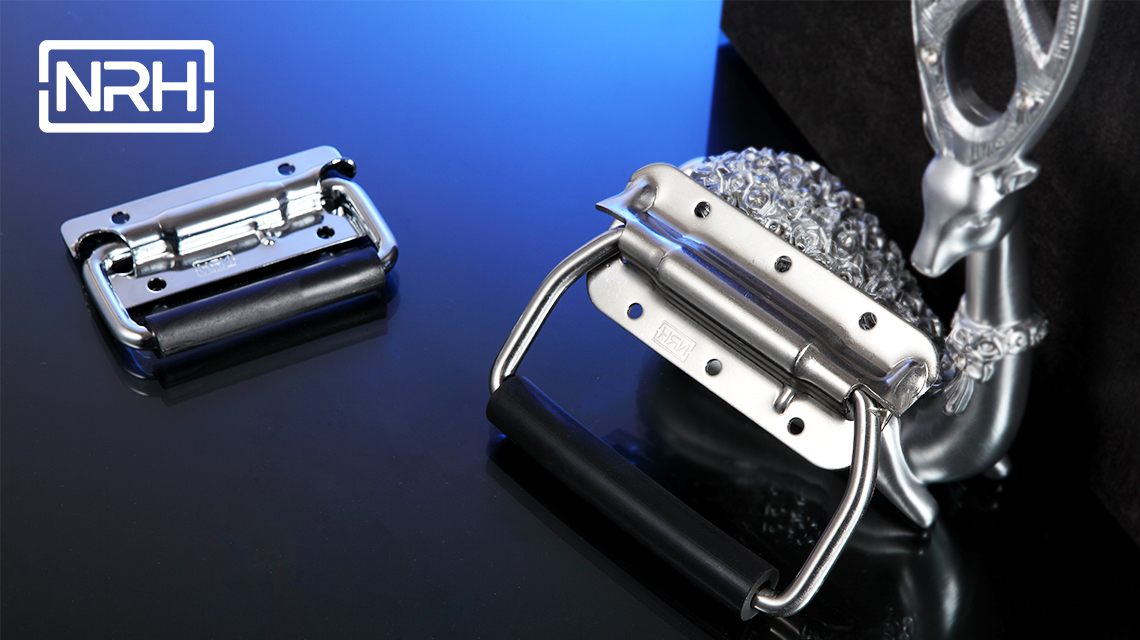
Key Finding: NRH offers two distinct 304 stainless steel surface treatments. The ZG (vibratory finishing) process produces a uniform satin texture that hides fingerprints, scratches, and wear – making it the practical choice for field-deployed hardware, flight cases, and industrial equipment. The LG (mirror polishing) process delivers a high-gloss, reflective surface that signals premium quality – ideal for medical enclosures, display cases, and applications where aesthetics are paramount. Based on four real NRH products: ZG finishes average 42.5kg load capacity at 153.5g weight; LG finishes average 35kg load capacity at 179g weight. The choice between ZG and LG directly impacts appearance, maintenance, cost, and service life.
Surface finish is more than cosmetic. On stainless steel hardware, the finish determines how the product looks, how it feels to the touch, how well it hides wear, and how much it costs. NRH uses two primary finishes on its 304 stainless steel products: ZG (vibratory finishing) and LG (mirror polishing). The difference is visible at a glance – but the implications go much deeper.
What Is Vibratory Finishing (ZG)?
Process principle: Vibratory finishing loads parts into a tub with abrasive media and a compound solution. The tub vibrates at high frequency, causing media to rub against every surface of the part. This mechanical action removes burrs, smooths edges, and produces a uniform, non-directional satin texture. The process is automated and batch-operated – load the tub, set the timer, and walk away. Cycle times typically range from 30 minutes to 2 hours depending on part size and media type.
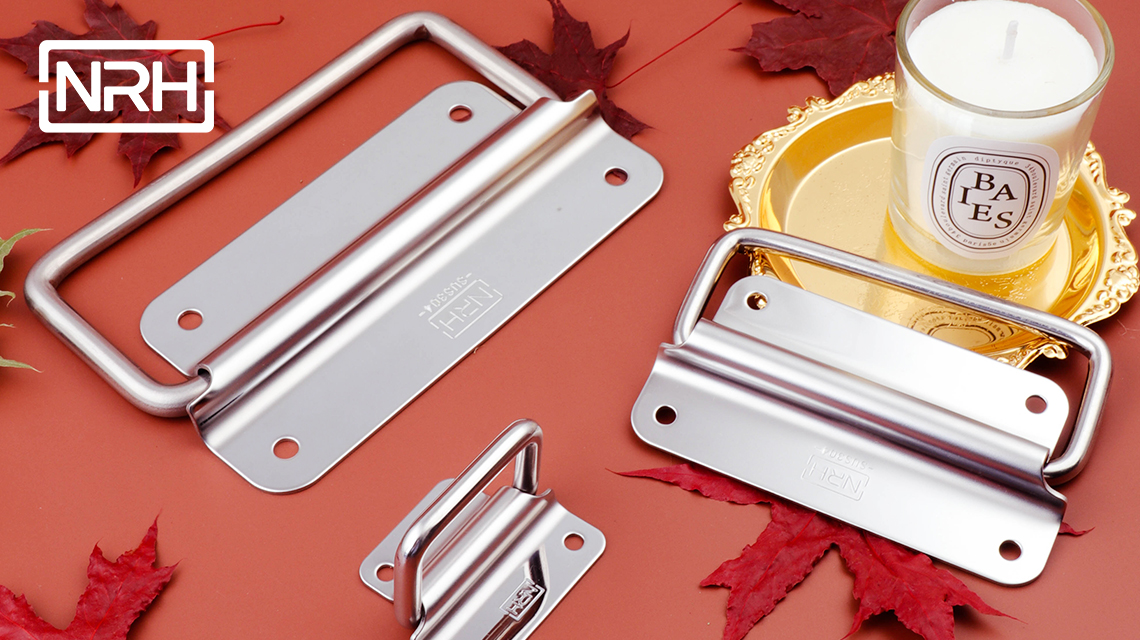
Surface characteristics: Vibratory finishing produces a matte-silver, satin appearance. Light scatters in all directions rather than reflecting sharply. The surface feels smooth but not slippery – a fine, consistent grain is visible up close. Surface roughness (Ra) typically ranges from 0.95 to 1.68 μm depending on media type and duration.
Key advantages:
- Hides fingerprints and smudges: The satin texture absorbs oils from skin contact, making fingerprints nearly invisible.
- Hides scratches: Fine scratches blend into the existing grain pattern and are difficult to see.
- Deburring included: The same process that creates the finish also removes burrs and stress concentrations.
- Cost-effective for volume: Batch processing means low per-part labor cost.
- Consistent results: Process-controlled finishing delivers the same texture across entire batches.
Real NRH product examples (ZG):
| Model | Material | Finish | Code | Weight | Load Capacity | Key Feature |
|---|---|---|---|---|---|---|
| 4201-120 | 304 SS | Vibratory ground | ZG | 161 g | 35 kg | Spring loaded, ~80deg opening angle |
| 4301-100 | 304 SS | Vibratory ground | ZG | 146 g | 50 kg | Highest load in ZG sample |
Ideal applications for ZG:
- Military and defense cases – frequent handling without showing wear
- Flight cases and transit containers – field use, dirt, and rough conditions
- Industrial equipment enclosures – hides fingerprints and minor scratches
- High-volume production runs – lower cost and faster throughput
- Parts that need deburring – vibratory finishing handles both in one step
What Is Mirror Polishing (LG)?
Process principle: Mirror polishing takes stainless steel through a multi-step abrasive process – coarse grinding, fine grinding, buffing, and final polishing with compounds. Each part requires individual attention through several abrasive stages. The surface is refined until it achieves a reflective, mirror-like gloss where you can see reflections. This is a labor-intensive, manual process.
Surface characteristics: Mirror polish produces a high-gloss, chrome-like appearance. Light reflects sharply in a single direction. The surface feels slick and glassy. Surface roughness (Ra) is extremely low – typically below 0.05 μm, with high-quality finishes reaching 0.02-0.04 μm Ra. By comparison, a standard hairline finish has an Ra of around 0.5-1.0 μm.
Key advantages:
- Premium visual impact: The reflective surface signals quality and precision.
- Easy to clean: Smooth, non-porous surface resists contamination.
- Marginal corrosion benefit: Smoother surface has fewer crevices for moisture to collect.
- Perceived value: Mirror finish is associated with high-end, precision equipment.
Key disadvantages:
- Shows fingerprints: Every touch leaves a visible smudge.
- Shows scratches: Every mark is immediately visible and cannot be hidden.
- Higher cost: Labor-intensive process adds 20-40% to part cost.
- Slower production: Each part requires individual handling through multiple stages.
Real NRH product examples (LG):
| Model | Material | Finish | Code | Weight | Load Capacity | Key Feature |
|---|---|---|---|---|---|---|
| 4265-100 | 304 SS | Mirror / Bright | LG | 115 g | 30 kg | 4-M5.0 through holes |
| 4259-108-1 | 304 SS | Mirror / Bright | LG | 243 g | 40 kg | Heavier, higher load |
Ideal applications for LG:
- Medical equipment enclosures – clean, reflective appearance signals hygiene
- Display cases and retail fixtures – premium look for visible installations
- Cleanroom hardware – smoother surface reduces particle adhesion
- Decorative or architectural applications – aesthetics drive the specification
- Marine hardware – marginally better corrosion performance in salt environments
Head-to-Head: Vibratory Finish vs Mirror Polish
1. Appearance and Texture
ZG (Vibratory): Satin, matte-silver. Light scatters in all directions. Fine, consistent grain visible up close. Surface feels smooth but not slippery.
LG (Mirror): High-gloss, reflective. Light reflects sharply. Surface feels slick and glassy. Looks premium but shows every detail.
Verdict: Choose ZG for practical, understated appearance; choose LG for visual impact and premium aesthetics.
2. Fingerprint and Smudge Resistance
ZG: Does not show fingerprints. Oils from skin contact absorb into the fine grain and become nearly invisible.
LG: Shows every fingerprint. Touch a mirror-polished handle once, and you see a smudge.
Verdict: ZG is the clear winner for hardware that gets handled frequently.
3. Scratch Resistance
ZG: Hides scratches. A fine scratch blends into the existing grain pattern and is difficult to see.
LG: Shows every scratch. A single fine line across a reflective surface is immediately visible.
Verdict: ZG is more durable in real-world use. LG requires careful handling and protection.
4. Corrosion Resistance
Both finishes start with the same SUS304 base material. The chromium oxide passive layer that provides corrosion resistance forms regardless of surface finish. Mirror polishing does close surface micro-pores more completely. In theory, mirror polish offers a marginal advantage in salt-spray performance. However, both finishes on SUS304 pass the same industry-standard salt-spray tests. The difference in real-world corrosion resistance is negligible for most applications.
Verdict: Base material matters more than surface finish. Choose SUS304 for corrosion resistance regardless of ZG or LG.
5. Cost and Production Time
ZG: Automated batch process. Low labor cost. Fast throughput. Deburring included in the same cycle.
LG: Manual, multi-step process. High labor cost. Slower throughput. Requires separate deburring step.
Verdict: ZG is significantly more cost-effective for volume production. LG carries a 20-40% cost premium.
6. Maintenance Requirements
ZG: Low maintenance. Wipe clean as needed. Does not require special cleaning products.
LG: High maintenance. Requires frequent cleaning to remove fingerprints and smudges. May require specialized cleaners to maintain gloss.
Verdict: ZG is lower maintenance in real-world use. LG requires regular attention to maintain appearance.
Selection Guide: Which Finish for Your Project?
| Factor | ZG (Vibratory Finish) | LG (Mirror Polish) |
|---|---|---|
| Appearance | Satin, matte silver | High-gloss, reflective |
| Fingerprint visibility | Low – barely visible | High – every touch shows |
| Scratch visibility | Low – blends with grain | High – every mark shows |
| Corrosion resistance | Same base SUS304 | Same base SUS304 |
| Cost premium | Baseline | 20-40% higher |
| Production speed | Fast (automated batch) | Slow (manual multi-step) |
| Deburring included | Yes | No (separate step) |
| Maintenance | Low | High |
| Best environment | Industrial, field, military | Medical, cleanroom, display |
Selection rule: Choose ZG (vibratory finish) when durability, low maintenance, and cost-effectiveness matter more than appearance. Choose LG (mirror polish) when visual impact is the priority and the environment is controlled.
Application-Specific Recommendations
| Application | Recommended Finish | Reason |
|---|---|---|
| Military / defense cases | ZG | Hides wear, field-ready |
| Flight cases / transit | ZG | Frequent handling, rough conditions |
| Medical equipment | LG | Clean, hygienic appearance |
| Display / retail fixtures | LG | Premium visual impact |
| Industrial enclosures | ZG | Hides fingerprints and scratches |
| High-volume production | ZG | Lower cost, faster throughput |
Frequently Asked Questions (FAQ)
What does ZG mean in NRH part numbers?
ZG stands for vibratory finishing. It indicates the part has been processed through vibratory finishing media to produce a uniform satin texture. NRH products like the 4201-120 and 4301-100 use this finish.
What does LG mean in NRH part numbers?
LG stands for mirror polishing. It indicates the part has been polished to a reflective, mirror-like finish. NRH products like the 4265-100 and 4259-108-1 use this finish.
Is mirror polish more corrosion-resistant than vibratory finish?
Both finishes use the same SUS304 base material with identical chromium content. Mirror polish produces a marginally smoother surface with fewer micro-crevices, but the practical difference in salt-spray performance is negligible. Base material and environment matter more than surface finish.
Which finish is better for outdoor equipment cases?
ZG (vibratory finish). Outdoor cases get handled frequently, exposed to dirt and moisture, and transported in rough conditions. The satin texture hides wear, resists visible scratching, and does not show fingerprints. Mirror polish would require constant cleaning and show every mark.
Why does mirror polish cost more?
Mirror polishing requires multiple manual abrasive steps – coarse grind, fine grind, buff, and final polish. Each part is handled individually. Labor time per unit is significantly higher than the automated vibratory finishing process. Consumable costs for polishing compounds and wheels also add up.
Does vibratory finishing weaken the part?
No. Vibratory finishing removes only surface-level material – typically less than 0.01 mm. It does not affect tensile load, shear strength, or dimensional tolerance in any meaningful way. The process also deburrs and edge-breaks parts, which can improve fatigue life by removing stress concentrations.
Can a mirror-polished part be refinished to satin?
Yes. A mirror-polished part can be run through a vibratory finishing cycle to convert it to a satin texture. The reverse is also possible but requires re-polishing from scratch. If you anticipate needing to change finishes, starting with vibratory finish and upgrading to mirror later is more cost-effective than the reverse.
What is the surface roughness difference between ZG and LG?
ZG (vibratory finish) typically achieves an Ra of 0.95-1.68 μm depending on media and duration. LG (mirror polish) achieves an Ra below 0.05 μm, with high-quality finishes reaching 0.02-0.04 μm. Mirror polish is approximately 20-50 times smoother than vibratory finish.
Key Takeaways
- ZG (vibratory finishing) produces a uniform satin texture that hides fingerprints, scratches, and wear – the practical choice for field equipment, flight cases, and industrial use.
- LG (mirror polishing) delivers a high-gloss, reflective surface that signals premium quality – ideal for medical enclosures, display cases, and aesthetic applications.
- Both finishes use the same SUS304 base material – corrosion resistance is determined by the material, not the finish.
- ZG is more cost-effective – automated batch processing vs. manual multi-step labor for LG.
- ZG hides wear – fingerprints, smudges, and minor scratches are nearly invisible.
- LG shows everything – every fingerprint, smudge, and scratch is immediately visible.
- ZG includes deburring – the same process that creates the finish also removes burrs and stress concentrations.
- Choose based on application – ZG for durability and low maintenance; LG for visual impact and controlled environments.
- Real NRH products demonstrate the difference – 4201-120 (ZG, 161g, 35kg) and 4301-100 (ZG, 146g, 50kg) vs. 4265-100 (LG, 115g, 30kg) and 4259-108-1 (LG, 243g, 40kg).
About NRH
NRH is a brand of Shanghai Nahui Hardware Products Co., Ltd., established in 1996 and headquartered in Shanghai, China. The company specialises in R&D and production of high-quality hardware fittings for cases and boxes – including latches, handles, hinges, and corner protectors. NRH products are widely used in military, medical, aviation, industrial, and logistics applications worldwide. NRH spring loaded handles and hardware feature precision-engineered 304 stainless steel construction with multiple surface finish options including ZG (vibratory finishing) and LG (mirror polishing).
For official engineering drawings, customisation enquiries, or bulk orders, please visit the NRH product pages or contact the sales team directly.