
Home > News > Industry news > Adjustable Latch Specifications: A Complete Guide for Industrial Applications


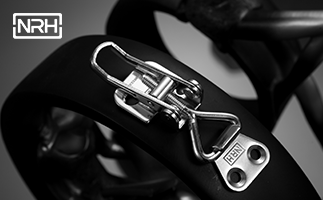
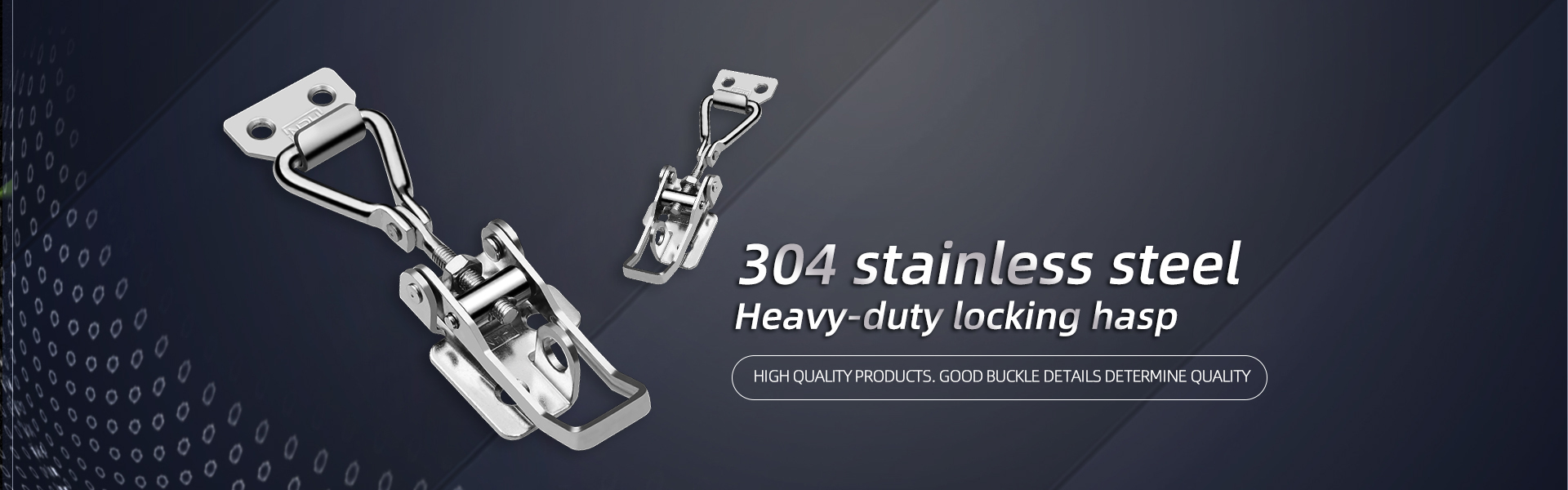
Adjustable latches, as the name implies, are specialized fastening devices designed with customizable tension and positioning capabilities. Unlike fixed latches such as oven latches, adjustable variants offer flexibility in securing applications where precise compression or variable tolerance accommodation is required.
The key advantage of adjustable latches lies in their ability to maintain optimal clamping force even in challenging environments. This adaptability significantly extends product lifespan and expands potential applications across various industries.
This design is particularly valuable for industrial doors requiring **weather stripping or gasket compression**, ensuring effective waterproofing and sound insulation. While toolbox latches may serve similar purposes, they typically lack the fine-tuning capabilities of dedicated adjustable latches.
2. **Carbon Steel**
– Cost-effective alternative
– Requires surface treatment for corrosion protection
3. **Zinc Alloy**
– Less common due to strength limitations
– Suitable for specific aesthetic applications
Adjustable latches serve critical functions across numerous sectors:
– **Industrial Ovens and Heating Equipment**
– **Technical Enclosures and Electrical Cabinets**
– **Soundproof Isolation Chambers**
– **Jigs and Fixtures in Manufacturing**
– **Outdoor Equipment Housings**
– **Vibration-Prone Machinery**
– Regular inspection of adjustment mechanisms
– Lubrication of threaded components
– Verification of tension settings
– Replacement wear indicators
Adjustable latches provide essential flexibility for industrial applications where fixed fasteners cannot maintain optimal performance. Their ability to accommodate changing conditions while maintaining secure closure makes them invaluable solutions for challenging environments.
When selecting adjustable latches, consider specific application requirements including environmental conditions, vibration exposure, sealing needs, and material compatibility. Proper specification ensures enhanced safety, reduced maintenance, and extended equipment lifespan.
For optimal performance, partner with manufacturers offering technical support and customization capabilities to meet your specific application requirements.
*Need help selecting the right adjustable latches for your application? Contact our technical team for personalized recommendations and specification support.*
+8618017975137(Nancy yang)

Room 1703-1704, Zhongji Mansion, 819 Yinxiang Road, Nanxiang Town, Jiading District, Shanghai, China
E-mailnrh-gz@nrh.cn
Copyright @ 2026 NRH Box Hardware No:84463